ClickFix- Phishing Alert: The New Fake Update Threat Targeting Las Vegas Hospitality

ClickFix phishing attack Las Vegas


🚨 URGENT: “ClickFix” Phishing Campaign Targeting Las Vegas Hospitality

Copy-Paste PowerShell Scam Bypasses Email Filters – Hotels, Casinos, and Transportation at Risk


⚠️ ACTIVE CAMPAIGN – HOSPITALITY SECTOR TARGETED


1. Executive Summary: The “Copy-Paste” Trap

A sophisticated new social engineering campaign, dubbed “ClickFix,” is actively targeting the hospitality and transportation sectors. Unlike traditional phishing that relies on a malicious link, this attack weaponizes “tech support anxiety.”

How The Scam Works:

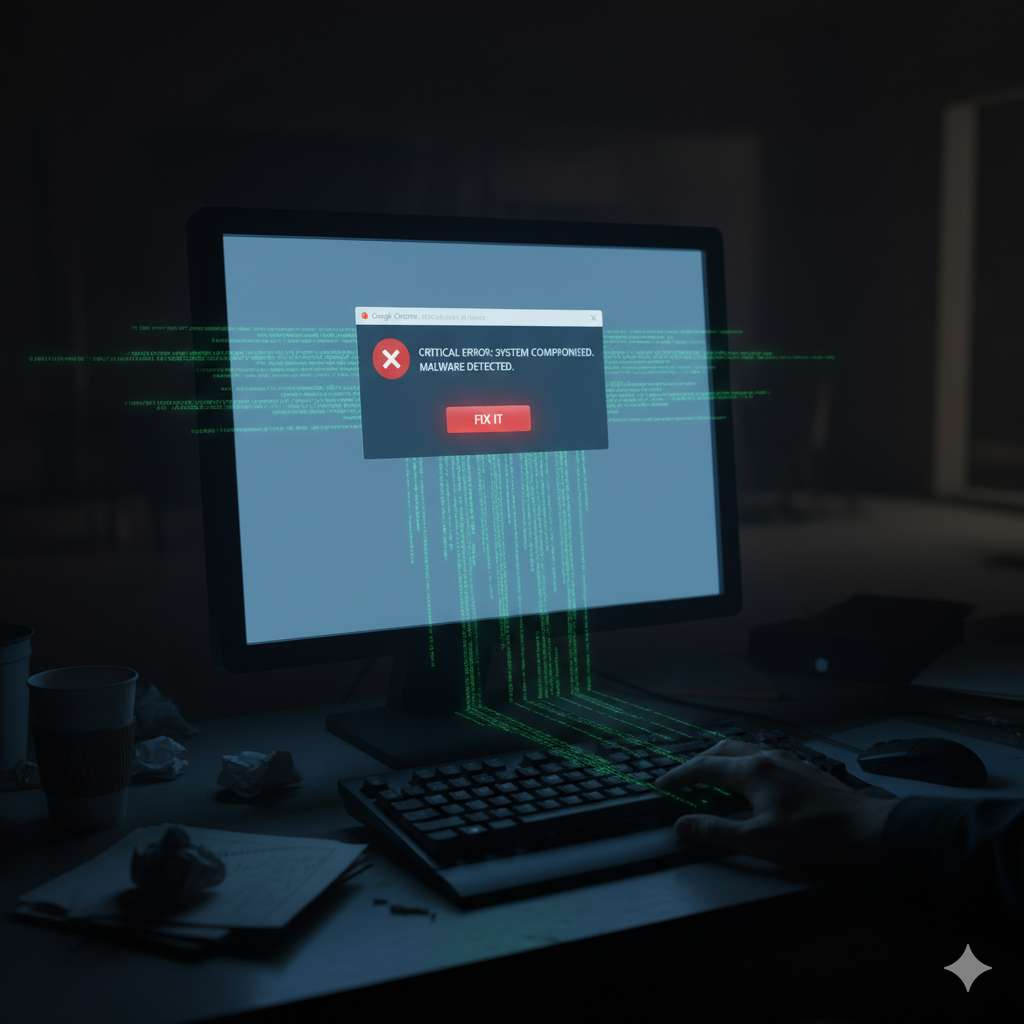
The Trap: Employees see a fake pop-up (mimicking Google Chrome, Microsoft Word, or Booking.com) claiming a “Critical Error” or “Update Required.” Instead of a download button, it instructs them to copy a PowerShell script and paste it into their terminal to “fix” the issue.

The Impact on Las Vegas: With our city’s heavy reliance on Booking.com, Expedia, and rapid front-desk operations, this specific campaign puts guest data and corporate networks at immediate risk of ransomware and credential theft. Hotels on The Strip, downtown properties, and casino resorts are prime targets.


2. The Technical Details: Bypassing Email Filters

This attack is clever because it bypasses email filters—the malicious code is never “sent” to you; you paste it yourself.

Attack Mechanism Analysis:

🌐 Attack Vector

Compromised websites inject an iframe displaying a fake error (e.g., “Word Online: Document Preview Error” or “Booking.com: Session Timeout – Action Required”). These appear on legitimate-looking pages employees visit daily.

⌨️ The Mechanism

The user is told to press “Ctrl+C” (to copy the “fix”) and “Ctrl+V” into a Windows PowerShell window. Instructions appear professional with Microsoft-style formatting and official-looking error codes.

💀 The Payload

The clipboard content is actually a malicious PowerShell script (using mshta.exe or similar legitimate Windows binaries) that downloads the Lumma Stealer or Vidar malware. These are credential-harvesting tools that steal browser passwords, session tokens, and cryptocurrency wallets.

🎯 Targeted Sectors

Specifically targeting Transport, Logistics, and Hospitality (Hotels/Casinos). Las Vegas hospitality sector is uniquely vulnerable due to high volume of Booking.com, Expedia, and reservation system usage combined with frequent employee turnover.


3. The Risk: Why Firewalls Can’t Stop This

For a Las Vegas hotel manager or logistics coordinator, this looks like a standard IT glitch. The attack exploits trust in familiar platforms and the pressure of fast-paced hospitality operations.

🛡️ Bypassing EDR (Endpoint Detection & Response)

Because the user manually executes the script, many Endpoint Detection & Response (EDR) tools view it as an “administrative action” rather than a virus. The malware uses legitimate Windows utilities (Living off the Land – LotL attack), making detection extremely difficult. Traditional antivirus sees PowerShell.exe and assumes it’s a technician performing maintenance.

🔐 Session Token Theft

The malware targets browser cookies and session tokens. This means hackers can log into your Booking.com, Expedia, or Bank of America portal without needing your password or 2FA code. They hijack active sessions, appearing as legitimate logged-in users. Multi-Factor Authentication provides zero protection against session token theft.

💳 Guest Fraud & Reputation Damage

Once inside a hotel’s Booking.com account, attackers can message future guests demanding payment to alternative accounts, cancel reservations causing revenue loss, or steal guest credit card information for fraud. This is a reputation nightmare for Las Vegas properties. A single incident can destroy years of 5-star reviews and guest trust, particularly damaging for boutique hotels and independent properties.

Las Vegas Hospitality Sector Vulnerability:

High-volume operations: The Strip hotels process thousands of check-ins daily, creating pressure to “fix” issues quickly without verification
Employee turnover: Frequent staff changes in hospitality mean new employees may not recognize legitimate vs. fake IT procedures
Multiple booking platforms: Properties use Booking.com, Expedia, Hotels.com, Airbnb – attackers customize fake errors for each
PCI compliance requirements: Hotels process credit cards – credential theft can trigger compliance violations and massive fines
Gaming Control Board scrutiny: Casino-hotels face additional regulatory oversight – security breaches can jeopardize gaming licenses

4. The 3-Step Mitigation Plan

Since this exploits human behavior, technology alone isn’t the fix. You need a “Human Firewall.”

1

Disable PowerShell for Front-Desk Users

Technical Control: Most front-desk staff, reservation agents, and concierge personnel never need to use PowerShell or Windows Command Prompt in legitimate operations.

Action: Use Group Policy (GPO) to disable the Windows Command Prompt and PowerShell for non-admin users, or restrict “Console Window” access entirely. Only IT administrators should have PowerShell privileges. This single step blocks the entire ClickFix attack chain.

2

The “Tech Support” Verification Rule

Policy: Train staff that no legitimate error message will ever ask you to “Copy and Paste” code or commands. Not from Microsoft, not from Google, not from Booking.com, not from any legitimate vendor.

Action: If a pop-up asks for a manual “fix” involving copying code, instruct staff to: (1) Close the browser immediately, (2) Do not restart the computer, (3) Call the CMIT Help Desk at 702-725-2877 before taking any action. Post this procedure prominently at every front desk workstation.

3

Monitor for “mshta.exe” Execution

Detection: The “ClickFix” script often uses the Microsoft HTML Application Host (mshta.exe) to reach the internet and download malware payloads.

Action: Configure your EDR (SentinelOne, CrowdStrike, Microsoft Defender) to flag or automatically block mshta.exe if it attempts to make an outbound network connection. In most hotel environments, mshta.exe should never need internet access. This catches the attack during payload download.


5. How CMIT Solutions Protects Las Vegas Hospitality

We actively hunt for these specific “Living off the Land” (LotL) attacks where hackers use your own tools against you. Our hotel and casino clients receive specialized protection designed for high-volume guest operations.

Hospitality-Focused Security Services:

PowerShell Script Blocking: Our security stack blocks unauthorized PowerShell scripts from running on front-desk terminals, reservation systems, and guest-facing computers. Application whitelisting ensures only approved hospitality software executes.
DNS Filtering: We block the known Command & Control (C2) domains that ClickFix scripts try to contact. Advanced threat intelligence prevents communication with malware distribution servers.
Front-Desk Security Training: Customized training for hotel staff covering ClickFix, fake Booking.com errors, and reservation system scams. Monthly simulations test employee readiness with realistic hospitality scenarios.
Session Monitoring: 24/7 SOC watches for impossible travel (Booking.com login from Las Vegas suddenly appearing from Russia), credential stuffing, and session token anomalies across all hotel systems.
PMS & POS Protection: Segmented networks isolate Property Management Systems (Opera, OnQ, Maestro) and Point of Sale systems from general office computers, containing infections if they occur.
PCI Compliance Maintenance: Security controls designed to maintain Payment Card Industry Data Security Standard (PCI DSS) compliance while blocking modern attack vectors like ClickFix.
Incident Response Plan: Pre-established breach response procedures specific to hospitality operations – minimizing guest notification delays and protecting reputation during security events.


⚠️ Is Your Front Desk Vulnerable to “Fake Update” Scams?

Don’t let ClickFix compromise guest data and destroy your reputation. We can assess your front-desk security in 24 hours.

Schedule Security Awareness Training


Protect Your Hotel from ClickFix Attacks

Get specialized hospitality cybersecurity that protects guest data, Booking.com credentials, and your reputation.

CMIT Solutions: Trusted by Las Vegas Hotels, Casinos, and Hospitality Groups

📞 702-725-2877

Request Hospitality Security Assessment

cmitsolutions.com/lasvegas-nv-1206


Key Takeaways for Hospitality Operations:

ClickFix targets hospitality sector – Copy-paste PowerShell scam specifically designed for hotels, casinos, and transportation
Bypasses email filters – Malicious code never sent via email, users paste it themselves after fake error messages
Session token theft – Steals Booking.com, Expedia credentials allowing hackers to impersonate staff and commit fraud
Guest fraud risk – Attackers message future guests demanding payment, causing reputation damage and revenue loss
Disable PowerShell for front-desk staff – Most hospitality employees never need command line access
Never copy-paste “fixes” – No legitimate error message asks users to paste code into PowerShell
Monitor mshta.exe activity – Block Microsoft HTML Application Host from making outbound connections
CMIT Solutions provides hospitality-focused training and front-desk security for Las Vegas hotels and casinos


6. Source & Technical Analysis

Read the technical breakdown of the ClickFix campaign targeting hospitality here: The Hacker News: Large-Scale ClickFix Phishing Attacks Target Transport and Hospitality Sectors


Back to Blog

Share:

Related Posts

Las Vegas skyline — guide to choosing the best managed IT services in Las Vegas

Your 2025 Guide: Best Managed IT Services in Las Vegas | SMB Buyer’s Checklist

Your 2025 Guide: Choosing the Best Managed IT Services in Las Vegas…

Read More
From casino breaches to law firm hacks, here’s what 2025 looks like for Las Vegas cybersecurity — and how local SMBs can defend themselves.

Las Vegas Cybersecurity Threats in 2025

Las Vegas Cybersecurity Threats in 2025: What SMBs Must Know & How…

Read More

How Data Backup Protects You from Ransomware (Las Vegas SMB Guide)

How Data Backup Protects You from Ransomware: A Practical Guide for Las…

Read More