

Is your cybersecurity training failing to prevent employees from making errors, despite your investments? This often stems from traditional, compliance-based programs that feel like a chore, causing low engagement in training and poor retention of concepts. As a result, human error turns employees into your greatest vulnerability instead of your first line of defense.
By leveraging gamified cybersecurity training, organizations can turn this challenge around—converting passive participants into “proactive human firewalls” and strengthening the security culture.
Engaging cybersecurity consulting services will ensure these gamified programs are implemented effectively, aligning training with organizational goals and maximizing employee engagement.
This guide provides a practical framework for implementing gamified cybersecurity training to drive measurable behavioral change.
What is Gamification in Cybersecurity?
Gamification in cybersecurity is a strategic approach that transforms traditional security training by incorporating game mechanics into awareness programs. Rather than sitting through passive lectures, employees engage with interactive environments where they practice security principles and learn threat response in real time.
Key components and applications:
- Points and badges
- Leaderboards
- Quests and challenges
- Scenario-based learning
- Simulations
- Behavioral framework
Ultimately, gamification taps into natural human motivations and works as a “behavior-shaping” system. It pairs triggers (like a fake phishing email landing in your inbox) with rewards (points for reporting it correctly), gradually turning secure actions into automatic habits.
Next, let’s explore how these mechanics translate into real motivators for employees.
Also Read: Navigating IT Needs With Customized IT Solutions & Compliance for Business
Gamification Taps Into Key Psychological Drivers
The effectiveness of cybersecurity gamification training isn’t just about fun—it’s rooted in sound behavioral and cognitive psychology.
When employees achieve a goal, their brains get a rewarding feeling from a dopamine release, which activates their reward centers, making learning an engaging experience—people love seeing tangible advancement through rewards. Moreover, the most effective programs go beyond surface-level rewards—they foster intrinsic motivators like mastery and purpose, which drive lasting behavior change.
These motivators come to life through gamification platforms—boosting engagement and participation.
So, what is a gamification platform for cybersecurity?
Gamification platforms for cybersecurity are training tools that borrow elements from video games—such as points and leaderboards—to teach security awareness. Platforms like ThreatGEN, Clashing, Hoxhunt, Click Armor, and Guardey replace boring slideshows with interactive experiences that employees actually want to complete.
The concept is straightforward: when training feels like a game, employees pay attention. They compete against coworkers, earn rewards for spotting threats, and practice responding to attacks without real consequences.
How these platforms work:
- Deliver gamified training.
- Boost motivation and engagement.
- Reinforce positive behavior change.
- Provide simulated threats.
- Track progress through reporting.
As a result, this heightened engagement directly leads to improved knowledge retention and reinforces positive security behaviors.
Now that we understand the psychological foundation, what specific components build these effective programs?—let’s explore next.
Core Elements of Gamified Cybersecurity Training
Here’s a breakdown of the foundational elements that support effective gamified cybersecurity training:
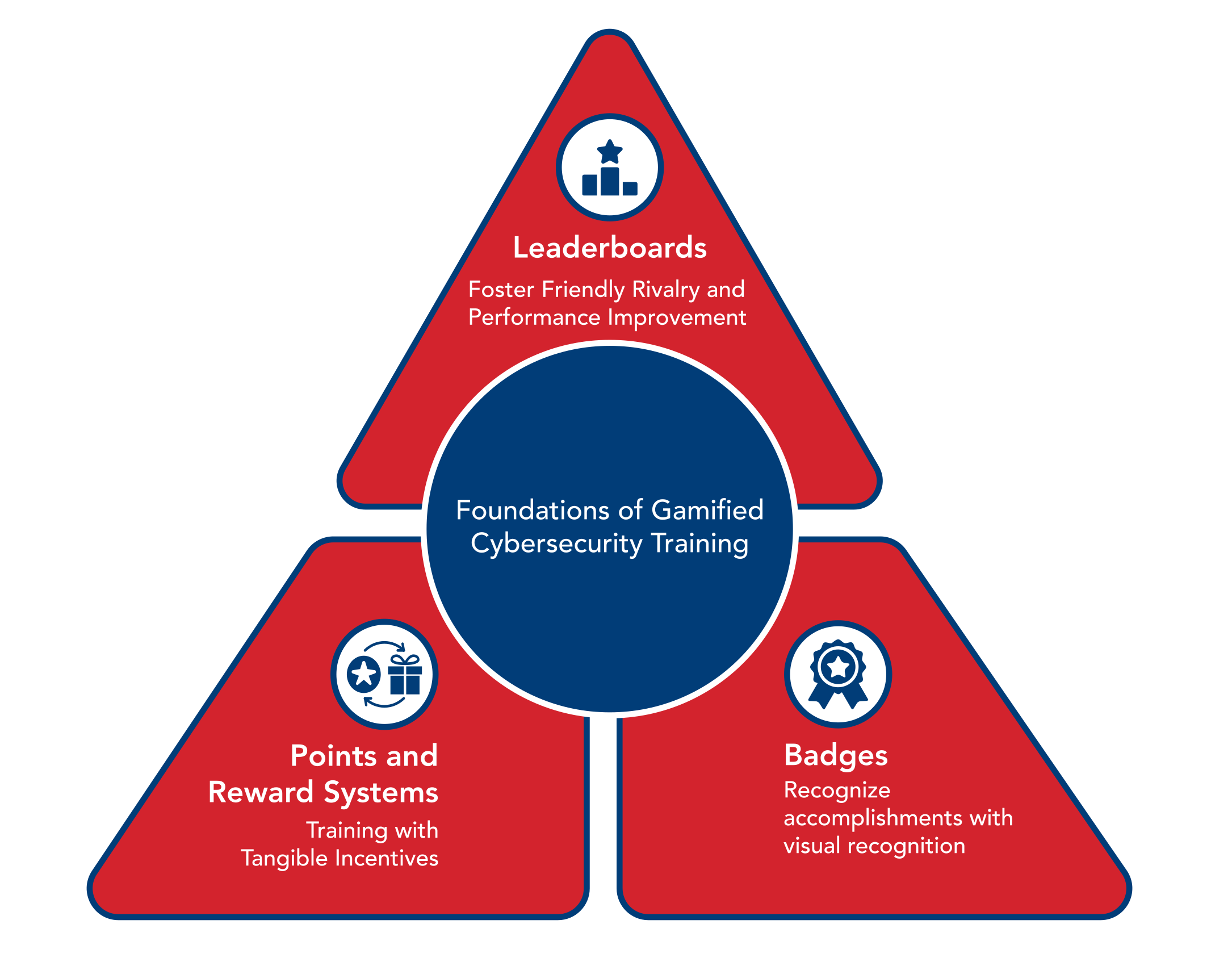
- Points and Reward Systems: Points track progress and, combined with rewards, incentivize employees to invest time in training. For example, you can offer tangible incentives like webcam covers, gift cards, or team lunches for achieving security milestones.
- Badges: Badges acknowledge specific accomplishments, providing visual recognition that boosts morale and encourages continued learning.
- Leaderboards: Leaderboards foster friendly rivalry by allowing score comparisons, motivating employees to improve performance. However, to avoid discomfort, allow employees to opt out or use aliases on leaderboards.
With these core elements in place, let’s now explore how the gamification strategy puts them into action.
What is a Gamification Strategy?
Gamification strategy builds on the core elements outlined above and applies them to challenges in non-game contexts to increase engagement and motivation.
Other common methods involve:
- Rewarding progress with virtual currency
- Setting clear goals
- Encouraging collaboration
- Providing both immediate and long-term rewards
Beyond these core mechanics, advanced elements like storytelling and simulations add depth to engagement.
- Storytelling creates narrative contexts, such as mystery-style games where users uncover cybersecurity clues, making lessons interactive and memorable.
- Realistic threat simulations, particularly phishing simulations in mock email clients, provide a safe environment for hands-on practice against phishing attacks without real-world consequences.
- Employees often repeat scenarios they initially fail, leveraging points to strengthen proficiency through practice.
- Immediate feedback loops in these scenarios reinforce learning by providing instant responses to decisions, solidifying knowledge in a controlled setting.
While these components form the toolkit, their true power is unlocked when tailored to departmental risks, and this guides us to the next section—customizing gamified training.
Customizing Gamified Training for Maximum Impact
A one-size-fits-all training approach is detrimental because it fails to address the unique workflows of different departments. Hence, customizing training by role and skill level becomes vital to ensure the training resonates directly with daily tasks and achieve high completion rates and improved engagement.
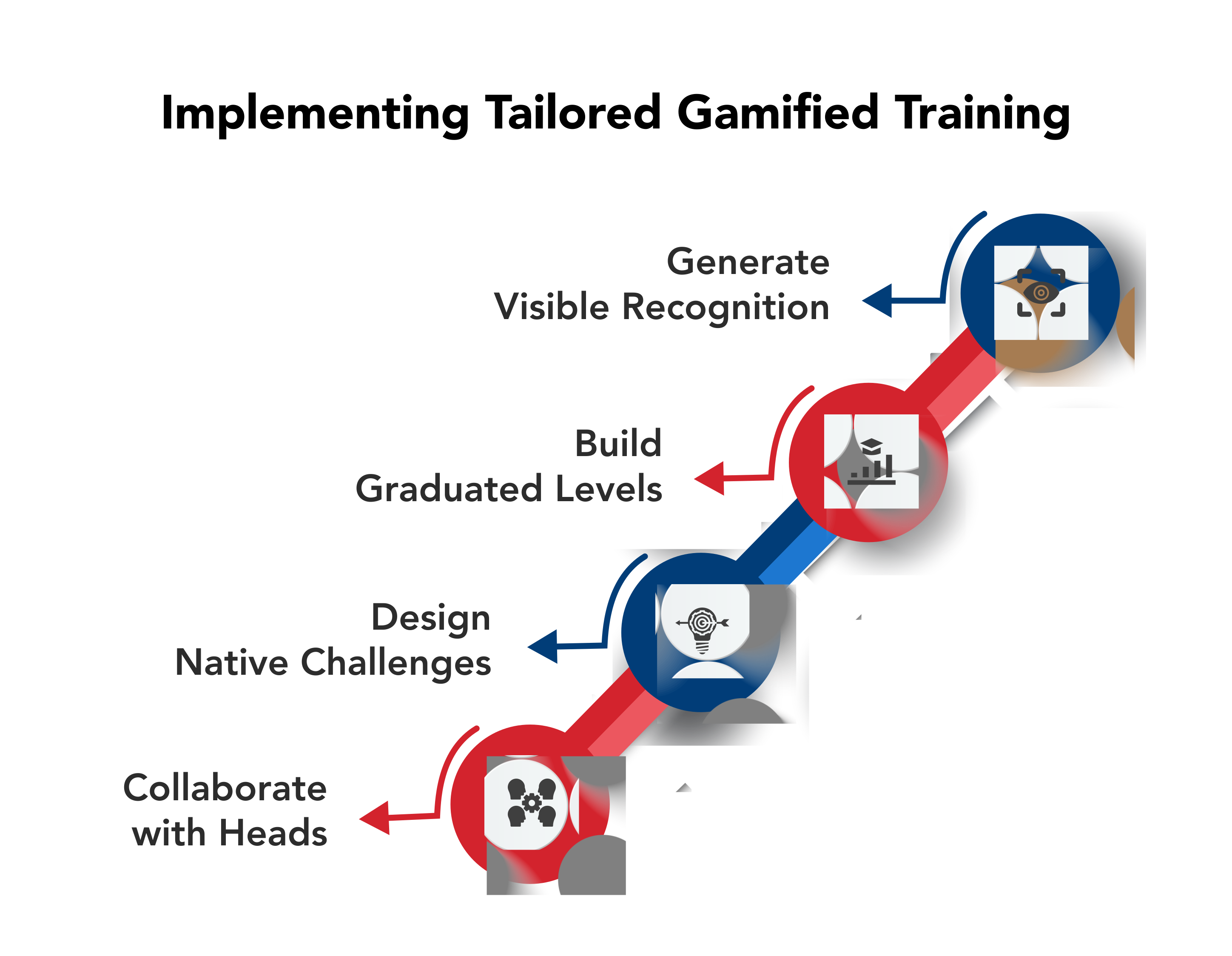
Here’s a practical four-step framework to implement this tailored strategy effectively:
- Step 1: Collaborate with department heads to align training with department workflows by identifying 3–5 meaningful security moments associated with specific tasks for each role. When non-technical employees see their real work represented in their training, the engagement level completely rises due to the integrity of the experience.
- Step 2: Design a challenge that feels native to the role and folds seamlessly into their workflow (not just another task). For instance, create a scenario for the finance department that challenges people to identify phishing in invoices while simulating the vendor verification process. Then, for HR, create a challenge that verifies employee data requests to address social engineering.
- Step 3: Build in graduated levels of complexity so the learning experience is organized in levels, just like a video game. Start with Level 1, where employees identify simple red flags of fraud, and as the levels progress (e.g., Learning Level 3), present complicated threats, like a CEO fraud scenario, to challenge employees.
- Step 4: Generate visible recognition that holds meaning in the professionals’ context. Do not award a generic IT badge; instead, offer awards such as a shout-out and additional opportunities, such as first choice to attend the conference, that you can leverage.
This tailored approach to gamification of cybersecurity training transforms employees from security targets into proactive defenders.
Transform Your Employees Into Your Strongest Defense
The key to securing your organization lies in fundamentally changing how employees view cybersecurity—shifting it from a reactive compliance task to a proactive shared mission.
By making learning interactive and enjoyable through gamification, you ensure that security practices become ingrained habits, not just forgotten rules. This transformation creates a human firewall, turning employees from a source of human vulnerability into your most sophisticated defense.
Ultimately, a well-executed gamified program:
- Strengthens your security posture.
- Builds a positive security culture.
- Enhances overall cyber resilience.
Want to strengthen your cybersecurity with gamification? At CMIT Solutions, Franklin Township, New Jersey, we offer expert IT consulting management to implement gamified training strategies. Connect with us today and build a strong security culture.