
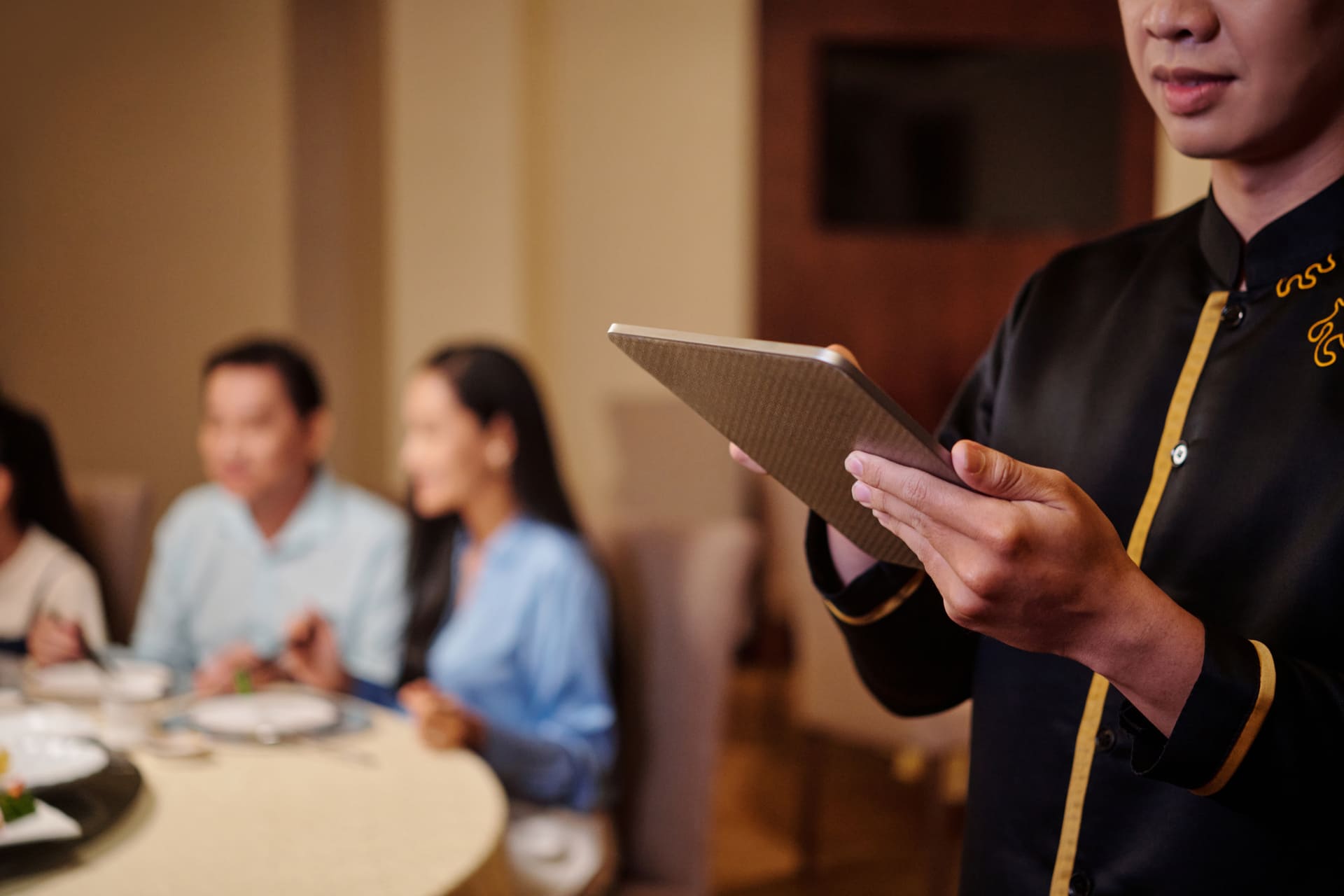
A well-structured hotel tech stack reduces IT costs for management companies by replacing fragmented, property-by-property technology with a consistent, centrally managed environment where support is unified, security standards apply everywhere, and vendor complexity stops compounding with every new location.
At CMIT Solutions, that is exactly what we help multi-property hospitality groups build.
When each property runs different systems, different vendors, and different support contracts, costs add up, and risk multiplies with every location added.
Learn more about our hotel IT support services and how we help hospitality groups build that foundation.
What Is a Hotel Tech Stack, and Why Does It Matter for Management Companies?
A hotel tech stack is the collection of software and systems a property uses to run its daily operations, from taking reservations to processing payments to managing staff access.
For a single property, a disconnected stack is inconvenient. For a management company overseeing five, fifteen, or fifty properties, the growing complexity of managing that technology becomes a liability in its own right, quietly absorbing time, budget, and attention that should be going toward running the business.
The challenge for management companies is not just choosing the right tools. It is making sure those tools work consistently across every property in the portfolio. When each location uses a different PMS, a different POS system, and a different IT support arrangement, technology gets treated as a maintenance problem rather than a business asset.
There is no unified view, no shared standard, and no reliable way to catch problems before they affect guests. The result is higher support costs, more downtime, and a support team stretched thin trying to manage incompatible systems at scale.
CMIT Solutions helps management companies move from that reactive, fragmented model to a portfolio-wide IT approach that aligns technology with operational goals and treats the tech stack as a driver of business performance, not just a cost to maintain.
The Core Components of a Hotel Tech Stack
Every system in a hotel’s tech stack is a potential point of operational disruption. A modern hotel tech stack covers five core functional areas, and each creates IT cost exposure and real downtime risk when managed inconsistently across properties.
- Property Management System (PMS): The operational backbone of every hotel. The PMS manages reservations, check-in and check-out, room assignments, and billing. When PMS connectivity breaks, even briefly, front desk operations stop entirely.
- Point-of-Sale (POS) system: Used in restaurants, bars, room service, and retail within the property. POS downtime during peak service hours means lost revenue and frustrated guests with no way to pay.
- Revenue Management System (RMS): Analyzes demand and market data to optimize room pricing. It requires reliable data feeds from the PMS and external sources to function accurately.
- Booking engine and channel management: Connects the property to online travel agencies, direct booking platforms, and distribution channels. Outages or integration failures can result in overbooking or missed reservations.
- Guest-facing systems: Includes Wi-Fi networks, self-check-in kiosks, digital key systems, and guest communication platforms. Guests treat these as basic expectations, and failures here show up directly in online reviews.
| System | Operational function | Cost of failure |
| PMS | Reservations, check-in, billing | Front desk stops; revenue and guest data at risk |
| POS | Food, beverage, retail transactions | Lost revenue per transaction during outage |
| RMS | Dynamic pricing and demand forecasting | Missed revenue optimization; manual pricing errors |
| Booking engine | Direct and third-party reservations | Missed bookings; potential overbooking |
| Guest Wi-Fi | Guest connectivity | Negative reviews; perceived service failure |
A system outage at the front desk or restaurant POS is not just an IT problem. It is a revenue and guest experience problem.
Use our IT downtime calculator to estimate what unplanned downtime is actually costing your business.
💡 Additional reading: How technology can help improve hotel guest experience
How Fragmented IT Drives Up Costs Across Multiple Properties
When a management company relies on multiple vendors across its properties, each with its own contracts, escalation paths, and response standards, accountability gaps are inevitable.
The most expensive IT environments in hospitality are not the ones with sophisticated tools; they are the ones with too many mismatched tools and no one responsible for keeping them aligned. For management companies, this fragmentation compounds with every additional property added to the portfolio.
When each property has negotiated its own support contracts, runs a different PMS, and has a different arrangement for IT help desk coverage, the management company is not getting multiplied value. It is absorbing multiplied complexity.
Support calls go to different vendors. Problems at one property do not trigger a review of the same potential issue at others. And when something goes wrong, there is no central partner accountable for resolution.
Vendor sprawl also creates hidden compliance risk. Every system that handles payment card data is subject to PCI DSS requirements, maintained by the PCI Security Standards Council.
When properties run different payment systems with different vendors, it becomes difficult to confirm that every touchpoint is actually compliant, and even harder to demonstrate that compliance to auditors or insurers.
CMIT Solutions helps management companies replace that fragmented vendor arrangement with shared tools, consistent standards, and security practices that exceed baseline compliance requirements across the entire portfolio.

What Multi-Location IT Consistency Actually Looks Like
Consistent IT across a hotel portfolio does not mean every property runs identical hardware. It means every property operates within a shared framework: security built into the environment by design, continuous monitoring applied across all locations, and the same escalation path in place when something breaks.
For management companies, this kind of consistency produces measurable benefits:
- Faster problem resolution: When the same IT partner supports all locations, they know the environment. Diagnosis is faster, escalation is cleaner, and resolution time drops.
- Easier audits and compliance reviews: A unified IT framework makes it significantly easier to demonstrate PCI DSS compliance, because the controls are applied consistently rather than being recreated at each property from scratch.
- Better budget visibility: A consolidated IT environment replaces unpredictable, per-property support costs with a more predictable model that is easier to plan around as the portfolio grows.
CMIT Solutions delivers this through a model that combines locally responsive support, including on-site assistance when remote resolution is not enough, with the resources of a nationwide network of IT and cybersecurity professionals.
Management companies get enterprise-level capabilities delivered through the kind of trusted advisor relationship that makes ongoing IT support genuinely useful, not just technically present.
Contact our team to see how a consistent, security-first approach can reduce risk and bring your portfolio under control.
The Hidden IT Costs in High-Turnover Hospitality Environments
High staff turnover is one of the most persistent and underestimated sources of access control risk in hospitality, and one of the hardest IT costs to track. Every hire and departure involves onboarding and offboarding across multiple systems: PMS access, POS credentials, email accounts, guest Wi-Fi management consoles, and any property-specific platforms the employee used. When this process is manual and inconsistent, it takes longer, costs more, and leaves gaps.
The security risk is real and recurring. A former employee whose credentials remain active in the PMS or the POS system is an open door.
In a multi-property environment, that risk multiplies. A single inconsistent offboarding at one property creates exposure across systems, devices, and networks that a centralized IT team may not be aware of until an incident occurs.
CMIT Solutions helps management companies automate and standardize the access lifecycle across every property, building in layered protection that catches credential risks before they become incidents, backed by continuous monitoring that keeps threat visibility active across systems, devices, and networks even as staff changes.
Seasonal Demand and IT Infrastructure: Planning for Peak Before It Arrives
One of the clearest signs that IT resources cannot scale with business growth is what happens during peak season. Hotel occupancy is not linear, and neither is the strain it places on IT infrastructure.
A property running at 40% occupancy in February is a fundamentally different IT environment than the same property at 95% occupancy over a holiday weekend. Most IT failures in hospitality do not surface during quiet periods. They surface when systems are under load, and there is no time to troubleshoot.
The pattern is consistent: systems that perform without issue during slow periods reveal problems under peak demand. A POS system that was never load-tested at full transaction volume, a guest Wi-Fi network sized for off-season occupancy, or a help desk relationship with no defined response SLA all become serious operational liabilities the moment peak season arrives.
CMIT Solutions addresses this proactively through pre-season infrastructure reviews, load-testing of critical systems before demand arrives, and continuous monitoring that surfaces problems before they affect operations.
With responsive, locally delivered support and clearly defined escalation commitments, management companies have the coverage they need regardless of where or when a failure occurs.
Cybersecurity in Guest-Facing Systems: An Overlooked Attack Surface
Guest-facing technology is where hospitality operators are most likely to underestimate their cybersecurity exposure. Check-in kiosks, guest Wi-Fi networks, online booking portals, and in-room entertainment systems are all connected to the broader property network, and each represents a potential entry point for malicious activity.
Th e Cybersecurity and Infrastructure Security Agency designates the hospitality and lodging sector as part of the Commercial Facilities critical infrastructure sector, recognizing the unique security risks that come with open public access environments.
Guest Wi-Fi is a common vector: without proper network segmentation, a guest device on the property network could reach systems that have no business being accessible to guests, including back-of-house operations and payment processing environments.
CMIT Solutions builds layered cybersecurity protection into every hospitality engagement, starting with network segmentation as a standard control and extending to continuous monitoring across all guest-facing and back-of-house systems.
The goal is protection that covers the full environment, not just the obvious entry points, so management companies can operate with confidence across every property in their portfolio.
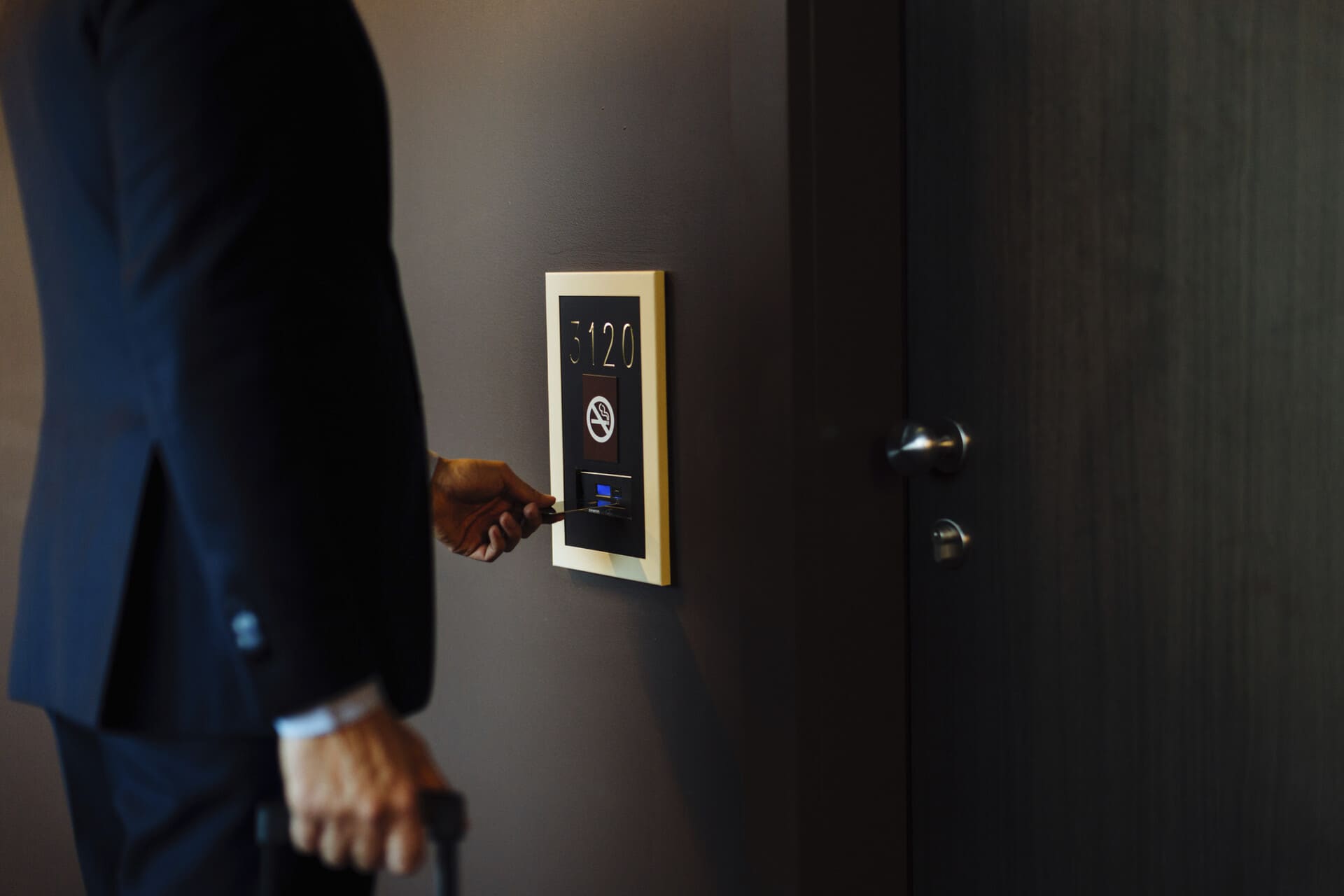
How AI and Automation Are Changing Hotel IT Management
Many hotel management companies are investing in AI-driven tools without the IT infrastructure to support them reliably, a clear sign that technology decisions are being made in isolation from the operational goals they are meant to serve. Artificial intelligence is increasingly embedded in the revenue management and guest experience layers of the hotel tech stack, and management companies are beginning to feel its operational impact.
AI-driven revenue management systems can adjust pricing dynamically based on demand signals, competitive rate data, and booking pace, without manual intervention. Guest communication platforms are using AI to handle routine requests, freeing front-desk staff for higher-value interactions.
AI tools require clean, reliable data feeds from the PMS and other operational systems. If the underlying infrastructure is unstable or poorly integrated, AI recommendations become unreliable, and the investment does not deliver.
The FTC’s guidance on privacy and data security is also relevant for hospitality operators using AI-driven personalization or guest data tools, particularly where those systems collect, store, or act on personal information.
CMIT Solutions helps management companies adopt AI tools with confidence, ensuring the underlying infrastructure is secure and well-maintained, and providing cybersecurity-informed recommendations that account for the data governance and privacy considerations that AI-driven hospitality tools introduce.
Our role is to give management companies access to modern technology insights, including AI, without exposing the business to risks that come from moving faster than the infrastructure can safely support.
Building a Hotel Tech Stack That Scales With Your Portfolio
For many management companies, IT infrastructure that works adequately today becomes a growth bottleneck within a few years, not because the tools fail, but because the environment was never designed to scale. The right hotel tech stack for a management company is not one that works for the properties you operate today.
It is one that can support the properties you will add over the next three to five years without requiring a complete rebuild. Scalability is a function of both the tools you choose and the IT infrastructure supporting them.
Cloud-based systems offer a practical foundation for scalability. They reduce dependency on on-site hardware, simplify updates, and make it easier to extend a consistent environment to a new property without deploying a full IT team on-site first.
But cloud adoption does not eliminate IT complexity. It shifts it. Security configuration, access management, integration quality, and monitoring all still require active, expert management, and the stakes are higher when those systems are shared across a multi-property portfolio.
The American Hotel & Lodging Association has documented the growing pressure on management companies to demonstrate technology competency as a competitive differentiator, not just for guest satisfaction but for owner and operator relationships.
CMIT Solutions provides the strategic technology guidance needed to meet that expectation, aligning IT decisions with business goals, improving operational performance across every property, and building a technology environment that scales with the portfolio rather than constraining it.
Let CMIT Solutions Help You Get Control of IT Across Your Properties
Managing IT across multiple hotel properties requires more than a help desk number. It requires a trusted partner who understands how hospitality operations work, knows what is at stake when a POS system goes down at dinner service, and has the depth to deliver stronger cybersecurity protection, reliable IT support, and the strategic expertise to align technology decisions with how your business actually runs.
At CMIT Solutions, we work with multi-location hospitality businesses to bring order to fragmented IT environments by improving operational resilience, eliminating the accountability gaps that come from managing too many vendors, and turning technology into a genuine driver of productivity and growth.
Our approach is built on security-first IT designed to prevent, detect, and respond to threats across every property, including backup and recovery to keep operations running if the unexpected happens.
We pair that with responsive local support backed by a nationwide network of cybersecurity and technology professionals who are available when and where you need them. And we bring strategic guidance that aligns your technology environment with your operational goals and positions your portfolio to grow without friction.
To talk through what consistent, proactive IT management could look like across your properties, contact us or call us at (800) 399-2648.
FAQs
Can a managed IT provider work with the vendor contracts a hotel management company already has in place?
Yes. CMIT Solutions assesses your existing vendor relationships and contracts before recommending any changes. In most cases, we layer consistent oversight and monitoring on top of what is already in place, then help consolidate or renegotiate arrangements over time as contracts expire, rather than forcing an immediate replacement of every system across your portfolio.
What should a hotel management company look for when reviewing an IT support service level agreement for multiple properties?
A hospitality-specific IT SLA should define response and resolution times for critical systems, particularly PMS and POS, not just general response windows. Look for priority escalation for guest-facing systems during peak hours, 24/7 monitoring commitments, and clearly defined on-site support availability. These are where vague SLA language most often creates problems when a real incident occurs.
Can managed IT support help a hotel management company perform technology due diligence before taking on a new property?
Yes, and CMIT Solutions considers this one of the most valuable applications of a managed IT relationship. Before taking on management of a new property, a technology audit can surface outdated systems, unsupported software, compliance gaps, and security vulnerabilities. Factoring IT remediation costs into the acquisition model before handover can meaningfully affect deal terms and post-transition risk.
How does having inconsistent IT infrastructure across hotel properties affect a management company’s cyber insurance coverage?
Cyber insurers increasingly require evidence of specific security controls, including multi-factor authentication, endpoint protection, network segmentation, and documented incident response procedures, before issuing or renewing coverage. A portfolio with inconsistent IT environments may find that some properties fail to meet insurer requirements, resulting in coverage gaps or higher premiums across the entire portfolio.
How long does it realistically take to standardize IT infrastructure across a multi-property hotel management company?
Most hotel management companies working with CMIT Solutions see meaningful IT consistency within six to twelve months, with full standardization over a longer horizon. A phased approach typically begins with security and monitoring, which can be deployed relatively quickly, followed by support consolidation and infrastructure alignment as legacy vendor contracts expire and systems are brought in line.