Hotel technology improves the guest experience and reduces IT costs when it’s built on a reliable, secure infrastructure, not just good-looking apps sitting on top of fragile systems.
At CMIT Solutions, we help hotels and hospitality groups run the technology guests depend on, from POS terminals and property management platforms to guest Wi-Fi and payment processing, so that better guest experiences and lower operational costs come together, not at the expense of each other.
Explore our hotel IT support services to see how we make that happen.
What Guests Expect From Hotel Technology Today
Today’s hotel guests arrive with high expectations. They want fast, frictionless check-ins, personalized service, and reliable Wi-Fi, and they often leave a negative review if any of these fall short.
For many operators, the problem isn’t awareness of what guests want; it’s that the underlying IT environment hasn’t kept pace, leaving technology feeling like a liability to manage rather than a tool to compete with.
The pressure is real: guests rate hotels on the quality of their digital experience alongside the quality of their rooms. A slow check-in process, a payment that fails to go through, or a dropped Wi-Fi connection in a guest room can undo the work of an otherwise excellent stay. For hotel operators running multiple properties, this challenge is multiplied across every location.
How Hotel Technology Improves the Guest Experience
Modern hospitality technology enhances the guest experience at every stage of a stay, from booking to checkout and beyond. The right tools, properly supported and secured, let your staff focus on guests rather than troubleshooting systems.
Here are the core technology areas shaping the guest experience today:
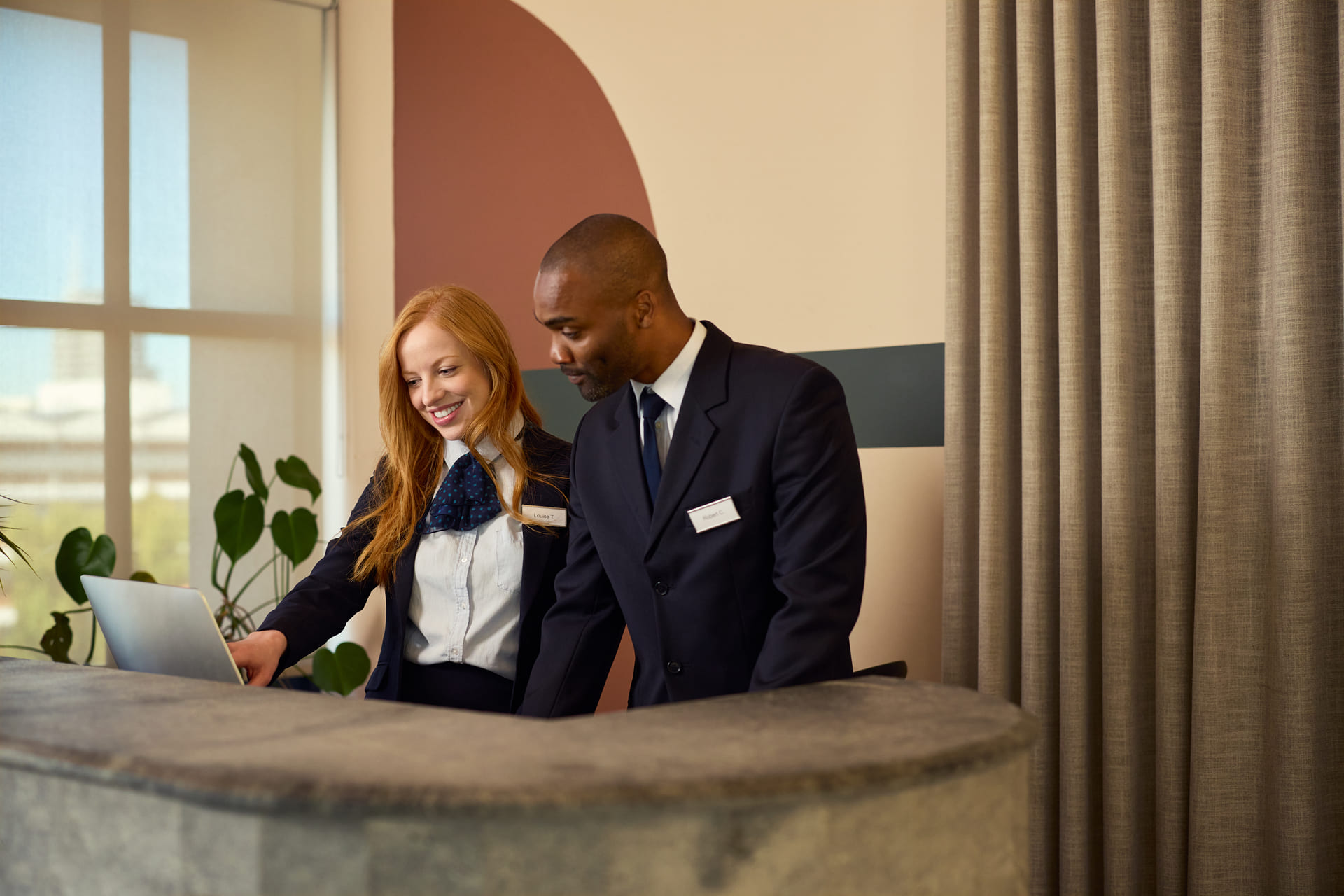
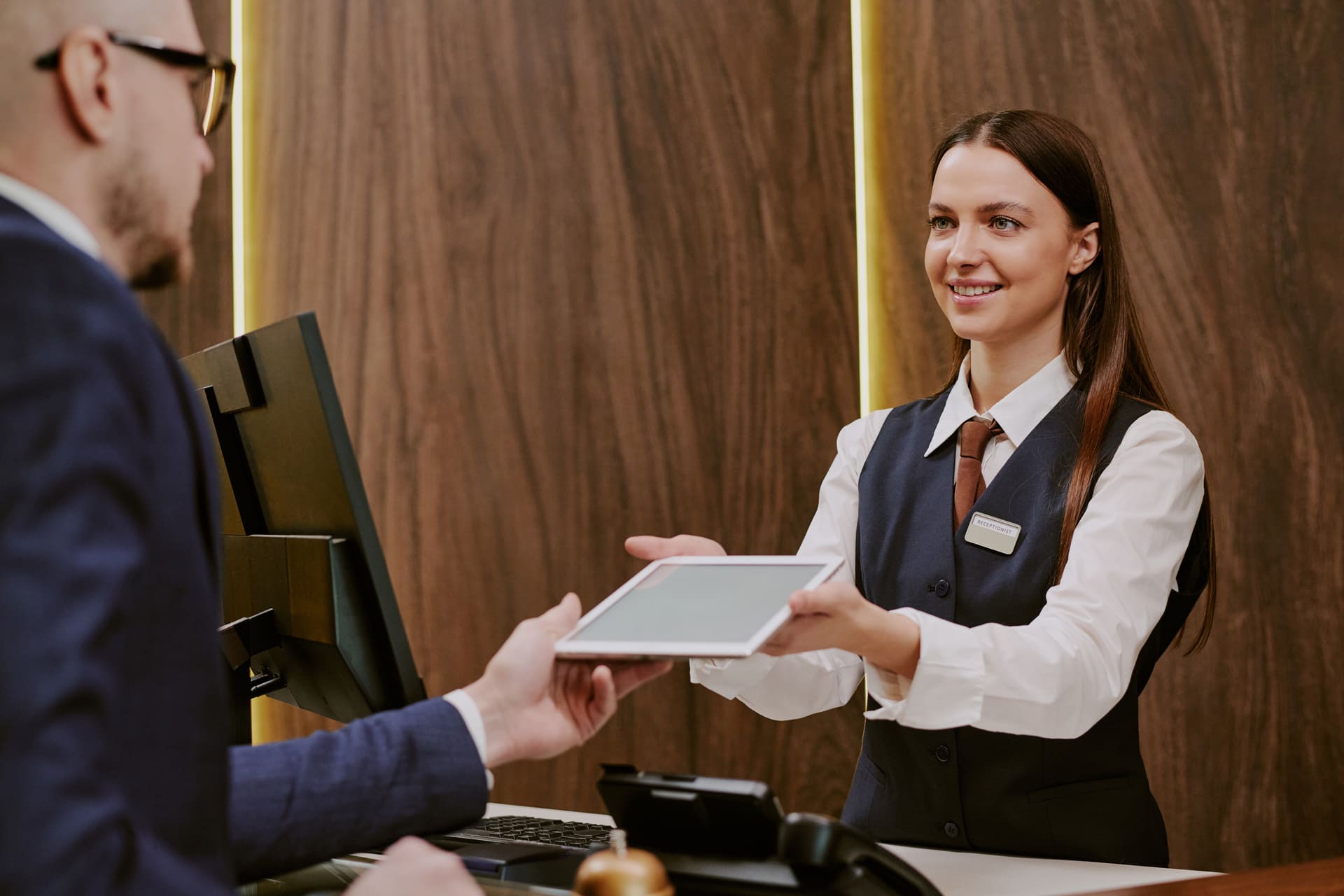
- Mobile check-in and digital keys. Guests can bypass the front desk entirely, checking in via a mobile app and accessing their room with a digital key on their phone. This reduces wait times and gives guests control over their own arrival experience.
- AI-powered personalization. Property management systems increasingly use AI to surface guest preferences, including past room choices, dietary notes, and upsell history, so front desk staff can offer a more personal welcome without sifting through disconnected records manually.
- Smart room controls. IoT-enabled rooms allow guests to adjust lighting, temperature, and entertainment through a tablet or voice assistant. These systems also adjust automatically based on occupancy, reducing energy use when rooms are empty.
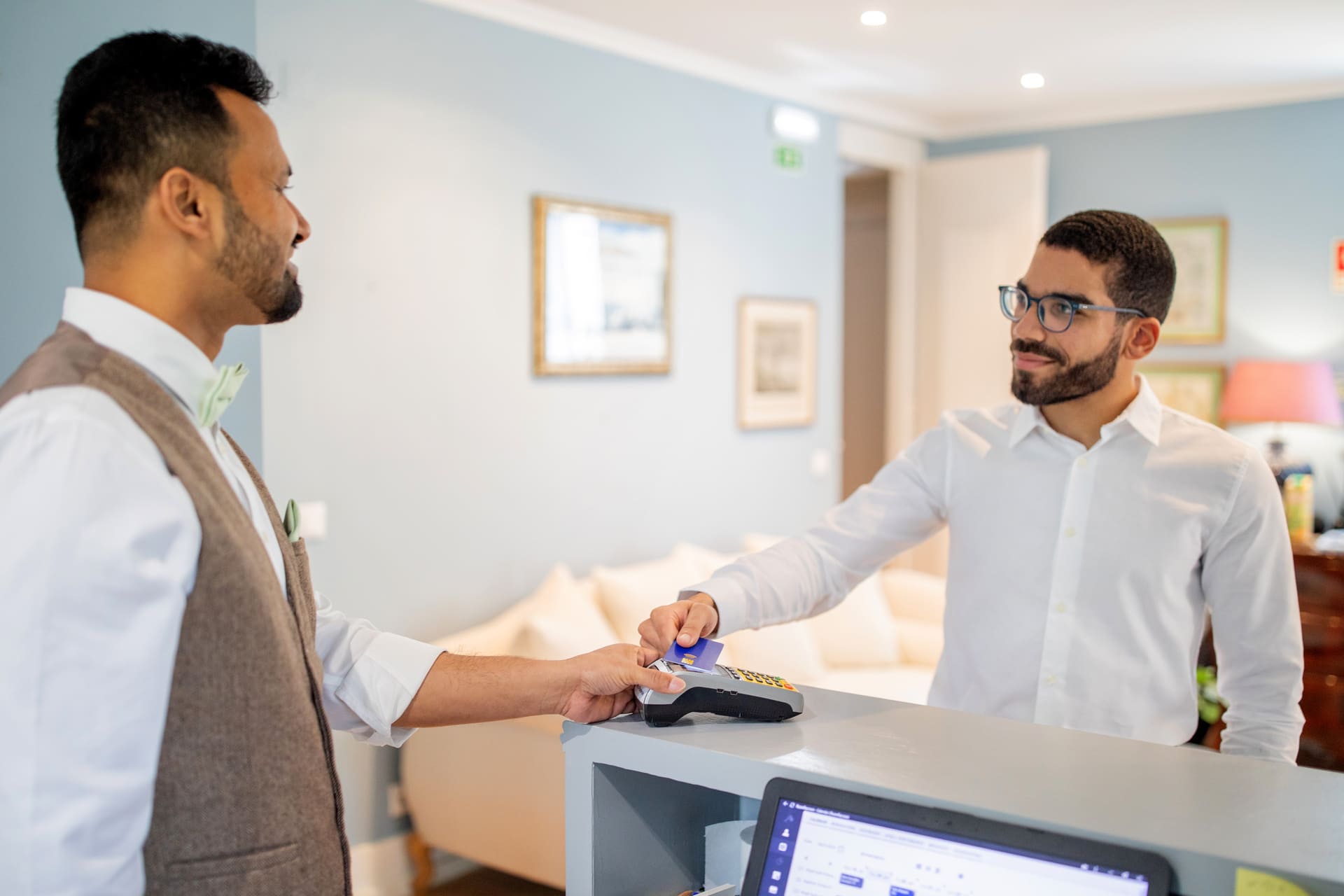
- Contactless payments. Guests now expect to pay with Apple Pay, Google Pay, or a contactless card at any point of service, whether at the restaurant, spa, or front desk. Integrated payment systems that communicate across departments reduce friction and errors.
- Virtual concierge and chatbots. Automated chat tools answer common guest questions around the clock, covering hours, local recommendations, and housekeeping requests, without requiring staff to pick up the phone or step away from the desk.
- Dynamic pricing beyond room rates. Hospitality operators are extending revenue management logic to parking, co-working spaces, dining times, and amenity bookings, using technology to optimize yield across the full property, not just bedrooms.
- Personalized loyalty programs. Digital loyalty platforms allow hotels to offer tailored rewards based on individual guest behavior rather than blanket point systems. Gamification features, such as in-app challenges tied to dining, local activities, or repeat bookings, drive engagement between stays.
💡 Additional reading: Hotel tech stack
The IT Infrastructure Hotels Don’t Talk About Enough
Every guest-facing technology in your hotel depends on something running reliably in the background. Most hospitality technology conversations focus on the apps and interfaces guests see, but the infrastructure supporting those tools is where the real risk lives.
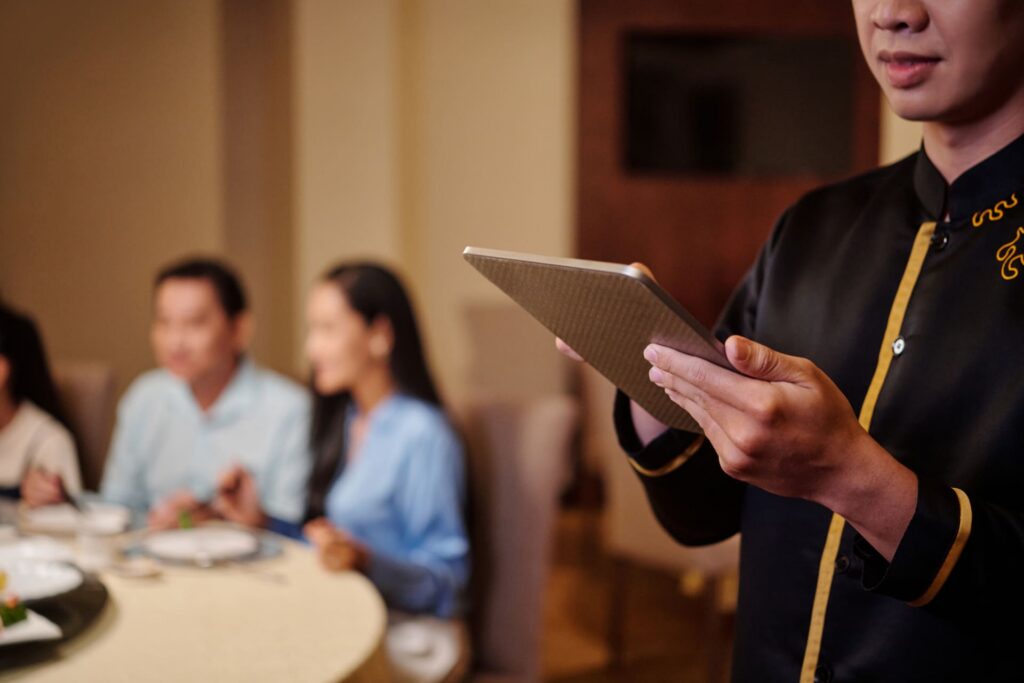
Think about what happens when a POS system goes down during dinner service. Staff can’t process transactions. Tables back up. Guests are frustrated. The revenue loss is immediate, and the reputational damage follows in reviews.
The same scenario applies to front desk check-in systems during a peak arrival window or a payment gateway that fails during a busy weekend. These aren’t abstract IT problems. They’re visible guest experience failures with a direct cost.
That’s where we come in. CMIT Solutions delivers security-first managed IT services that keep your guest-facing systems online, monitoring performance continuously, detecting and resolving issues before guests notice them, and maintaining the secure technical foundation that every piece of hospitality technology depends on. Our approach is built around prevention, not reaction.
💡 Additional reading: Hotel tech audit
What Does IT Downtime Actually Cost a Hotel?
Downtime in hospitality has a cost that most operators underestimate. It’s not just the revenue lost in the moment a system goes offline. It’s the ripple effect on staffing, guest satisfaction, and review scores that follows.
| Downtime Scenario | Immediate Operational Impact | Longer-Term Risk |
| POS system failure during service | Transactions stall, revenue stops, and staff are overwhelmed | Negative reviews, lost covers |
| PMS outage during check-in | Front desk can’t assign rooms or process arrivals | Guest frustration, brand damage |
| Guest Wi-Fi failure | Guest complaints, loss of repeat bookings | Lower review scores on OTAs |
| Payment gateway down | Card transactions fail across all departments | Revenue loss, trust erosion |
| Security breach via guest network | Guest data exposed, potential regulatory action | PCI DSS fines, legal liability |
IT reliability is a guest experience and revenue issue, not a back-office one.
Find out what system failures are really costing your property with our IT downtime calculator.
Seasonal Demand and the IT Scalability Problem
Hotel IT systems are rarely stress-tested before the season changes. For many properties, internal IT resources are sized for average demand, which means when peak season arrives, and check-in volumes surge, those same systems and the teams supporting them are suddenly stretched well beyond what they were built to handle.
A coastal resort that runs smoothly through the quieter months can see guest Wi-Fi become unreliable and PMS response times slow to a crawl the moment peak summer arrivals begin. Staff end up troubleshooting rather than serving guests, and the technology meant to improve the experience becomes the source of the problem.
CMIT Solutions manages this proactively. Continuous monitoring and capacity planning mean we catch performance issues before they surface at the front desk, and because our support scales with your operation, your busiest periods are backed by the same standards and expertise as your quieter ones.
Additional reading: hotel POS system
High Staff Turnover and the Security Risk Hotels Often Overlook
Hospitality has one of the highest staff turnover rates of any industry. That creates a security exposure that most operators don’t connect to their IT environment: when employees leave, their credentials, system access, and device permissions often remain active longer than they should.
A former front desk employee who still has active login credentials to your PMS is a security risk. A kitchen staff member whose personal device connected to your internal network before they left is another.
The Cybersecurity and Infrastructure Security Agency has consistently flagged poor access control practices as a leading contributor to security incidents across industries, and hospitality, with its volume of part-time, seasonal, and contract staff, is particularly exposed.
CMIT Solutions builds proper offboarding processes into your IT environment, systematically revoking credentials, deactivating accounts, and auditing active access, so that staff changes don’t leave gaps in your security posture.
It’s one layer in a broader approach to protecting your systems, devices, networks, and data against risks that build quietly over time.
PCI DSS Compliance: What Hotel Operators Need to Know
Any hotel that accepts credit card payments, which is to say virtually every hotel, must comply with the Payment Card Industry Data Security Standard (PCI DSS).
Most operators know PCI DSS exists; far fewer are confident that their current IT environment actually meets it. That uncertainty is itself a risk, and in hospitality, it compounds across every payment touchpoint in the building.
In hospitality, PCI DSS exposure exists across multiple touchpoints: the front desk terminal, the restaurant POS, the online booking engine, and any in-room payment system. Each represents a potential compliance gap, and as systems evolve and new integrations are added, the risk of an overlooked vulnerability grows with them.
The PCI Security Standards Council maintains the authoritative guidance on what compliance requires. CMIT Solutions works with hospitality businesses to build and maintain IT environments that meet and exceed PCI DSS baseline requirements, treating compliance as part of a broader security-first strategy rather than a checklist to revisit once a year.
Guest Wi-Fi: Reliability, Segmentation, and Security
Reliable guest Wi-Fi is no longer a differentiator. It’s a baseline expectation that influences booking decisions and review scores. Yet for hotel groups operating across multiple properties, delivering consistent connectivity is rarely as straightforward as it sounds.
Different setups, different vendors, and no unified standard across locations mean guest Wi-Fi quality can vary significantly from one property to the next, and guests notice.
Guest networks that aren’t properly segmented from internal business systems create a direct path from a compromised guest device to your operational network. A guest whose laptop is infected with malware connecting to an unsegmented hotel network can, in the right circumstances, reach PMS data, staff credentials, or payment systems. This isn’t a remote possibility. It’s a recognized attack vector in hospitality cybersecurity.
CMIT Solutions designs and manages guest Wi-Fi environments with full network segmentation, keeping guest traffic completely separate from back-of-house systems. That means strong connectivity for guests and layered protection for the operational network behind it, monitored continuously and built to meet security standards that go beyond the baseline.
Your guests expect technology to work without friction, and your team depends on it to deliver great service. We help ensure both. Connect with CMIT Solutions to strengthen the infrastructure behind your guest experience.
Multi-Location IT: Making Technology Consistent Across Every Property
For hotel groups and restaurant chains, one of the most persistent IT challenges is consistency. When each property uses different systems, different vendors, and different support contacts, the accountability gaps between locations become operational and security risks.
Without a unified approach, security patches get applied inconsistently, support calls go to whoever a local manager can reach, and guest experience varies by location in ways it shouldn’t. Technology that works well at one property doesn’t automatically work well at the next.
CMIT Solutions gives multi-location hospitality groups a single trusted IT partner across every property, with consistent tools, standards, monitoring, and support at each site. The result is a technology environment where every location performs to the same standard, and your team has one place to turn when something needs attention.
The Technology Trends Shaping Hotel Operations Right Now
Hospitality technology continues to evolve quickly. The pressure to adopt the next tool, whether a new AI feature, a smarter room system, or a contactless payment upgrade, is constant. But for many hotel operators, new technology gets evaluated and deployed without a clear picture of how it connects to operational goals or fits within the existing IT environment, leaving technology investments that look impressive on paper but underdeliver in practice.
- Predictive analytics are moving from room rate optimization to anticipating individual guest needs, suggesting a spa treatment before a guest thinks to ask, or flagging that a regular guest prefers a high floor before check-in.
- Augmented and virtual reality are being used by hotel sales teams to give event planners immersive property walkthroughs without requiring a site visit.
- Sustainability through technology is gaining momentum as guests and planners increasingly factor environmental performance into their decisions, and smart energy management, digital compendiums, and automated HVAC controls all support this without adding operational complexity.
- Voice and gesture controls for in-room systems are progressing from a novelty to a genuine accessibility and convenience feature. For hospitality businesses, the question isn’t whether to adopt these tools. It’s how to do so in a way that aligns with operational goals, protects guest data, and doesn’t outpace the infrastructure underneath.
That’s the role CMIT Solutions plays: a strategic technology partner who provides cybersecurity-informed recommendations on emerging tools, including AI, so hotels can move forward with confidence rather than uncertainty.
Your Hotel Technology Deserves an IT Partner Who Gets Hospitality
Your guests notice when technology fails. Your staff feels the pressure when systems go down during a peak service window. At CMIT Solutions, we help hotels support, secure, and maintain the technology guests depend on, including POS systems, property management platforms, guest Wi-Fi, and payment infrastructure, so that better guest experiences and lower operational costs come together without added operational risk.
CMIT Solutions acts as a trusted technology partner for hospitality businesses, delivering security-first IT that protects your systems by design, responsive support that keeps operations running through your busiest periods, and the strategic expertise to turn your technology investment into a driver of productivity and long-term resilience.
Whether you operate a single boutique property or a portfolio of hotels, our locally delivered support, backed by a nationwide network of IT and cybersecurity professionals, means you have a trusted advisor who knows your systems, can be on-site when you need them, and provides strategic technology guidance that keeps your IT aligned with where your business is going.
To find out how CMIT Solutions can strengthen your hotel’s cybersecurity, reliability, and IT resilience, contact us online or call us at (800) 399-2648.
FAQs
How long does it take for a hotel to switch to a managed IT provider?
CMIT Solutions typically completes a hotel’s transition to managed IT within two to eight weeks. The process starts with a full technology assessment of your property’s existing infrastructure, followed by a phased onboarding plan built to keep guest-facing systems, including POS, PMS, Wi-Fi, and payment processing, running without interruption throughout.
Can a managed IT provider support a hotel group that runs different PMS platforms at different properties?
Yes. CMIT Solutions supports hotel groups running mixed property management system environments, including properties on different PMS platforms. Our managed IT services are system-agnostic, meaning we monitor, secure, and support your infrastructure regardless of which PMS vendor each location uses, with no requirement to standardize platforms before we begin.
What IT support does a hotel get if a system fails during a busy check-in period or peak weekend?
CMIT Solutions provides 24/7 monitoring and helpdesk support for hotel clients, meaning system failures are detected and escalated around the clock. Because we monitor infrastructure continuously, many issues are identified and resolved before they affect front desk operations, reducing the risk of a PMS or POS failure reaching guests at all.
How does managed hotel IT support work across properties in multiple states?
CMIT Solutions delivers hotel IT support across multiple states through a nationwide network of locally operated IT professionals. Each property receives locally delivered support, with an IT expert available on-site when needed, backed by the shared tools, standards, and expertise of a national managed services organization with over 900 professionals.
Does switching to CMIT Solutions require a hotel to replace its current technology systems?
No. CMIT Solutions builds managed IT support around a hotel’s existing technology environment without requiring system replacements upfront. We assess your current infrastructure, identify security gaps or performance issues, and implement a support structure around what you already have. Upgrades are only recommended when they are operationally justified, never as a starting condition.