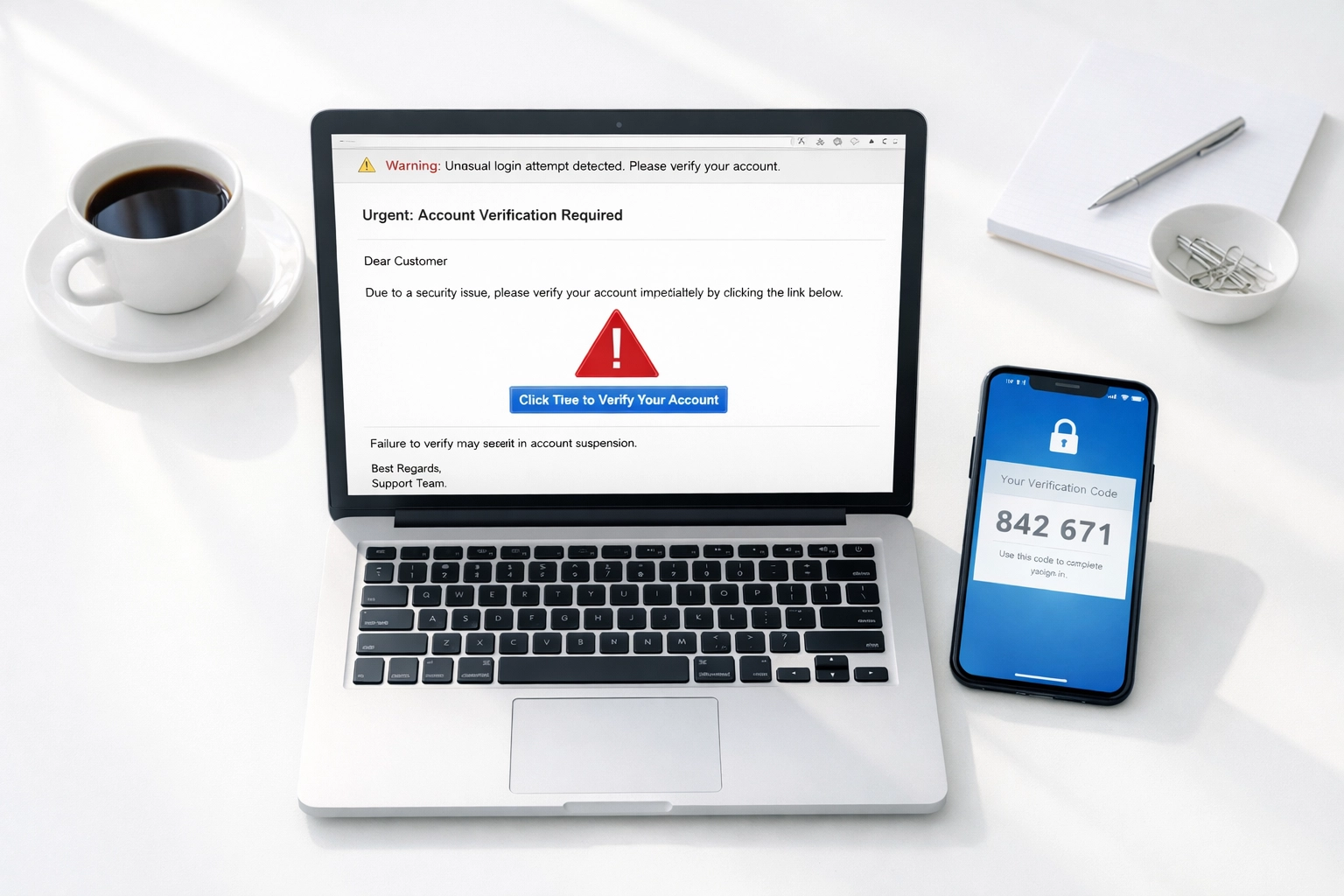
Your inbox looks totally normal. The email from "QuickBooks Support" has perfect grammar. It references your actual clients. The logo looks legit. You click the link.
And just like that, you've handed over the keys to your entire client database.
Here's the scary truth: AI has completely changed the phishing game, and accounting firms in Cedar Rapids and Iowa City are sitting ducks. The old red flags, misspellings, weird grammar, generic greetings, don't work anymore. Today's AI-powered phishing emails look exactly like the real thing.
If you're still relying on your team to "just be careful," you're playing Russian roulette with your clients' most sensitive financial data.
Why Accounting Firms Are Hackers' Favorite Target
Let's talk about why cybercriminals are obsessed with accounting firms.
You're literally sitting on a goldmine of valuable information: Social Security numbers, bank account details, tax returns, payroll data, everything a hacker needs to commit identity theft or drain bank accounts. And here's the kicker: you have access to dozens or even hundreds of clients. One successful phishing attack on your firm could compromise data for your entire client roster.
The IRS reported over 250 data breach incidents from tax professionals in 2024 alone. That's not just big national firms, that's small local practices getting hit hard.
And it gets worse. When your accounting firm gets breached, you don't just lose data. You lose:
- Client trust (good luck explaining to your clients that their Social Security numbers are now on the dark web)
- Your professional reputation (news travels fast in Cedar Rapids and Iowa City)
- Compliance standing (the IRS and FTC don't take data breaches lightly)
- Money (between ransom payments, recovery costs, and potential lawsuits, we're talking serious financial damage)
How AI Changed the Phishing Game
Remember when phishing emails were easy to spot? "Dear Sir/Madam, I am a Nigerian prince…"
Those days are over.
Today's AI-powered phishing attacks are terrifyingly sophisticated. We're talking about emails that:
- Use perfect grammar and professional language (no more obvious typos)
- Reference specific clients, tax seasons, or software you actually use (they've done their homework)
- Mimic the exact writing style of your software vendors or the IRS
- Create urgency with subject lines like "Urgent: Your QuickBooks subscription expires today"
Here's what makes this especially dangerous: 67% of email-based cyber attacks now leverage AI technology. These aren't random spam blasts anymore. They're targeted, personalized attacks designed specifically to fool you.
AI can scrape LinkedIn, your website, and public records to build a complete profile of your firm. It knows your name, your role, your clients, and the software you use. Then it crafts an email so convincing that even tech-savvy people fall for it.
The 5 Steps Your Cedar Rapids Firm Needs to Take Today
Alright, enough doom and gloom. Let's talk solutions. Here are five concrete steps you need to implement right now to protect your accounting firm from AI-powered phishing attacks.
1. Turn On Multi-Factor Authentication (MFA) Everywhere
This is your first line of defense, and it's non-negotiable.
Multi-factor authentication (MFA) means that even if a hacker steals your password through a phishing email, they still can't access your accounts without a second verification method (usually a code sent to your phone).
What to do: Enable MFA on every single account that touches client data, your tax software, email, cloud storage, banking portals, everything. Yes, it's slightly annoying to enter a code every time you log in. But you know what's more annoying? Explaining to 200 clients that their tax returns got leaked.
Pro tip: Use an authenticator app like Microsoft Authenticator or Google Authenticator instead of text messages. Text-based codes can be intercepted; authenticator apps are much more secure.
2. Run Quarterly Phishing Simulations and Mandatory Training
Your team is your weakest link, not because they're bad at their jobs, but because hackers specifically design attacks to exploit human psychology.
Traditional "watch this boring security video once a year" training doesn't cut it anymore. You need ongoing, realistic training that specifically addresses AI-powered threats.
What to do:
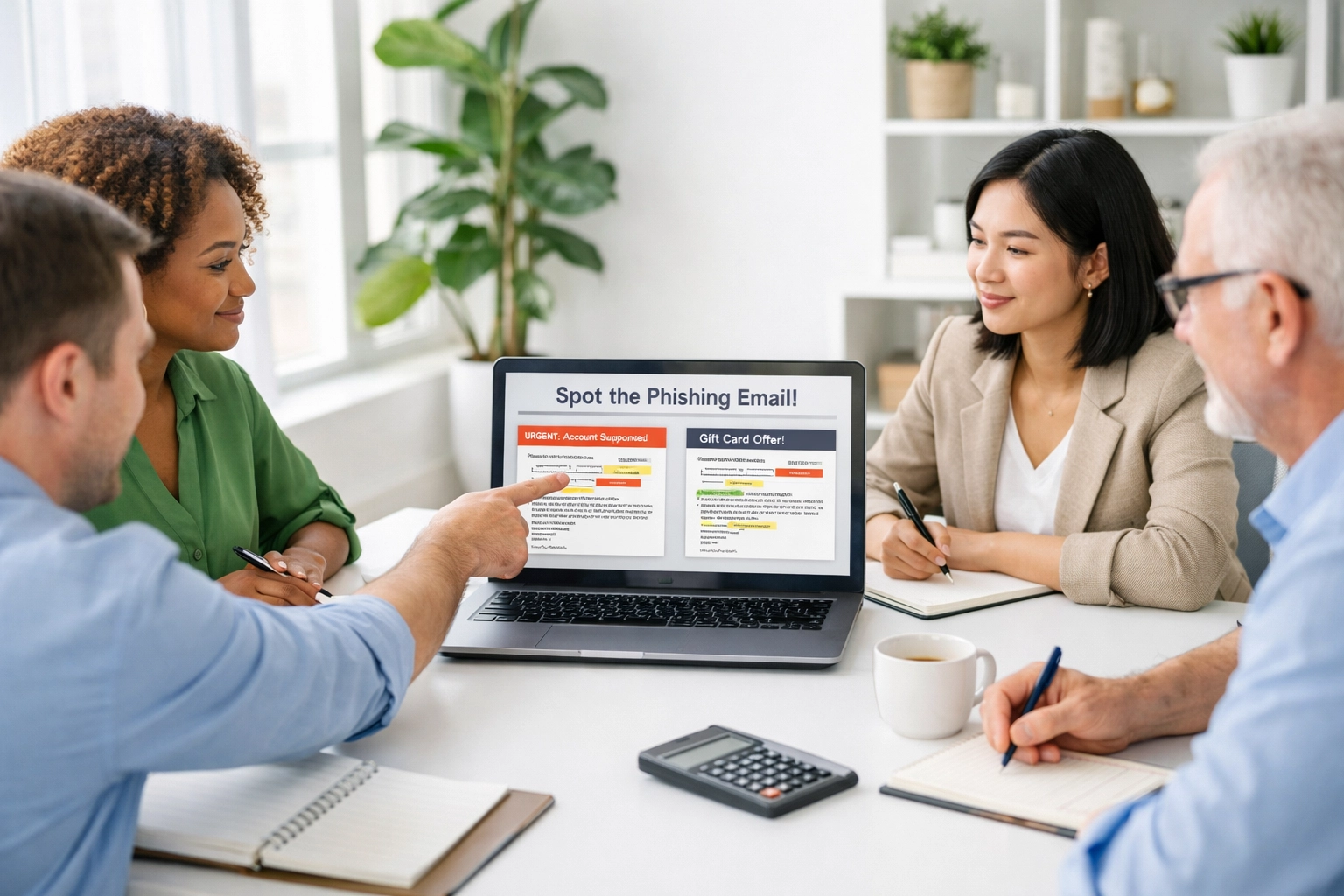
- Conduct quarterly phishing simulations where you send fake (but realistic) phishing emails to your staff
- Track who clicks on suspicious links
- Provide immediate, personalized training for anyone who falls for the simulation
- Hold mandatory training sessions that cover deepfake audio scams, fake vendor portals, and personalized phishing tactics
Ask yourself: When was the last time your team practiced identifying a phishing email? If the answer is "never" or "I can't remember," you've got work to do.
3. Deploy Advanced Email Security Filters
Your basic spam filter isn't designed to catch AI-powered phishing emails. You need intelligent, cloud-native email security that uses real-time analytics to spot suspicious patterns.
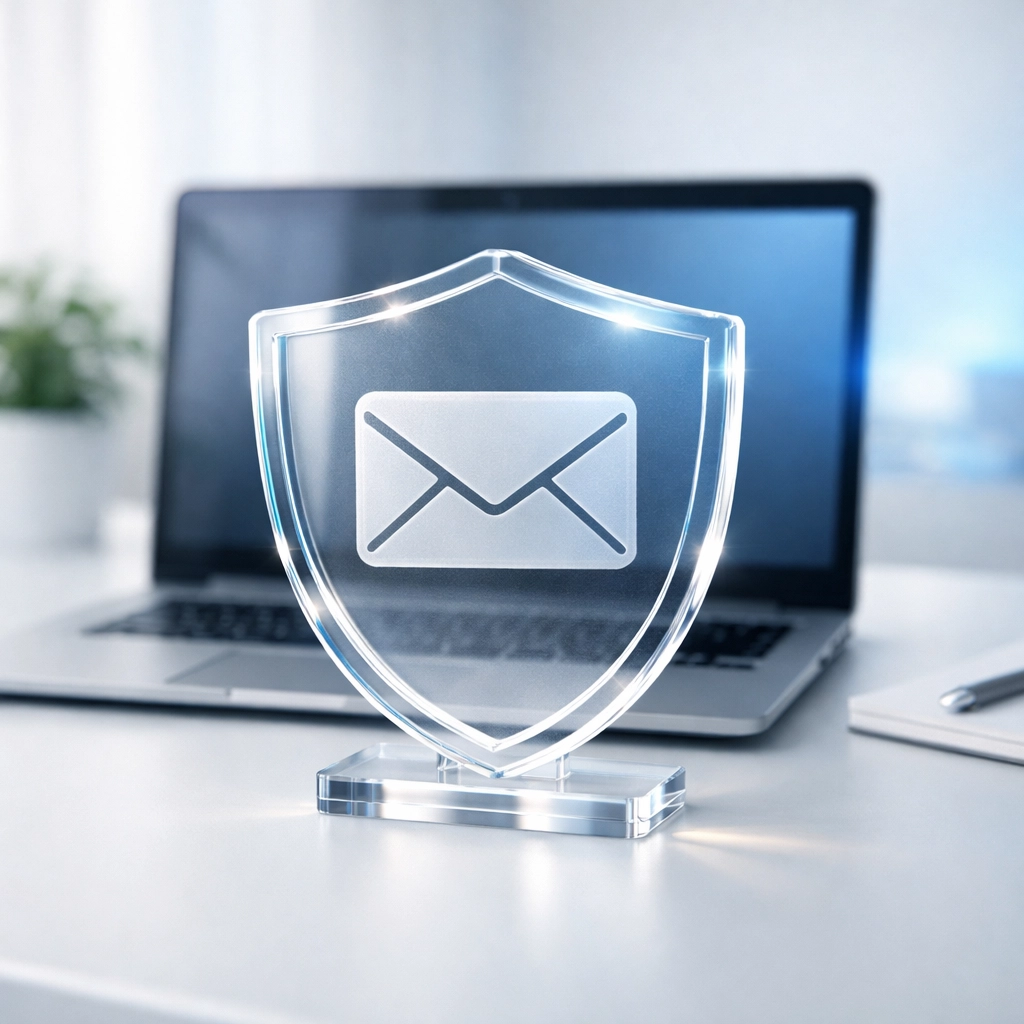
Modern email security solutions can:
- Analyze sender behavior patterns to detect impersonation attempts
- Scan links in real-time to identify newly created phishing sites
- Use AI to detect social engineering tactics in email content
- Quarantine suspicious emails before they reach your inbox
What to look for: Email security platforms that specifically mention AI-powered threat detection, behavioral analysis, and real-time link scanning. The goal is to catch phishing attempts before your team even sees them.
Pro tip: Look for solutions that integrate with your existing email provider (Microsoft 365, Google Workspace, etc.) rather than requiring you to switch platforms entirely.
4. Implement Automated, Encrypted Backups
Here's the harsh reality: No security system is 100% foolproof. If (when) you get hit with a ransomware attack that started with a phishing email, your backups are your lifeline.
What to do:
- Set up automated daily backups of all client data, tax files, and system configurations
- Store backups in multiple locations (local, cloud, and offline)
- Use encryption for all backup data
- Test your backups regularly (a backup you can't restore is useless)
- Keep at least one backup completely offline and disconnected from your network
Ask yourself: If ransomware encrypted all your files tomorrow, could you restore everything and be back to work within 24 hours? If you hesitated, your backup strategy needs work.
5. Partner with Professional Accounting Firm IT Support
Look, you're great at accounting. But blocking hackers and managing cybersecurity? That's a full-time job that requires specialized expertise.
Professional accounting firm IT services provide:
- 24/7 monitoring for suspicious activity
- Real-time threat detection and response
- Compliance assistance with IRS and FTC cybersecurity requirements
- Automated security updates and patch management
- Incident response plans for when (not if) something goes wrong

Here in Cedar Rapids and Iowa City, we understand the specific challenges local accounting firms face. Tax season chaos, client confidentiality requirements, compliance headaches, we get it. That's why dedicated accountants IT support isn't a luxury; it's essential protection.
What to look for: An IT support provider that specializes in accounting firms, offers 24/7 monitoring, and can show you specific examples of how they've helped similar firms prevent data breaches.
The Bottom Line for Cedar Rapids Accounting Firms
AI-powered phishing attacks aren't coming, they're already here. And they're getting more sophisticated every single day.
You can either take action now to protect your firm and your clients, or you can wait until you're explaining to the IRS why 150 clients' tax returns got compromised.
The five steps we've outlined aren't optional extras. They're the baseline for blocking hackers in 2026. Multi-factor authentication, ongoing staff training, advanced email filters, solid backups, and professional IT support, these are your non-negotiables.
Here's what you need to ask yourself right now:
- Could your team spot an AI-generated phishing email that references specific clients and uses perfect grammar?
- If ransomware hit tomorrow, could you restore all client data within 24 hours?
- Do you have someone monitoring your systems 24/7 for suspicious activity?
- Are you confident you're meeting IRS and FTC cybersecurity requirements?
If you answered "no" or "I'm not sure" to any of these questions, it's time to act.
The good news? You don't have to figure this out alone. Professional accounting firm IT support takes the burden off your shoulders, letting you focus on serving your clients while experts handle the security headaches.
Don't wait for a breach to take cybersecurity seriously. Your clients are counting on you to protect their most sensitive information. Make sure you're ready.
Need help assessing your current cybersecurity posture or implementing these five essential steps? Reach out to our team for a no-pressure conversation about protecting your Cedar Rapids or Iowa City accounting firm. We're local, we specialize in accounting firm IT services, and we're here to help you sleep better at night knowing your clients' data is secure.