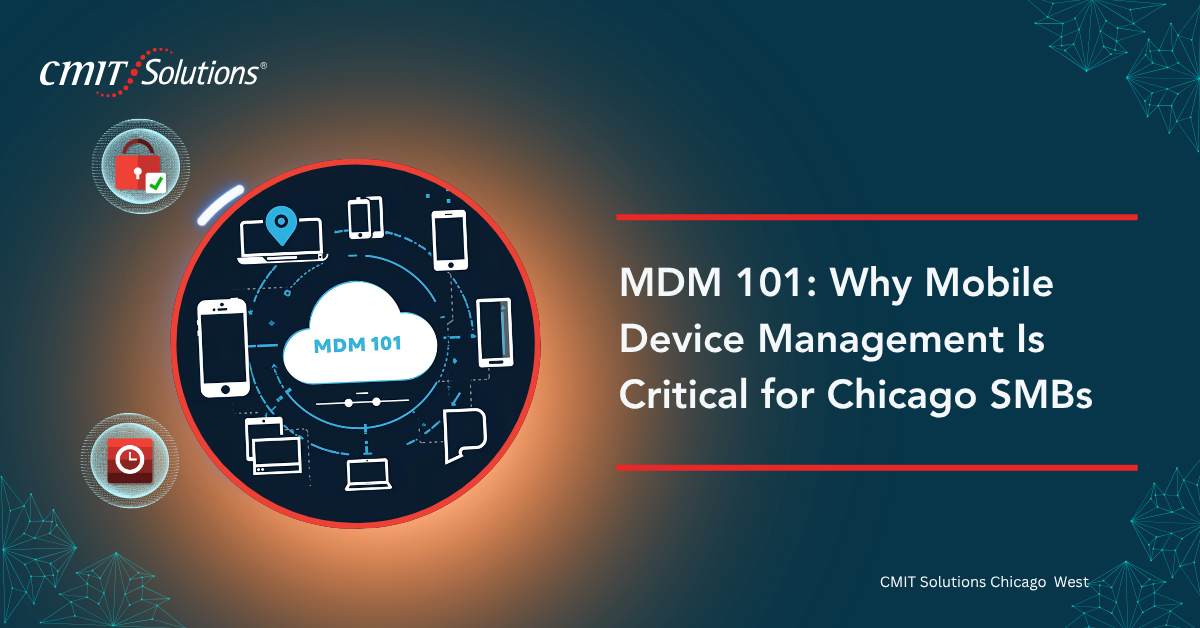
As small and midsize businesses (SMBs) in Chicago increasingly rely on mobile devices for daily operations, the need for effective Mobile Device Management (MDM) has never been greater. From smartphones and tablets to laptops and IoT devices, managing and securing these endpoints is critical to protect sensitive data, maintain productivity, and ensure regulatory compliance.
This guide explores why MDM is essential for Chicago SMBs and how it helps businesses stay secure, productive, and future-ready.
What is Mobile Device Management (MDM)?
Mobile Device Management (MDM) is a set of tools and policies that allow businesses to monitor, manage, and secure mobile devices used by employees. MDM enables IT teams to:
- Configure device settings and enforce security policies
- Track and locate company-owned devices
- Deploy apps and updates remotely
- Wipe data from lost or stolen devices
For SMBs, MDM provides centralized control over all mobile endpoints, reducing security risks and simplifying device management. Managed IT services often include MDM solutions to ensure businesses stay protected without overburdening internal IT staff.
Why MDM Matters for SMBs
Mobile devices are both a productivity booster and a potential security risk. Without proper management, SMBs face:
- Data breaches due to lost or stolen devices
- Unauthorized access to sensitive company information
- Non-compliance with industry regulations
- Disrupted workflows from inconsistent device performance
Implementing cloud security essentials ensures that mobile devices access corporate data securely, maintaining compliance while supporting remote work.
Securing Data Across All Devices
MDM solutions protect corporate and customer data by:
- Enforcing encryption and strong passwords
- Restricting access to sensitive applications
- Enabling remote wipe for lost or stolen devices
- Monitoring device usage for suspicious activity
Chicago SMBs can integrate MDM with network monitoring to detect anomalies and prevent security breaches before they affect operations.
Supporting Remote and Hybrid Workforces
As remote and hybrid work becomes standard, MDM ensures employees can work securely from anywhere:
- Remote configuration and updates reduce downtime
- Secure VPN and access controls protect sensitive information
- Device inventory management keeps IT teams aware of all endpoints
Using cloud services in conjunction with MDM enhances flexibility while maintaining high security standards.
Compliance and Regulatory Considerations
SMBs in industries such as healthcare, finance, and legal must meet strict regulatory standards. MDM helps enforce policies that support compliance with:
- HIPAA for healthcare data
- PCI DSS for payment processing
- State privacy laws like Illinois PIPA
Top IT compliance practices integrated with MDM reduce the risk of violations and fines while safeguarding sensitive information.
Streamlining IT Management and Productivity
MDM simplifies IT operations by centralizing device management:
- Automates app deployment and updates
- Tracks device usage and performance
- Provides analytics for better decision-making
- Reduces helpdesk requests and manual support
By pairing MDM with IT consulting, SMBs can create tailored policies and workflows that maximize efficiency without compromising security.

Choosing the Right MDM Solution
Selecting the right MDM solution depends on business size, device types, and security requirements:
- Cloud-based MDM: Ideal for businesses with remote or hybrid workforces
- On-premises MDM: Offers direct control over devices but requires IT resources
- Hybrid MDM: Combines cloud flexibility with on-premises oversight
Partnering with managed IT services providers helps Chicago SMBs evaluate options, implement the solution, and maintain ongoing support.
Conclusion: MDM as a Business Necessity
Mobile Device Management is no longer optional for SMBs it is a critical component of business security, productivity, and compliance. By implementing MDM alongside cloud security essentials, network monitoring, and managed IT services, Chicago SMBs can confidently secure mobile devices, streamline IT management, and support remote work without risk. A strategic MDM approach ensures that devices are secure, employees remain productive, and sensitive data stays protected laying the foundation for long-term growth and resilience.