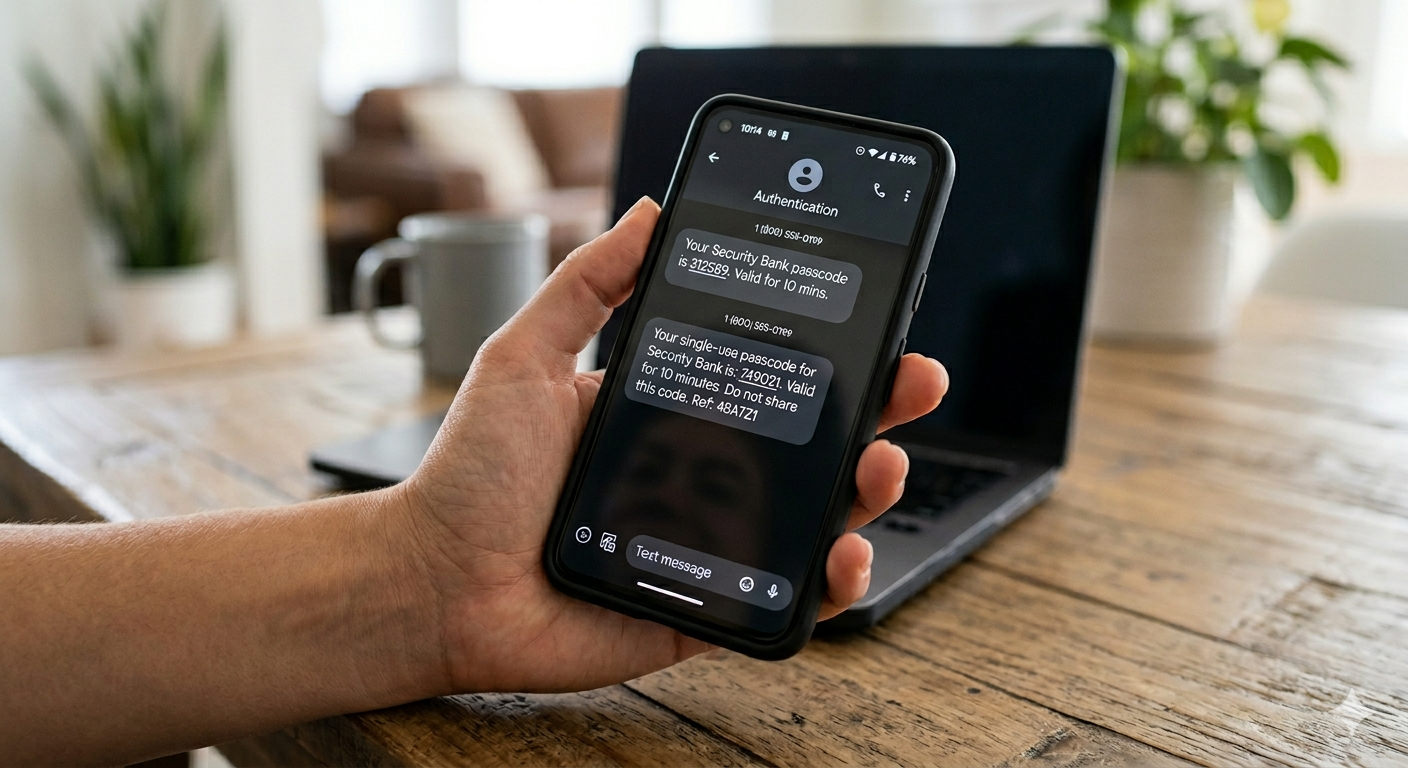
If you still use text messages for your 2-step logins, you’re playing defense with yesterday’s playbook. SMS codes were fine a few years ago, but today’s attackers know exactly how to beat them. For Columbus and Central Ohio businesses, especially small and mid-sized teams, it’s time to level up to phishing-resistant MFA that actually stops modern scams.
What’s wrong with SMS codes?
- Text messages can be intercepted. SMS runs on telecom tech with known flaws. Criminals can reroute or spy on codes without touching your phone.
- Fake login pages act as access points. If someone tricks you into a lookalike sign-in page, your password can be compromised.
- SIM swapping is a thing! A scammer convinces your carrier they’re you, moves your number to their SIM, and receives all your calls and texts, including bank and email codes.
None of this requires Hollywood-level hacking, just social engineering and persistence. That’s why SMS MFA no longer cuts it for cybersecurity for small business (or any organization that cares about its compliance).
Best options that work in the real world
Hardware security keys (the gold standard)
- What it is: A small USB/NFC device you tap or plug in when you log in.
- Why it’s better: No codes to type, nothing to phish, and attackers can’t steal it over the internet. Unless they physically have your key, they’re locked out.
- Great for: Executives, finance, IT admins, and anyone with access to sensitive data. Columbus firms in healthcare, finance, law, manufacturing, and local government love these for strong it compliance.
(PC Magazine has a great selection of rated security keys here.)
Authenticator apps with number matching
- What it is: Apps like Microsoft Authenticator or Google Authenticator generate codes on your phone, with no texts involved.
- Why it’s better: Stops SIM-swap and SMS interception. Turn on “number matching,” so you must type a number shown on your computer into the app; no more blind “Approve” taps during MFA fatigue attacks.
- Great for: Most teams who want a quick upgrade from SMS with little friction. A smart, low-cost move for cybersecurity for SMBs.
Passkeys (passwordless and easy)
- What it is: Secure, phishing-resistant login using your phone or laptop plus Face ID, fingerprint, or a PIN.
- Why it’s better: No passwords to steal, no one-time codes to phish. Your device and the real website exchange cryptographic proofs that scammers can’t fake.
- Great for: Everyday users. Works across ecosystems like iCloud Keychain and Google Password Manager and reduces help desk tickets.
How to roll it out without drama
- Start where risk is highest. Make phishing-resistant MFA mandatory for admins, executives, finance, and anyone with sensitive data.
- Pilot, then expand. Test with a small group, gather feedback, and roll out company-wide in phases.
- Explain the “why.” Share real examples of SIM swaps and phishing. When people understand the risk, they are more likely to accept the new terms.
- Keep backups. Issue two keys for critical users (one stays in a safe). Enable recovery options for passkeys.
What happens if you don’t upgrade?
- False sense of security. SMS checks a box, but it won’t stop today’s attacks.
- Real downtime, real money. Breaches cost far more than hardware keys or modern MFA management. Lost hours, lost trust, incident response, and none of that is cheap.
- Compliance headaches. Many frameworks now expect phishing-resistant MFA for high-privilege accounts. Staying ahead makes audits easier.
Quick cheat sheet: what to choose
- Highest security: Hardware security keys (FIDO2)
- Best balance: Authenticator app with number matching
- Easiest user experience: Passkeys (can use across multiple accounts, as opposed to a password)
If you’re looking for a managed service provider that knows Columbus and Central Ohio businesses, we’re here to help. We design rollouts that fit your tools, your people, and your budget. Our team handles planning, training, device setup, and compliance alignment, so you get stronger security without slowing the business.
This article was heavily inspired by The Technology Press.