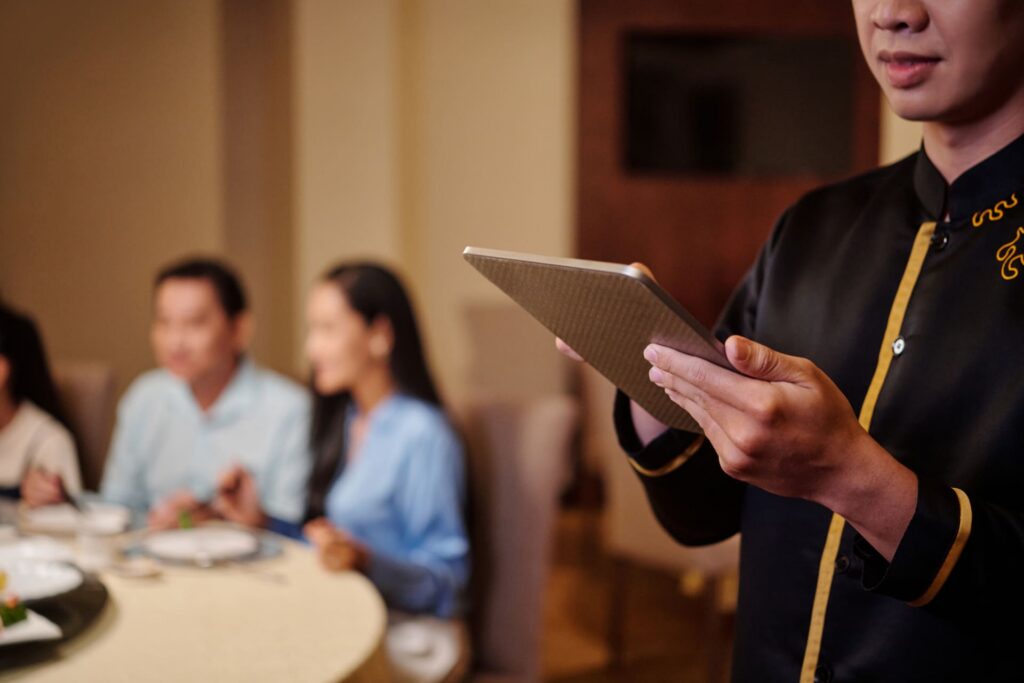
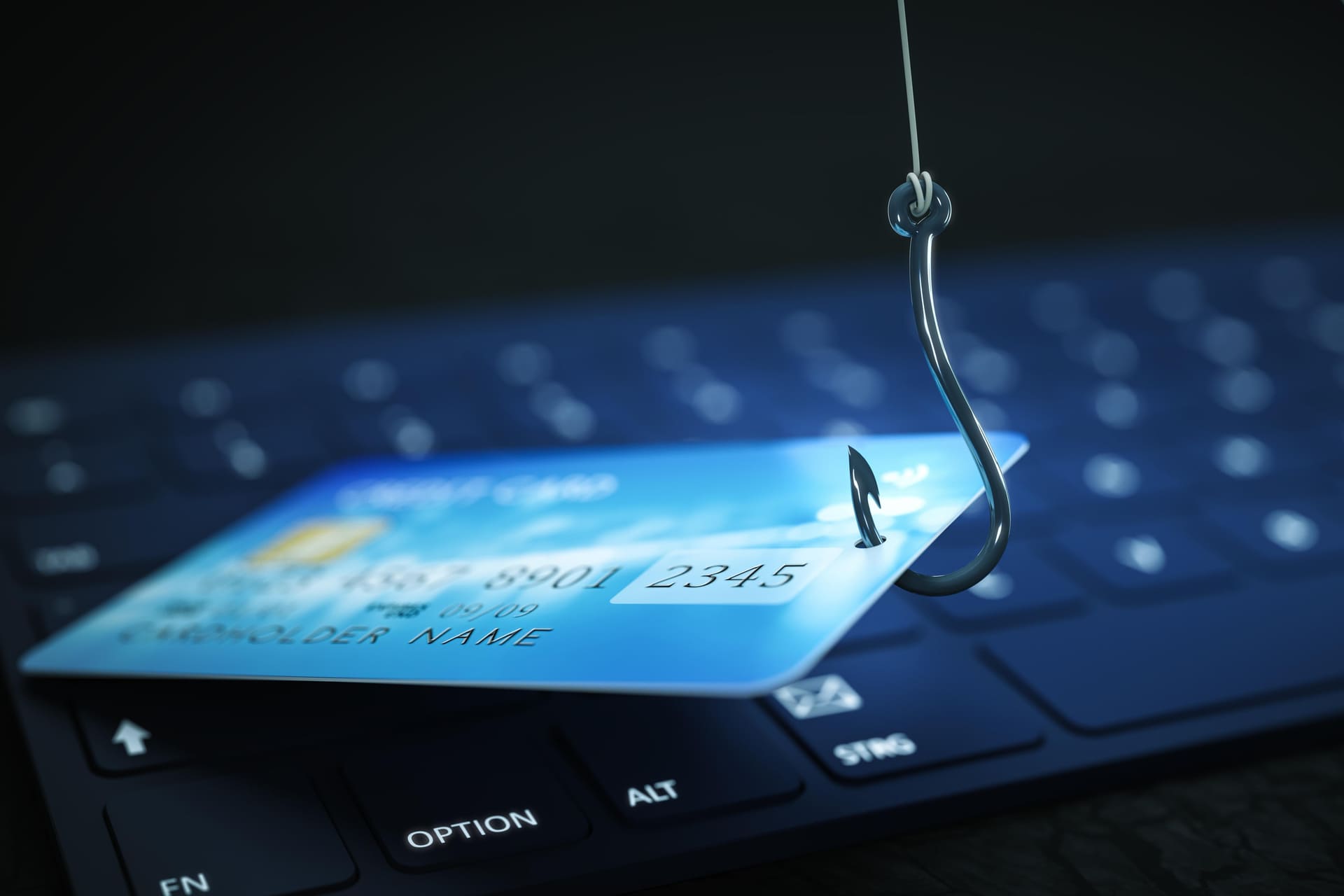
AI phishing attacks are exploiting hospitality staff in 2026 by impersonating regional management, vendors, and corporate booking agents with a level of realism that traditional training did not prepare your teams to spot:
- Fake booking modification emails
- Fraudulent vendor invoices
- GM impersonation texts
- Deepfake voice calls
- HR and payroll scams targeting seasonal staff
CMIT Solutions helps hotel groups, restaurant chains, and management companies address this shift with managed network protection, helpdesk-led verification workflows, and role-based staff training built for high-turnover environments.
Generative AI has removed the obvious red flags that used to give phishing emails away. The misspellings, awkward translations, and generic greetings are gone.
What hospitality teams are seeing now are messages that mirror real internal communications, real vendor invoices, and real guest correspondence.
For multi-location hotel and restaurant groups, the operational reality is harder than the headline. Front desks run 24/7. Finance teams process vendor payments at volume. HR onboards seasonal staff in waves.
Each of these workflows is now a target, and the cost of a single successful attack, whether measured in PCI DSS penalties or operational downtime at the front desk or POS, lands squarely on the bottom line.
We work with hospitality operators as a trusted technology advisor, not just an IT vendor, helping them control that exposure with predictable, fully managed support.
Talk to our team about hotel IT support built for multi-location hospitality groups.
The 5 AI-driven phishing attacks targeting hotels right now
The threats hospitality teams are seeing in 2026 are not theoretical. The five attack types below are the most common scenarios reported across hotel groups, restaurant chains, and multi-property management companies this year.
- Fake booking modification emails: A message arrives at the front desk claiming a corporate guest needs to modify an existing reservation, change the billing card on file, or apply a different rate code. The email mirrors the OTA’s exact branding and references a real booking reference.
- Fraudulent vendor invoices: Finance receives an invoice from what appears to be a known linen supplier, F&B distributor, or maintenance contractor. The invoice format matches the real vendor’s template. The only change is the bank account details for ACH payment.
- GM impersonation texts: A property general manager appears to text a front desk supervisor or finance lead asking them to “handle a quick request,” usually a gift card purchase, a wire transfer, or a payroll redirect. The number is spoofed; the urgency and tone are convincing.
- Deepfake voice calls: A caller impersonating a regional director or corporate executive contacts the front desk or finance team to request immediate action. Without a clear verification path, staff have no reliable way to confirm the request before acting on it.
- HR and payroll scams targeting seasonal staff: New seasonal hires receive emails posing as HR or payroll asking them to “confirm direct deposit details” through a phishing portal. Seasonal staff often lack the institutional knowledge to flag this as unusual.
CMIT Solutions helps hospitality groups address each of these attack patterns through managed network protection, helpdesk management that gives staff a single responsive point of contact for unusual requests, and training shaped to the role each staff member actually performs.
Why hospitality staff are prime phishing targets
Hospitality staff are prime phishing targets because the operating model itself creates exposure: high staff turnover that leaves credentials and system access unmanaged, fast-paced service, constant vendor communication, and fragmented IT across multiple properties with no unified visibility. Attackers know this, and AI lets them exploit it at scale across hundreds of properties at once.
A front desk agent managing a busy shift at 7 pm is not going to scrutinize the sender domain on an “urgent corporate booking” email. A finance clerk reconciling fifty vendor invoices on a Friday afternoon is not going to call back every supplier to verify ACH details.
The pressure is operational, and attackers design their campaigns around it. Distributed properties make the problem worse. A hotel group with twenty locations has twenty front desks, twenty finance touchpoints, and twenty sets of vendor relationships.
Inconsistent IT across those properties means one compromised mailbox can become a launchpad into the rest of the group.
Hospitality groups working with CMIT Solutions gain consistent IT standards and a single accountable partner across every property, backed by a nationwide network of IT and cybersecurity professionals that delivers locally responsive support without the gaps that fragmented vendor relationships create.
How AI is making phishing attacks harder to spot
AI is making phishing attacks harder to spot by closing the credibility gaps that used to expose them. The four areas where the shift is most visible are grammar, personalization, brand impersonation, and multilingual reach.
- Grammar and tone: Large language models produce (mostly) flawless business English and match the formal, brand-consistent tone of real corporate communications. The clumsy phrasing that used to flag a message as suspicious is gone.
- Personalization at scale: Attackers scrape LinkedIn, hotel websites, and trade publications to build profiles of specific staff. AI then drafts messages that reference real names, real properties, real reporting lines, and real ongoing projects.
- Brand impersonation: AI tools can replicate the visual identity, signature blocks, and writing style of major hospitality brands, booking platforms, and vendor systems with near-perfect fidelity. A spoofed OTA or booking platform notification now looks indistinguishable from a real one.
- Multilingual attacks: Hospitality is a multilingual industry. AI lets attackers run the same campaign in English, Spanish, French, Mandarin, and Portuguese with native-level fluency, opening up staff who were previously protected by the language barrier.
CMIT Solutions helps hospitality groups adapt to this shift by combining managed monitoring with role-based training that keeps pace with the way attacks are evolving.
See how we can help: contact us to talk through your current exposure.
A realistic scenario: the “urgent corporate booking” at 11 pm
Consider a hypothetical scenario at a mid-size hotel in a multi-property group.
It is 11 pm. The night auditor at the front desk receives an email that appears to come from the regional operations director.
The email is well-written, uses the regional director’s real signature block, and references an upcoming corporate event the property is genuinely hosting. It asks the night auditor to immediately process a block of rooms for a “VIP corporate guest arriving early tomorrow morning” and apply a specific rate code that bypasses standard authorization.
A follow-up text from a spoofed mobile number reinforces the urgency.
The breakdown point is the verification path. Without a clear, fast, internally supported way to confirm an unusual request out-of-band, whether by calling a known number, escalating through helpdesk, or routing through a documented approval workflow, the night auditor is left to make a judgment call alone at 11 pm.
CMIT Solutions closes that gap with a managed helpdesk that gives front desk teams a real-time channel to verify unusual requests, regardless of the hour or property.
What’s actually at risk when an attack lands
When an AI phishing attack succeeds against a hospitality target, the downstream damage extends well beyond a single compromised mailbox. POS or PMS system downtime disrupts service and revenue, payment card data exposure opens PCI-DSS compliance gaps, and the operational fallout cuts across systems, operational continuity, and bottom-line cost.
- PMS compromise: Access to the Property Management System exposes reservations, internal occupancy schedules, folio data, and rate structures across the property, and in chain environments, potentially across multiple properties through shared credentials.
- Payment theft: Compromised access to booking systems or POS environments puts payment card data directly at risk. PCI DSS exposure follows immediately, with penalties governed by the PCI Security Standards Council.
- Loyalty account fraud: Loyalty program compromise creates direct financial losses through fraudulent redemptions and exposes the broader payment environment to further access attempts.
- Data privacy exposure: PII exposure from a compromised PMS or booking system triggers obligations under state and federal data privacy frameworks. The FTC’s privacy and security guidance outlines the baseline expectations for businesses handling sensitive commercial and employee information.
- Operational disruption during peak occupancy: A successful intrusion during a peak weekend, conference, or holiday window can knock the front desk, POS, or booking system offline at the exact moment revenue is highest and recovery is hardest. The unplanned spend that follows, including emergency vendor calls, overtime, and lost bookings, is precisely the kind of reactive IT cost that scalable, consolidated managed services are designed to eliminate, handling seasonal demand without the emergency spend that follows an incident.
Each of these exposures has a controllable layer. Our advisory work with hospitality groups covers the controls that limit blast radius, the segmentation that protects payment environments, and the PCI DSS support that keeps a phishing event from becoming a compliance event.
Why traditional awareness training is no longer enough
Traditional phishing awareness training was built around teaching staff to spot patterns: bad grammar, suspicious greetings, urgent tone, mismatched logos. AI has erased those patterns.
The training that worked in 2022 is now teaching staff to look for warning signs that no longer appear in the attacks they will actually face.
Generic, once-a-year training videos do not address the reality of a hospitality environment either. A front desk agent, a payroll clerk, an HR coordinator, and a regional manager all face fundamentally different attack profiles.
Training them with the same content treats four distinct risk surfaces as one.
The shift now underway is toward role-based training, frequent micro-content, and live simulation exercises that reflect the actual attack types each team is being targeted with.
Role-based training for hospitality teams
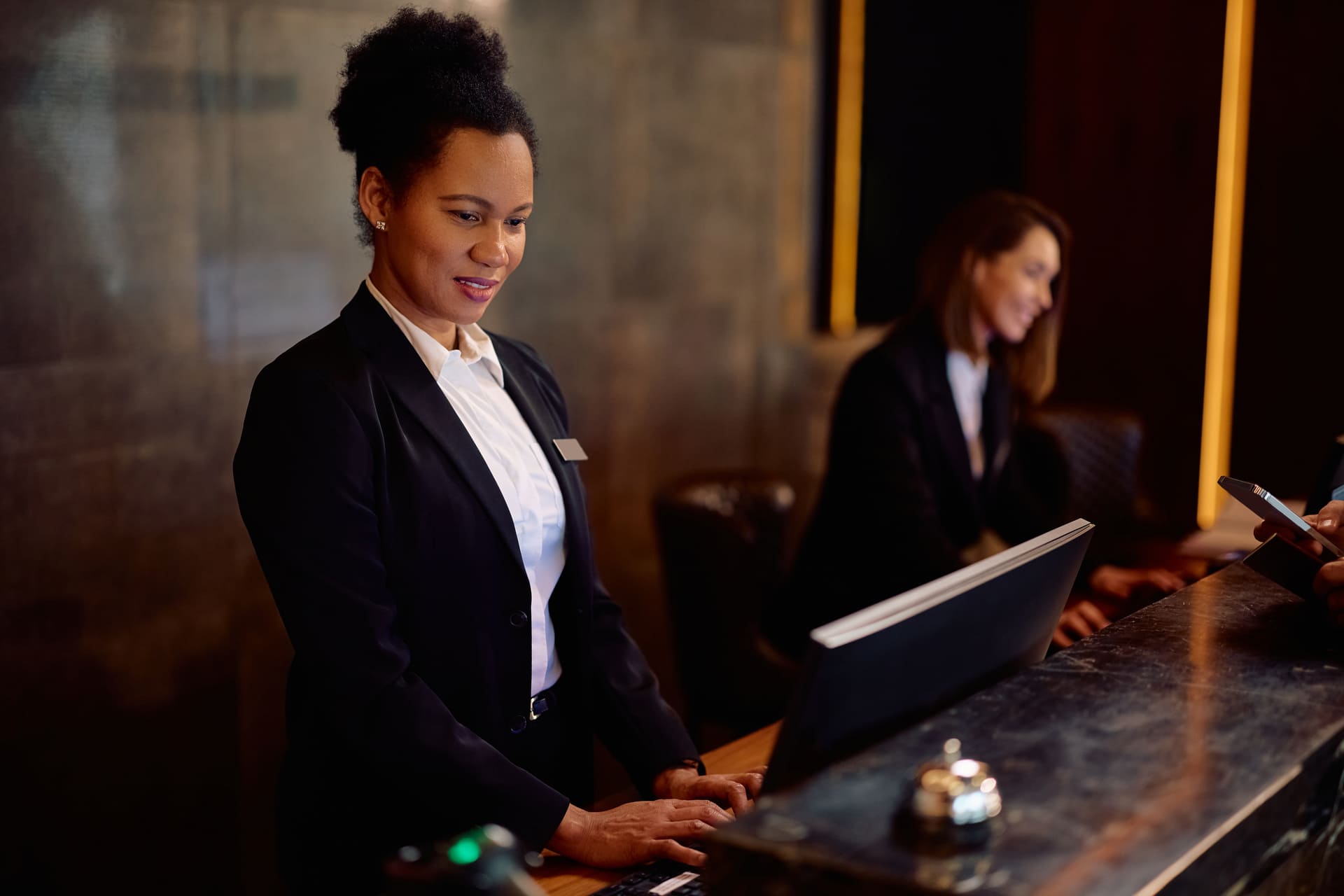
Effective phishing training for hospitality treats each role as a distinct risk surface. The table below outlines the primary AI phishing vectors each team faces and the training focus that addresses them.
| Role | Primary AI phishing exposure | Training focus |
| Front desk and night audit | Fake booking modifications, GM impersonation texts, deepfake voice calls | Out-of-band verification protocols, escalation paths, recognizing urgency-based manipulation |
| Finance and AP | Fraudulent vendor invoices, ACH redirect requests, fake purchase orders | Vendor verification workflows, dual-approval for banking changes, invoice fingerprinting |
| HR and payroll | Direct deposit phishing, seasonal hire onboarding scams, W-2 requests | Secure onboarding workflows, verified communication channels for payroll changes |
| General managers and regional leadership | Targeted spear phishing, executive impersonation, account takeover attempts | Personal exposure awareness, MFA on all admin accounts, scrutiny of unusual internal requests |
| Seasonal and temporary staff | HR/payroll scams, credential harvesting through fake portals | Short-format onboarding training, clear reporting paths, time-limited credential issuance |
CMIT Solutions tailors training across these tiers as part of a single managed program, with refresh cycles built around the seasonal hiring patterns hospitality groups actually operate on.
Ready to build training that fits your operation? Get in touch with our hospitality team.
How managed detection and response shortens the window between compromise and discovery
No training program prevents 100% of successful phishing attempts. The next-most-important question is how quickly a compromised account or device gets detected and contained, especially in operations where staff often absorb IT responsibilities outside their primary role and lack the time or expertise to monitor for compromise in real time.
That is where managed detection and response (MDR) and continuous monitoring make the operational difference.
Many hospitality properties already operate MDR solutions. The question is whether those solutions are configured for the specific risk profile of a multi-property hospitality environment: segmented guest networks, distributed POS, shared PMS access, and high-volume vendor communications across the group.
Generic MDR coverage often misses the lateral movement patterns specific to this industry.
CMIT Solutions acts as a trusted technology advisor for hospitality groups, integrating monitoring with managed network segmentation, helpdesk-led incident response, and ongoing training that reduces credential misuse and human error in high-turnover environments. When something does get through, the goal is to compress the time between compromise and containment, before the attacker reaches the PMS, the payment environment or back-of-house operational systems.
Additional reading: cyber insurance explained
Keep property systems online, compliant, and predictable to budget
Many hospitality groups deal with multiple vendors, creating accountability gaps across locations, unpredictable IT costs, and reactive break-fix spending that makes budgeting difficult in an uncertain economy. CMIT Solutions works with multi-location hotel groups, restaurant chains, and management companies as a trusted technology advisor, combining locally responsive support with the strength of a nationwide network of IT and cybersecurity professionals.
The focus is on keeping property management systems and payment infrastructure running, protecting payment card data, and maintaining PCI DSS compliance across every property, with strategic technology guidance aligned to your operational and business goals. AI phishing is now part of the operational risk picture, and we help groups address it through a coordinated set of managed services that deliver consistent IT across every location without the overhead of managing it internally.
- Managed Network with segmentation: Reliable, segmented network infrastructure across front-of-house, back-of-house, and guest-facing systems limits the blast radius if a phishing attack lands on a single mailbox.
- Helpdesk Management as a verification layer: A single responsive helpdesk gives staff a clear path to verify unusual requests in real time, replacing the judgment-call gap that AI phishing is designed to exploit.
- On-site Device Management: Proactive hardware maintenance and patching across distributed properties closes the device-level vulnerabilities that follow-on attacks rely on.
- Role-based Security Awareness Training: Training built for the distinct exposure profiles of front desk, finance, HR, management, and seasonal staff, refreshed frequently enough to reflect current attack types.
- PCI DSS compliance support: Maintaining a compliant payment environment across every payment touchpoint, from the front desk to restaurant POS to online booking, so a phishing event does not become a compliance event. Non-compliance penalties and the reputational fallout that follow a payment data breach hit the bottom line directly.
- Fixed, predictable managed services costs: Fixed monthly managed services costs give hospitality groups a stable operational budget across every property, replacing fragmented vendor relationships and the unpredictable break-fix spending that follows an incident.
Call us at (800) 399-2648 or contact us to talk through how we can keep your systems online, your payment environment compliant, and your IT costs predictable.
FAQs
How do I verify an unusual request from a manager or vendor?
Always verify out-of-band, meaning through a different channel than the one the request came from. Call a known internal number from your directory, not a number provided in the message. CMIT Solutions builds helpdesk-led verification paths so hospitality staff can confirm unusual requests in real time.
What should hotel staff do right after clicking a suspicious phishing link?
Hotel staff should disconnect the device from the network, report to IT or helpdesk immediately, and change any credentials entered. Do not delete the email; investigators need it. CMIT Solutions helps hospitality groups build clear post-click response paths that contain lateral movement before it spreads.
How long does it typically take to detect a compromised hospitality mailbox?
Without continuous monitoring, compromised mailboxes commonly stay active for weeks before discovery, often only surfacing when finance notices a fraudulent transfer or an internal ledger audit flags an unauthorized transfer. With CMIT Solutions’ managed detection tuned to hospitality workflows, the window can be compressed to hours or days.
How often should hotels run phishing simulations for their staff?
For high-turnover hospitality environments, monthly simulations targeted to specific roles work better than annual blanket exercises. New seasonal hires should receive a baseline simulation within their first two weeks of starting. CMIT Solutions designs training cycles around the seasonal hiring patterns that hospitality groups actually operate on.
Does cyber insurance cover losses from AI-driven phishing attacks?
Coverage varies significantly by policy and insurer. Most cyber policies cover some phishing-related losses, but social engineering and authorized transfer fraud often require specific endorsements. Insurers also increasingly require documented training programs, MFA, and monitoring as conditions of coverage, directly affecting whether claims pay out.