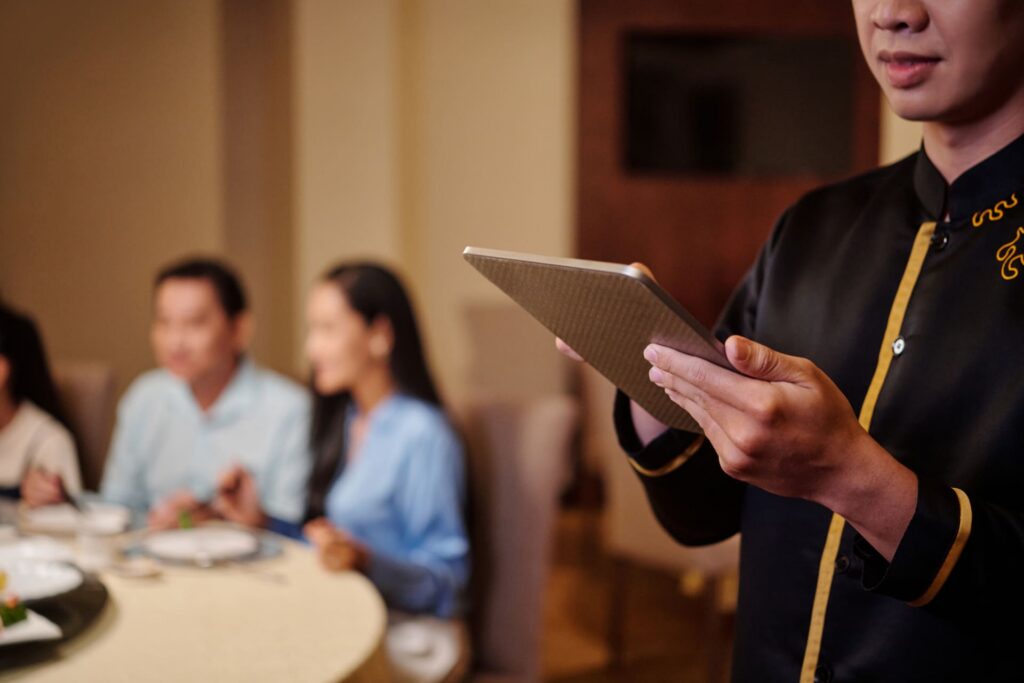

In our experience at CMIT Solutions, the biggest hotel technology trends reshaping hospitality are:
- Cloud-based PMS platforms
- AI-driven revenue tools
- IoT smart room systems
- Contactless payment infrastructure
These are driving a wave of property upgrades that demand more from IT than most operators have planned for. CMIT Solutions works with hotel groups and management companies across the country to ensure the networks, devices, and helpdesk support behind these technology upgrades are reliable, compliant, and cost-controlled from day one.
Modern hotel tech stacks are more complex than they were five years ago. Cloud-based property management systems, AI-driven revenue tools, mobile check-in platforms, and integrated POS systems all depend on network infrastructure that is stable, segmented, and consistently managed, and that complexity has a direct cost if it is not planned for.
For operators running multiple properties, the challenge is not just adopting new technology. That is where the right IT partner makes the difference, keeping technology performing predictably across every location without letting costs spiral out of control.
Find out how CMIT’s hotel IT support keeps your properties running without the break-fix bills.
Why Hotel Technology Upgrades Create IT Infrastructure Challenges
Hotel technology upgrades rarely happen in isolation, and the reactive IT costs they trigger are rarely budgeted for. When a property migrates to a new PMS, adds self-check-in kiosks, or rolls out mobile key technology, every one of those systems places new demands on the underlying network.
Bandwidth requirements increase, device counts grow, and the number of vendors involved in a single property’s IT environment can multiply quickly.
For multi-property groups, these challenges compound. A flag transition from one brand to another, for example, typically involves mandatory technology upgrades across the portfolio.
New PMS requirements, updated POS systems, and revised network segmentation standards all need to be implemented on a defined timeline. Properties that do not have a managed IT partner in place often find that reactive break-fix spending during these transitions is far more expensive than a planned, predictable support structure.
Staff absorbing IT responsibilities is another common pressure point. When a front desk supervisor is troubleshooting a network issue instead of managing check-in operations, that is an operational cost that rarely appears on a technology budget but always shows up somewhere on the bottom line.
CMIT Solutions replaces that fragmented, reactive model with single-vendor accountability and fixed, predictable managed services costs across every property in a group.
💡 Additional reading: M&A due diligence
4 Hotel Technology Trends For the Hospitality Industry
1. Cloud-Based PMS Platforms: What the Infrastructure Demands
For hotel operators, PMS downtime is not an IT inconvenience. It stops check-in, check-out, and room assignment in their tracks, and cloud-based platforms like Oracle OPERA Cloud, Cloudbeds, and Agilysys have made property connectivity the single dependency those operations cannot afford to lose.
If the internet connection at a property goes down, the PMS goes with it.
This dependency makes network reliability a business-critical requirement, not an IT preference. Properties need redundant connectivity, proper firewall configuration, and a segmented network architecture that separates back-of-house systems from public-access network traffic.
Without that segmentation, an unmanaged device on the property network can present a pathway to systems that handle payment card data and booking records, which creates direct PCI DSS compliance exposure.
For hotel groups running a shared PMS environment across locations, consistent network standards at every property are not a nice-to-have. They are a condition of keeping the platform operational, compliant with PCI DSS requirements, and aligned with data privacy obligations for booking records and payment information.
CMIT Solutions’ Managed Network services deliver the reliable, segmented connectivity that cloud-based PMS platforms depend on, with consistent standards enforced across every property in a group.

2. AI-Driven Revenue Tools
When IT infrastructure is not aligned with operational goals, even the most sophisticated technology fails to deliver. Artificial intelligence tools in hospitality, from revenue management platforms that adjust pricing in real time to automated housekeeping scheduling and predictive demand forecasting, generate real operational value only when the infrastructure supporting them is maintained and monitored.
AI-powered revenue management systems, for example, pull data continuously from a PMS, competitive rate feeds, and internal booking engines. If the devices running those integrations are outdated, unsupported, or poorly maintained, the data quality feeding the AI degrades.
Automation tools for internal staff coordination and logistics automation follow the same logic. They rely on devices, network connections, and software that need proactive management.
CMIT Solutions acts as a strategic IT partner for hotel operators, ensuring the hardware and firmware supporting these tools stay current and that new technology investments are adopted with the infrastructure confidence to back them up.
Ready to bring your hotel’s IT infrastructure in line with your technology investment? Contact us to get started.
3. IoT and Smart Room Systems: Network Segmentation and Device Management
Every IoT device added to a hotel property is also a potential payment card data exposure point if it is not properly managed.
Smart thermostats, keyless entry systems, in-room tablets, and voice-activated controls offer genuine operational value, and energy management systems alone can reduce utility costs meaningfully when properly configured. Each one also extends the network perimeter that PCI DSS compliance requires operators to control.
The practical challenge for operators is that IoT devices are often deployed quickly during a renovation or upgrade cycle and then left without a structured maintenance process. Firmware becomes outdated, default credentials remain in place, and devices accumulate on a network without anyone maintaining a current inventory.
For properties handling payment card data, this creates PCI DSS audit exposure. The PCI Security Standards Council requires that organizations maintain an inventory of system components in scope for cardholder data protection, and IoT devices connected to the property network can fall within that scope depending on their configuration.
CMIT Solutions manages network segmentation, device inventories, and patch cycles for hotel groups, giving operators the efficiency benefits of smart room technology without the compliance exposure that unmanaged endpoints create. For high-turnover hospitality environments, we also deliver Security Awareness Training that reduces the credential misuse and human error that compliance auditors flag most often.
💡 Additional reading: hotel privacy laws
4. Contactless Payment Infrastructure
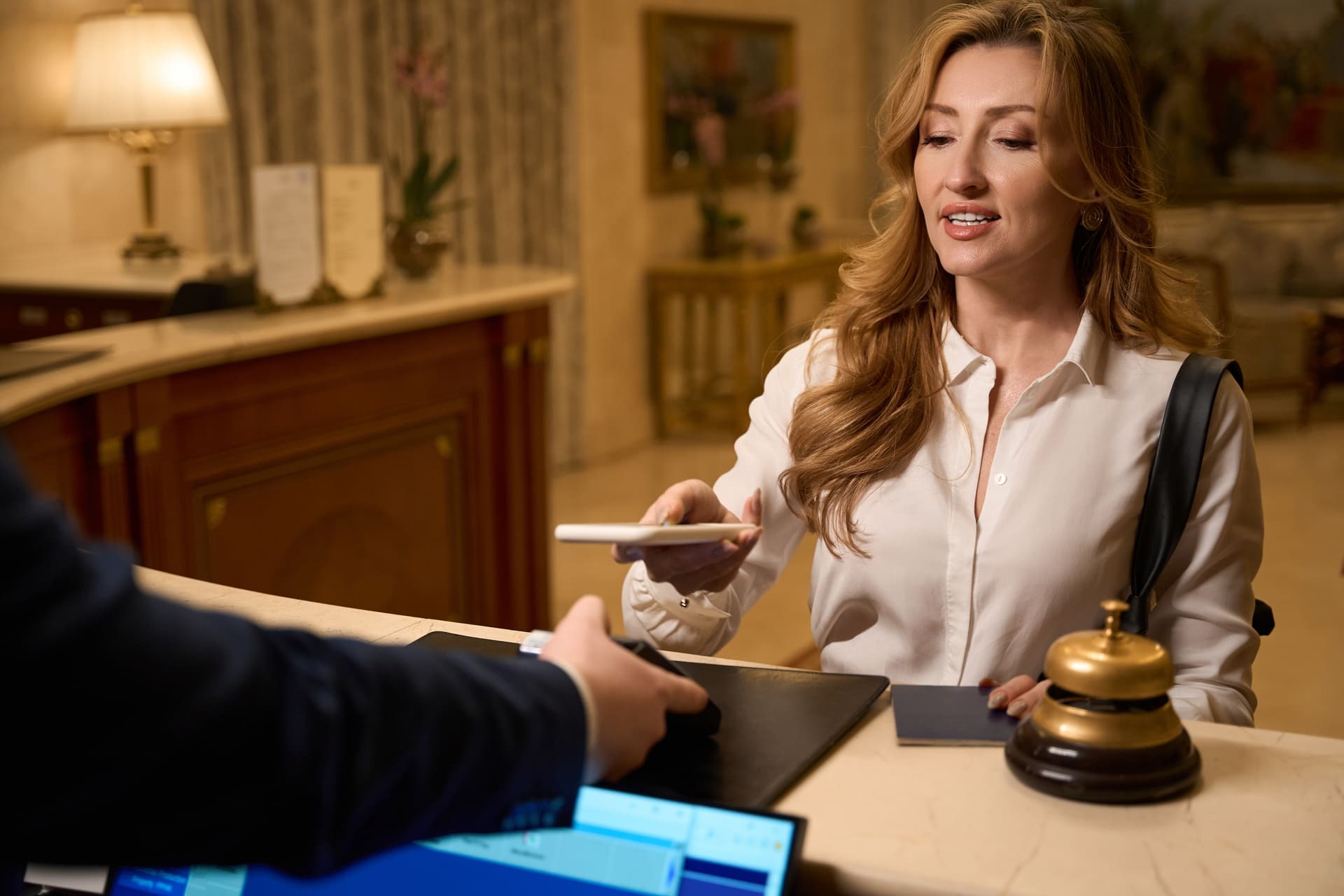
In high-turnover hospitality environments, the same mobile and contactless systems that streamline check-in can become access control liabilities when staff credentials are not properly managed. Mobile check-in and digital room key technology have moved from differentiator to standard expectation across most branded hotel categories, with Marriott and Hilton operating these programs portfolio-wide and brand standards increasingly requiring them at the property level.
From an IT perspective, these systems depend on reliable network connectivity and properly provisioned mobile device infrastructure at the front desk. Staff need devices that are maintained, updated, and working during peak check-in hours.
If the device a front desk associate uses to override a mobile key or complete a digital check-in sequence is outdated or unresponsive, the operational efficiency gain from the technology is lost.
Contactless payment technology at POS terminals carries additional compliance weight. Any terminal processing card-present transactions must be PCI DSS compliant, and that compliance requirement does not pause during a technology rollout or upgrade cycle.
CMIT Solutions keeps payment card environments compliant across every touchpoint during upgrades, ensuring that new contactless infrastructure meets PCI DSS requirements from the point of deployment rather than as a remediation task after the fact.
Data Analytics and Revenue Management: The Devices and Connectivity Behind the Insights
Without consistent IT guidance, revenue management and analytics tools quickly become expensive platforms that underperform. These systems aggregate booking data, rate data, and demand signals to support pricing decisions that directly affect RevPAR, but they depend on infrastructure that most operators do not have the internal expertise to keep fully optimized.
The American Hotel and Lodging Association tracks technology investment priorities across the sector, and revenue management tools consistently rank among the most actively adopted upgrades for property operators.
For these tools to function accurately, the devices and connectivity they depend on need to be consistently maintained. A revenue management system pulling stale data because a back-of-house workstation has not been updated in six months, or because a PMS integration has dropped connection due to a network configuration issue, is not delivering its intended value.
Multi-property groups also face the challenge of data consistency. When different properties in a group are running different hardware generations, different network configurations, or different software update schedules, the data flowing into a centralized analytics platform is inconsistent by design.
CMIT Solutions standardizes IT infrastructure across a hotel portfolio, giving management companies the consistent data environment their analytics and revenue platforms depend on.
Managing multiple properties and need consistent IT across every location? Contact us to find out how CMIT can help.
Sustainability Technology and the IT Overhead it Creates
Every sustainability technology added to a property brings a device management overhead that compounds quietly into unpredictable IT costs. Energy management systems, smart HVAC controls, water-saving sensors, and occupancy-based lighting reduce utility spend when they work correctly, but without a structured management process, the reactive IT spend they generate can offset those savings.
The pattern is consistent: a sustainability technology rollout adds network endpoints, creates new device management requirements, and introduces software that needs to be kept current. For operators without a structured IT management process, the overhead accumulates with each new system.
CMIT Solutions proactively manages the device and network overhead that sustainability technology creates, ensuring the cost control benefits of these systems are not offset by reactive IT spend. With locally based technicians backed by a nationwide network of IT professionals, we deliver that support consistently across every property in a group.
Seasonal Demand, Technology Scalability, and the Cost of Getting It Wrong
Hospitality operates on seasonal cycles, and IT infrastructure that performs adequately in a slow period can fail under the demand of a peak season. A property adding 300 check-ins per day in July, compared to 80 in February, faces a network capacity and device availability challenge that rarely appears on the technology roadmap until it causes a disruption.
Technology that works in off-peak conditions may not be adequately sized for peak demand. Networks that carry light traffic in the shoulder season may saturate when public-access network usage peaks.
POS systems that process moderate transaction volumes may slow or fail under the load of a fully booked property during a holiday weekend. For hotel groups, these failure points are predictable.
The cost of addressing them reactively after a peak-season failure is consistently higher than the cost of planning for them in advance.
CMIT Solutions provisions and monitors scalable IT infrastructure for hotel groups, so peak seasons arrive with a fully prepared technology environment rather than a reactive repair plan. Fixed managed services costs mean there are no emergency IT bills when demand spikes, just infrastructure that was built to handle it.
Multi-Location IT Consistency: The Operational Case for a Single Managed Partner
For hotel groups managing more than one property, IT inconsistency across locations is one of the most persistent operational drags on efficiency and budget predictability. When each property in a portfolio is running different vendors, different hardware generations, different software update schedules, and different support arrangements, there is no unified visibility into the group’s IT environment.
This fragmentation has direct cost implications. Multiple vendor contracts across a portfolio mean multiple points of accountability, multiple billing cycles, and multiple service level agreements to manage.
When something breaks, the question of which vendor is responsible is not always straightforward, and that ambiguity costs time.
CMIT Solutions works with hotel groups to consolidate IT management across properties under a single, accountable partner. With a nationwide network of locally based IT professionals, CMIT delivers consistent standards and on-site support at each property while giving group-level operators unified visibility across the portfolio.
Fixed, predictable managed services costs replace the reactive break-fix spending that fragmented vendor arrangements generate.
Looking to replace fragmented vendor arrangements with a single accountable partner? Contact us to learn more.
How CMIT Solutions Helps Hotel Groups Keep IT Infrastructure Aligned With Technology Investment
When IT is disconnected from the operational and business goals of a hotel group, technology investments underperform, and budgets absorb costs that should never have occurred. CMIT Solutions partners with hotel groups and management companies as a trusted technology advisor, aligning IT directly with operational goals and ensuring networks, devices, and helpdesk support are managed proactively, maintained consistently, and kept compliant with PCI DSS requirements at every location.
CMIT’s Managed Network services deliver reliable, segmented connectivity across all property areas, from back-of-house systems and POS terminals to public-access networks. Helpdesk Management gives staff a single, responsive point of contact for IT issues across every location, backed by a nationwide network of IT professionals and delivered by locally based technicians who can be on-site when needed.
On-site Device Management keeps hardware maintained, updated, and operational across every property, so the systems staff depend on during peak service hours are reliable and ready, with no internal device management overhead sitting on the hotel group’s books.
Whether managing a single property or a portfolio of locations, CMIT delivers consistent IT standards and proactive support across every site, so operators get enterprise-level IT capability without the cost or complexity of managing it internally.
Keep your property management systems online, your IT costs predictable, and your payment infrastructure compliant. Contact us or call us at (800) 399-2648 to speak with a CMIT hospitality IT specialist.
FAQs
What IT work is required when a hotel changes flags or undergoes a brand upgrade?
A hotel flag transition typically requires network reconfiguration, new PMS installations, updated POS systems, and revised segmentation standards, all within a defined brand timeline. CMIT Solutions manages each of those IT components, handling device provisioning and connectivity validation so the transition stays on schedule without generating unplanned break-fix costs.
What does PCI DSS compliance actually require from a hotel’s network?
PCI DSS compliance requires that any network environment processing payment card data is properly segmented, monitored, and documented. CMIT Solutions helps hotel operators build and maintain a compliant network architecture, covering payment system segmentation and the audit documentation that card brands and compliance assessors require at every property.
How do hotel staff get IT support when there is no on-site technician at the property?
CMIT Solutions gives hotel staff a single helpdesk contact for IT issues across every property in a group, with no on-site IT headcount required at each location. Staff reach CMIT directly for fast resolution, and when a problem needs hands-on attention, a locally based CMIT technician can dispatch.
How does CMIT Solutions manage IT for a hotel group when each property uses different vendors?
CMIT Solutions works with hotel groups to replace fragmented, per-property vendor arrangements with a single, accountable managed IT partner across every location. The consolidation is handled to minimize disruption at each site, and the result is consistent IT standards, unified portfolio visibility, and predictable monthly costs, replacing variable break-fix spending.
What is the best way to prevent POS and PMS downtime at a hotel during peak seasons?
Preventing POS and PMS downtime requires proactive device maintenance, not reactive repairs. CMIT Solutions’ On-site Device Management keeps hotel hardware updated and monitored on a regular schedule, so front desk terminals and F&B systems are fully operational before a high-demand period begins, not serviced after a failure disrupts one.