
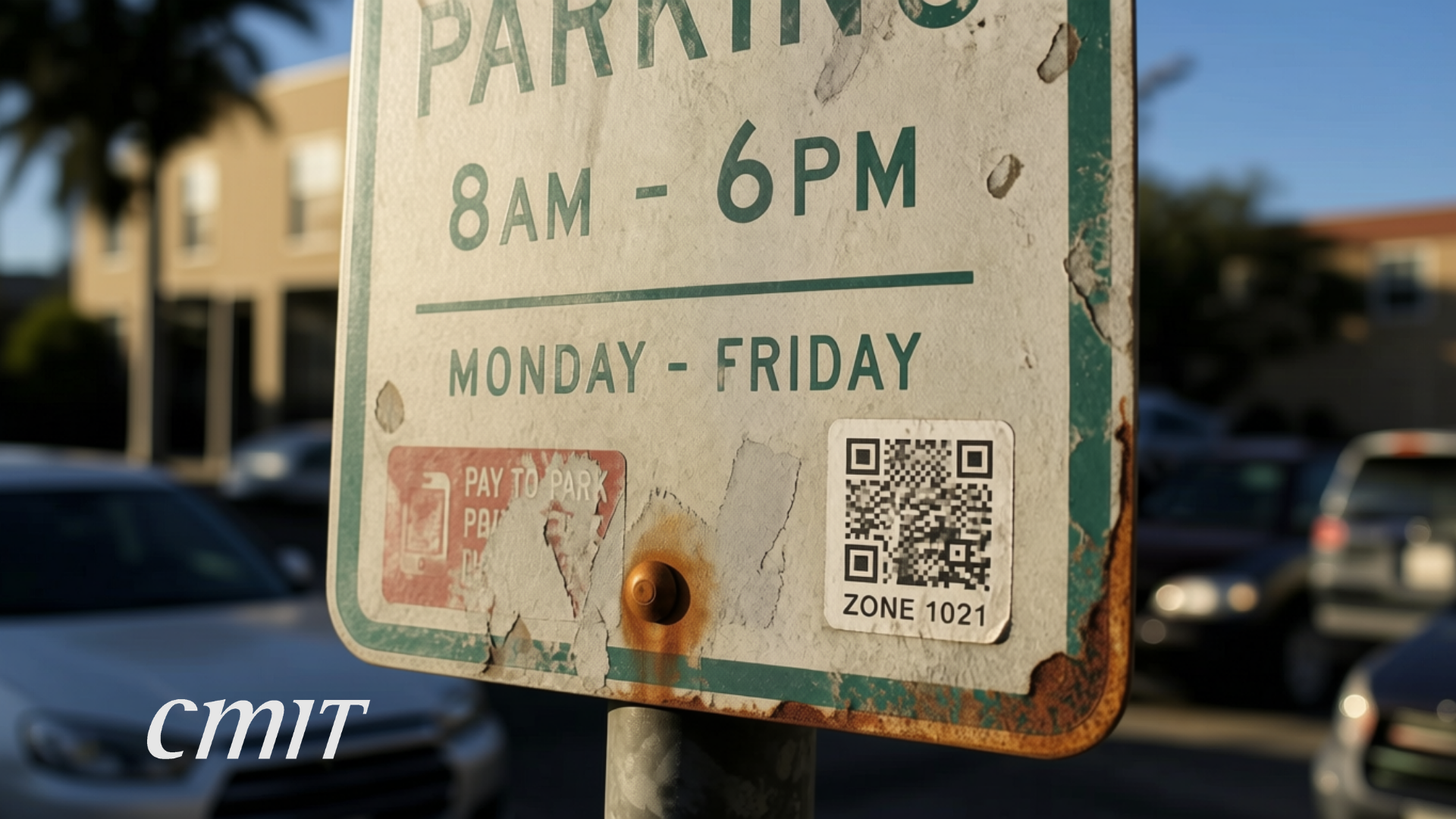
We pulled into a beach parking lot this week on vacation, the kind that charges enough to make you check your bank balance twice, and the rate sign at the entrance turned into an unplanned lesson in how a QR code scam actually works. The sign posting the rate was worn from salt air, corners peeling, decorated with the usual mix of surf stickers and graffiti you’d expect on something that’s stood there through a decade of beach traffic. Bolted to the bottom was a QR code for anyone who hadn’t already downloaded the parking app.
How a QR Code Scam Hides in Plain Sight
My first instinct was to distrust it. A beat up sign covered in random stickers is exactly the kind of surface a scammer would pick. One more sticker blends right in.
Then I ran the alternate version through my head. What if the sign had been pristine and freshly painted, with no graffiti anywhere? What if the QR code sat in a clean printed box exactly where the parking authority would put it? Would that have earned more trust. It shouldn’t have. Faking a clean sticker in exactly the right spot isn’t any harder than faking a messy one. It might be easier. A scammer with a laminator and twenty minutes can make something that looks more official than the real sign ever did.
Why Quishing Fools You Either Way
That’s the part worth sitting with. The condition of the sign tells you nothing about the code. A QR code is just a picture of a web address. Unlike a text link, you cannot read where it points before you commit to opening it. Someone prints a sticker with their own code and sizes it to match the original. Then they press it directly over the real one. The lot still looks like a lot. The rate still looks right. The only thing that changed is which server your phone talks to next. The FTC has documented this exact scam on parking meters as a recurring pattern, not an isolated incident.
Protecting Yourself from a QR Code Scam
What makes this work in a parking lot specifically is the pressure of the moment. You are standing in the sun while the meter runs. The parking authority trained you to scan the code, pay, and move on. That trained behavior is the vulnerability. This is not the first time misplaced trust in something that looked legitimate has shown up in this newsletter. Earlier this year, a business owner nearly lost fifty thousand dollars to a fraudulent invoice. It arrived through a LinkedIn conversation that felt entirely normal until it wasn’t. The fix here is not judging the sign. It’s reading the link your phone’s camera shows you before you tap it. Confirm it points to the actual parking authority’s domain, not something close enough to pass a glance. If anything looks off, walk to the pay station or open the real app directly instead.


