
Most business owners in Des Moines and Overland Park assume that hiring in-house IT gives them more control and better service. The reality is exactly the opposite for growing companies in 2026.
Here’s what’s actually happening: businesses with 10-250 employees are discovering that in-house IT creates more problems than it solves. The cost is higher, the expertise is limited, and the coverage gaps are dangerous.
This misconception is costing growing companies real money and putting them at serious risk.
The True Cost of In-House IT in 2026
When business owners calculate IT costs, they typically think about salary. That’s where the math gets them into trouble.
A single in-house IT person costs $150,000+ annually when you factor in everything:
• Base salary: $85,000-$95,000 for qualified candidates
• Benefits and taxes: $25,000-$30,000
• Security tools and software licenses: $20,000-$25,000
• Backup and disaster recovery systems: $10,000-$15,000
• Training and certifications: $3,000-$5,000
• Equipment and workspace: $2,000-$3,000
That’s before you consider what happens when they’re sick, on vacation, or leave the company.
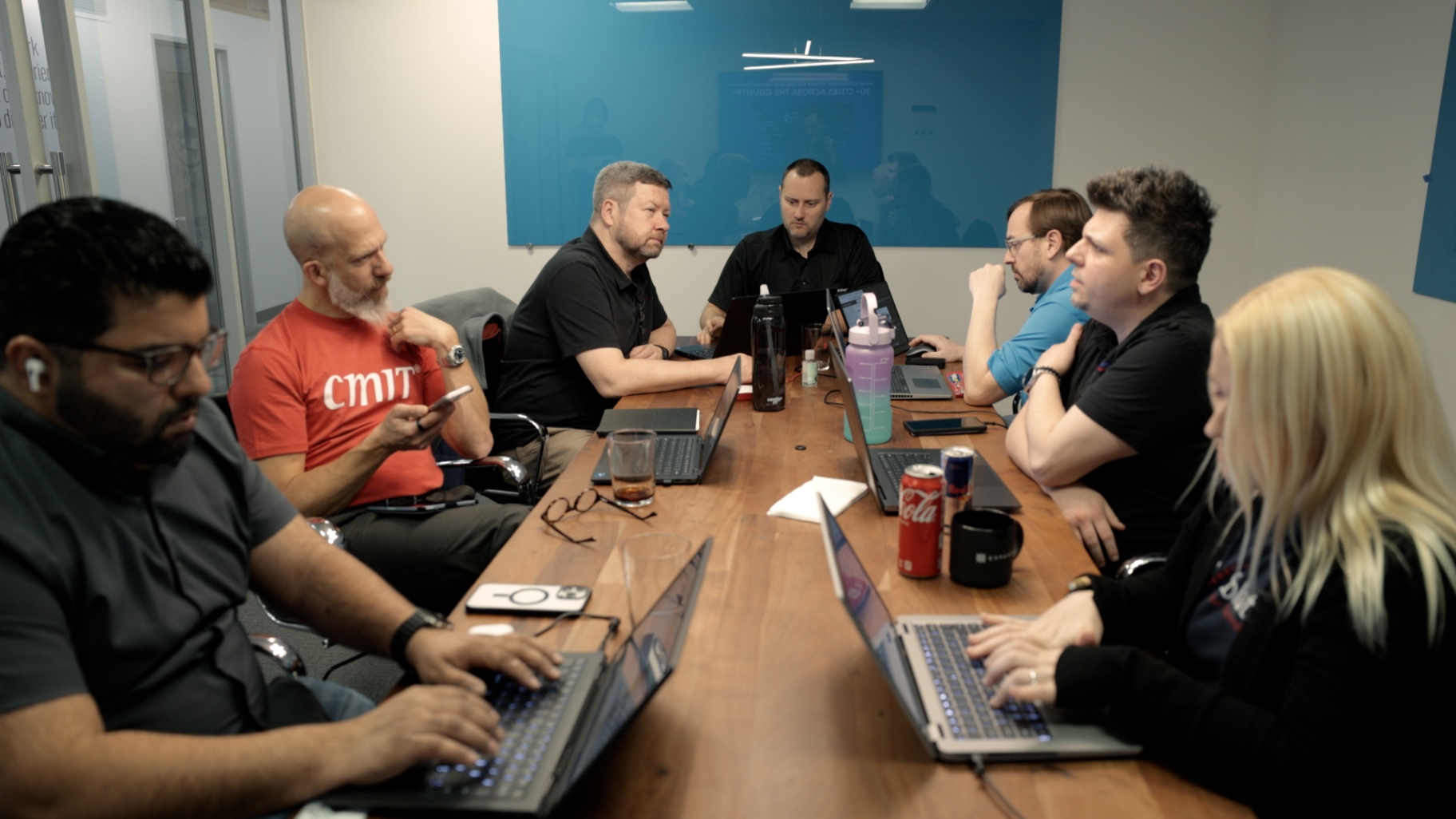
A managed IT provider typically costs $100-$200 per user per month with no additional overhead. For a 25-person company, that’s $2,500-$5,000 monthly versus $12,500+ for one in-house employee who can’t provide 24/7 coverage.
The math is clear: managed IT saves most growing companies $60,000-$80,000 annually while delivering better service.
Why Growing Companies Need More Than One Person Can Deliver
Business owners who’ve never managed IT don’t realize how specialized the field has become. In 2026, your IT needs span multiple disciplines:
Cybersecurity expertise to defend against AI-powered attacks and sophisticated social engineering
Cloud architecture to manage hybrid environments across multiple platforms
Compliance knowledge for industry regulations and data protection requirements
AI governance to manage new tools safely while maintaining productivity
Network security to protect endpoints, servers, and mobile devices
Backup and disaster recovery to ensure business continuity
One person cannot master all these areas. Even if they could, they can’t monitor your systems 24/7 or respond to emergencies during off-hours.
Growing companies need this breadth of expertise because they’re expanding into new markets, adding locations, and scaling operations. The IT complexity grows faster than the business itself.

The Coverage Gap That Kills Growing Businesses
Here’s the risk that keeps business owners up at night: what happens when your IT person is unavailable?
Vacation, sick leave, family emergencies, or simply leaving for another job creates immediate vulnerability. Your business operations don’t pause for IT staffing gaps.
A managed IT provider eliminates this risk completely:
• 24/7 monitoring and response
• Multiple technicians with different specializations
• Established escalation procedures
• Documented systems and processes
• No single point of failure
For growing companies, this continuity is critical. You can’t afford to lose momentum because your IT person is out of the office.
Modern Threats Require Team-Level Response
The cybersecurity landscape in 2026 demands immediate, expert response. Attackers use AI to automate reconnaissance, credential theft, and system infiltration. They target growing businesses specifically because they assume these companies have weaker defenses.
Your in-house IT person may be skilled, but they’re handling threats alone. They’re learning about new attack vectors in real-time, often after the damage is done.
Managed IT providers see thousands of attacks across their client base. They identify patterns, implement countermeasures, and share intelligence across their entire network. This collective defense is far more effective than individual response.
When an attack happens, you want a team of specialists responding, not one person trying to figure it out under pressure.
Scalability: The Deciding Factor for Growth
Growing companies need IT that scales seamlessly with business expansion. Adding employees, opening locations, or integrating new software should be straightforward, not months-long projects.
In-house IT creates scaling bottlenecks:
• New hires require additional IT headcount
• Complex projects exceed individual capacity
• Knowledge transfer becomes critical vulnerability
• Training and onboarding slow response times
Managed IT providers scale automatically with your growth. They have the staff, tools, and processes to support rapid expansion without hiring delays or capability gaps.

When In-House IT Makes Sense
In-house IT works for specific situations, but they’re less common than most business owners assume.
Consider in-house IT if:
• Your company has 200+ employees with significant IT complexity
• You operate in highly regulated industries requiring on-site presence
• You have proprietary systems requiring dedicated, specialized knowledge
• Your IT budget exceeds $500,000 annually
For most growing companies in Des Moines and Overland Park, these conditions don’t apply. You need reliable, comprehensive IT support without the overhead of building an internal department.
The Hybrid Approach: Best of Both Worlds
Some growing companies choose a hybrid model: one in-house coordinator working with a managed IT provider. This gives you local presence for day-to-day needs while maintaining access to specialized expertise and 24/7 coverage.
This approach works when:
• You have location-specific requirements
• Your team prefers face-to-face IT interaction
• You want internal oversight of external providers
• Your budget allows for both approaches
The key is ensuring clear responsibilities and avoiding gaps between internal and external coverage.
What This Means for Your Decision
For most growing companies in 2026, managed IT delivers better results at lower cost with less risk.
You get:
• Predictable monthly costs with no surprise expenses
• Access to specialized expertise across all IT disciplines
• 24/7 monitoring and response capabilities
• Scalable support that grows with your business
• Enterprise-grade security tools and processes
The decision comes down to whether you want to focus on building your business or managing IT infrastructure. Growing companies that choose managed IT can redirect their attention and resources toward revenue-generating activities.
Making the Transition
If you’re currently relying on basic IT support or considering your first dedicated IT hire, this is the right time to evaluate your options.
Start by understanding what comprehensive IT support looks like for a company your size. Most business owners underestimate their actual IT requirements until they see what proactive management delivers.
This is where having a conversation with an experienced provider makes sense. You can understand the specific benefits for your situation without committing to anything.
At CMIT Solutions, we help growing companies in Des Moines and Overland Park make these decisions with complete clarity. We show you exactly what managed IT includes, how it scales with your growth, and what the real costs are compared to building internal capability.
Contact us for a straightforward assessment of your current IT situation and future requirements. This conversation helps you make the right decision for your company’s growth trajectory.