
Cyber Risk & Insurance Readiness
Reduce Cyber Risk. Strengthen Resilience. Improve Insurance Readiness.
Cybersecurity is no longer just a technology issue—it is a business risk issue.
Organizations today face increasing pressure from cyber threats, cyber insurance requirements, compliance obligations, client security expectations, and operational risks.
CMIT Solutions of Northwest Metro Detroit helps organizations identify cyber risks, strengthen security controls, improve resilience, and prepare for evolving insurance and compliance requirements.
[Schedule a Cyber Risk Technology Assessment]
Learn More

Why Cyber Risk Matters
Cyber incidents can impact far more than technology systems.
Potential impacts include:
- Operational disruptions
- Financial losses
- Client trust concerns
- Regulatory issues
- Compliance violations
- Business interruptions
- Reputational damage
Many organizations have security tools in place but lack a clear understanding of their overall cyber risk exposure.
A structured cyber risk assessment helps leadership understand where vulnerabilities exist and what actions should be prioritized.
Understanding Cyber Risk
Cyber risk is the potential for technology-related events to negatively impact business operations, finances, reputation, compliance, or customer relationships.
Effective cyber risk management helps organizations answer questions such as:
- What are our biggest cybersecurity risks?
- How vulnerable are we to ransomware?
- What security gaps require immediate attention?
- Are we meeting client expectations?
- Are we prepared to respond to an incident?
- How resilient are our operations?
Cyber Risk Assessment
Identify Risks Before They Become Incidents
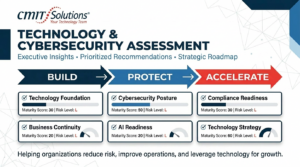
Our Cyber Risk Assessment evaluates your organization’s security posture, operational resilience, and readiness for evolving threats.
Areas Reviewed
- Identity & Access Management
- Multi-Factor Authentication
- Endpoint Security
- Email Security
- Backup & Recovery
- Vulnerability Management
- Security Awareness
- Vendor Risk
- Incident Response Planning
- Business Continuity Planning
- Technology Governance
Outcomes
- Improved risk visibility
- Prioritized recommendations
- Better decision-making
- Increased resilience
Cyber Insurance Readiness
Prepare for Increasing Insurance Requirements
Cyber insurance carriers continue to raise expectations regarding security controls and risk management practices.
Organizations often discover coverage challenges during policy renewals or claim investigations.
Areas We Help Address
- Multi-Factor Authentication
- Endpoint Protection
- Email Security
- Security Awareness Training
- Backup Validation
- Incident Response Planning
- Vulnerability Management
- Vendor Risk Management
- Documentation & Policies
Outcomes
- Improved insurance readiness
- Better understanding of coverage requirements
- Reduced underwriting concerns
- Increased confidence during renewals
Compliance & Security Governance
Many organizations face compliance obligations related to protecting sensitive information.
Common Areas of Focus
- Written Information Security Programs (WISP)
- FTC Safeguards Rule
- HIPAA Security Requirements
- Cybersecurity Policies
- Risk Assessments
- Security Documentation
- Vendor Oversight
- Governance Processes
Outcomes
- Improved compliance readiness
- Better documentation
- Stronger governance
- Reduced regulatory risk
Business Continuity & Resilience
Security is not just about prevention.
Organizations must also be prepared to respond and recover.
Areas We Help Address
- Business Continuity Planning
- Disaster Recovery Planning
- Incident Response Planning
- Recovery Testing
- Tabletop Exercises
- Documentation
- Recovery Objectives
- Operational Resilience
Outcomes
- Reduced downtime
- Faster recovery
- Improved preparedness
- Increased organizational resilience
Common Cyber Risks We Help Address
Ransomware
Reducing exposure and improving recovery capabilities.
Business Email Compromise
Protecting organizations from email-based fraud and account compromise.
Data Exposure
Protecting sensitive client, employee, and business information.
Vendor Risk
Evaluating third-party technology and service providers.
Compliance Gaps
Addressing deficiencies that may create legal, regulatory, or contractual concerns.
Operational Disruption
Improving resilience against incidents that impact business operations.
Who Benefits Most?
Organizations that:
- Have 10–250 employees
- Handle sensitive information
- Have cyber insurance requirements
- Face compliance obligations
- Work with regulated data
- Have multiple locations
- Lack executive cybersecurity leadership
- Want better visibility into organizational risk
Common Industries We Support
- CPA & Accounting Firms
- Healthcare Organizations
- Manufacturing Companies
- Construction Firms
- Financial Services Organizations
- Law Firms
- Nonprofits
- Professional Services Firms
How Cyber Risk Fits Into Our Framework
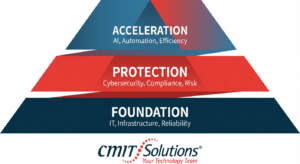
Our Business Technology Framework addresses cyber risk through the Protection layer.
Foundation
Reliable technology operations.
Protection
Cybersecurity, compliance, governance, and resilience.
Acceleration
Technology strategy, AI, automation, and growth initiatives.
Organizations achieve stronger security outcomes when cybersecurity is aligned with business objectives and supported by executive leadership.
Why CMIT Solutions of Northwest Metro Detroit?
Cybersecurity should support business objectives—not create unnecessary complexity.
We help organizations understand risk, prioritize investments, strengthen resilience, and improve decision-making through a combination of cybersecurity expertise, technology leadership, and business-focused advisory services.
Our goal is to help leadership answer:
- What risks matter most?
- What should we address first?
- What can wait?
- How prepared are we?
- What does success look like?
Frequently Asked Questions
What is a cyber risk assessment?
A cyber risk assessment evaluates security controls, vulnerabilities, operational risks, and organizational preparedness to identify areas requiring attention.
Is cyber insurance required?
Requirements vary by organization and industry, but many clients, partners, and contractual relationships increasingly expect cyber insurance coverage.
Can you help prepare for cyber insurance renewals?
Yes. We help organizations evaluate security controls, documentation, and risk management practices commonly reviewed by insurance carriers.
How is this different from a vulnerability scan?
A vulnerability scan identifies technical vulnerabilities. A cyber risk assessment evaluates broader organizational, operational, governance, and resilience factors.
Can you help with WISP and compliance requirements?
Yes. We help organizations address security policies, WISP requirements, risk assessments, and related governance activities.
Strengthen Security. Improve Resilience. Reduce Risk.
Cyber risk management is an ongoing business priority.
Whether you’re preparing for an insurance renewal, evaluating cybersecurity risks, addressing compliance requirements, or developing a stronger security strategy, CMIT Solutions can help.