The Rockstar Games Breach: How Lapsus$ Weaponized Slack & MFA Fatigue
“The Rockstar Games breach wasn’t a sophisticated zero-day software exploit; it was a masterclass in social engineering, MFA fatigue, and the weaponization of internal collaboration tools like Slack.”
1. Executive Summary: The Perimeter Is Dead
In one of the most high-profile cybersecurity incidents in the entertainment industry, Rockstar Games (creator of the Grand Theft Auto franchise) suffered a catastrophic data breach resulting in the theft and leak of 90+ videos of unreleased gameplay and sensitive source code. The attack was orchestrated by members of Lapsus$, a notorious cybercriminal extortion group.
For mid-market CEOs and IT leaders, this Rockstar Games data breach is a massive wake-up call. The hackers did not use complex, custom-coded malware to break through a firewall. Instead, they utilized aggressive social engineering, bypassed Multi-Factor Authentication (MFA), and weaponized the company’s own internal Slack channels. This proves that if you are relying on legacy perimeter security and basic text-message MFA to protect your 24/7 remote workforce, your intellectual property is entirely exposed.
2. The Technical Details: Social Engineering at Scale
Because this attack relied on human manipulation rather than unpatched software, there are no specific CVEs (Common Vulnerabilities and Exposures) to patch. Instead, we must look at the MITRE ATT&CK framework to understand the Lapsus$ cyber attack methodology:
- Valid Accounts (T1078): Lapsus$ frequently purchases stolen corporate credentials from Initial Access Brokers (IABs) on the dark web or utilizes infostealer malware to harvest active session tokens from remote employees.
- MFA Fatigue / Prompt Bombing (T1621): Once they have a password, attackers trigger dozens of MFA push notifications to the employee’s phone late at night. The exhausted or confused employee eventually hits “Approve” just to make the notifications stop, granting the attacker full network access.
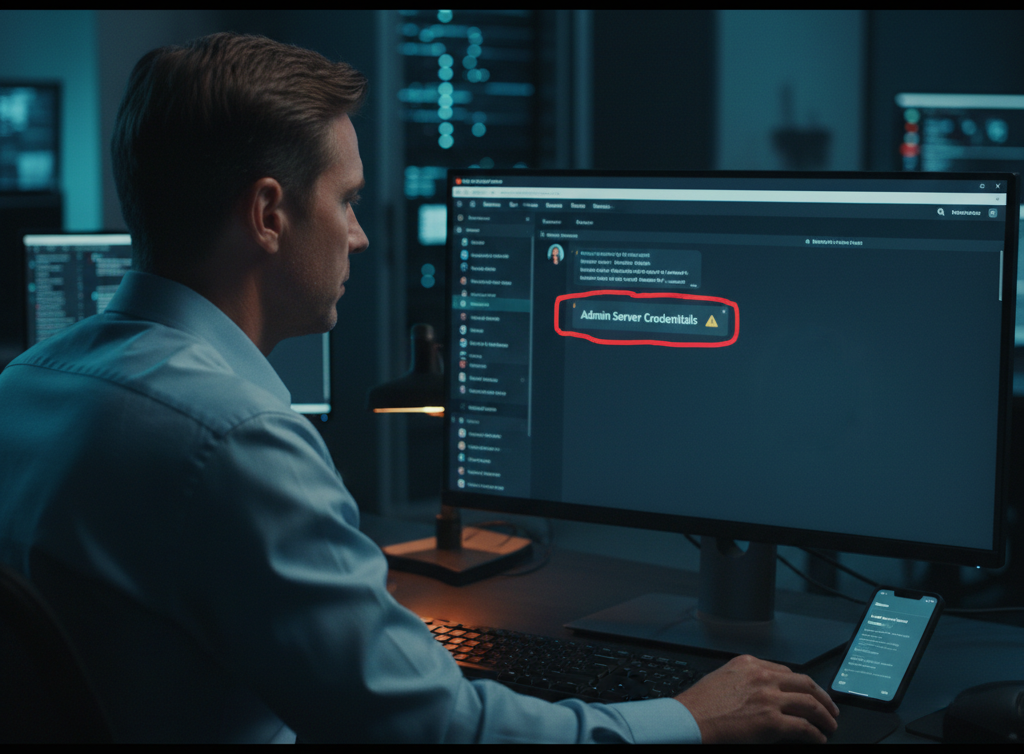
- Exploiting Collaboration Tools: Once inside the network, Lapsus$ navigated to the company’s Slack workspace. Internal chat platforms are notoriously under-secured. Employees routinely share hardcoded passwords, server IP addresses, and sensitive source code in plain text, allowing the attackers to easily escalate privileges and exfiltrate data — a textbook Slack security vulnerability.
3. The Risk: Why Every Business Leader Should Care
You do not need to be a billion-dollar gaming publisher to suffer this exact fate. If your business operates 24/7 or relies on remote collaboration (Slack, Microsoft Teams), you share the exact same attack surface as Rockstar Games did on the day of the social engineering breach.
- ⚠Intellectual Property Theft: For gaming, tech, and professional services firms, source code and proprietary client data are the lifeblood of the company. A breach of your internal Slack channels can result in a total loss of confidentiality.
- ⚠Extortion Without Ransomware: Lapsus$ rarely bothers to encrypt systems. They practice pure data extortion — stealing the data and threatening to leak it publicly or sell it to competitors unless a massive ransom is paid.
- ⚠Brand and Shareholder Damage: A public leak of pre-release products or sensitive legal communications shatters consumer trust and can instantly devalue a company’s market position.
4. The 3-Step Mitigation Plan (Defense-in-Depth)
You cannot patch human psychology, but you can build a Zero Trust architecture that survives human error. Business leaders must immediately implement the following strategies to neutralize the MFA fatigue attack vector and lock down their collaboration stack:
● Step 1: Eradicate Push-Notification MFA
The Gap “Prompt bombing” relies on employees being able to blindly approve an MFA request with a single tap.
The Fix Transition to Phishing-Resistant MFA. Require Number Matching (where the user must type a number displayed on their screen into their phone app) or adopt FIDO2 hardware security keys (like YubiKey) to eliminate MFA Fatigue entirely.
● Step 2: Secure Internal Collaboration Tools
The Gap IT departments heavily monitor email but treat internal Slack or Teams channels as safe zones.
The Fix Implement Data Loss Prevention (DLP) policies within your chat applications to automatically flag and block the sharing of passwords, API keys, or sensitive PII. Audit inactive channels and enforce strict access controls for external contractors.
● Step 3: Enforce Conditional Access Policies
The Gap A stolen password and an approved MFA prompt shouldn’t grant total network access if the login is originating from a suspicious location or unmanaged device.
The Fix Deploy Zero Trust Network Access (ZTNA). Tie successful logins to device health — meaning even if a hacker approves an MFA prompt, the system will block the login because the attacker’s laptop is not recognized by your corporate IT management platform.
5. Defend Your Remote Workforce with CMIT Solutions
At CMIT Solutions, we specialize in securing the modern, remote workforce. We know that basic security awareness training isn’t enough to stop sophisticated social engineering. We deploy enterprise-grade Identity and Access Management (IAM), 24/7 SOC monitoring, and Phishing-Resistant MFA to ensure your business remains impenetrable — even when the attacker already has the password.
6. Threat Intelligence Source
Read the details regarding the Rockstar Games cyberattack here:
Is Your Business Lapsus$-Ready?
Find out in 30 minutes. Book a complimentary cybersecurity assessment with a CMIT Solutions expert — we’ll review your MFA posture, identity controls, SaaS monitoring, and incident-response readiness against the exact techniques that took down Rockstar Games. No cost. No obligation. No jargon.
Book My Free Security Assessment