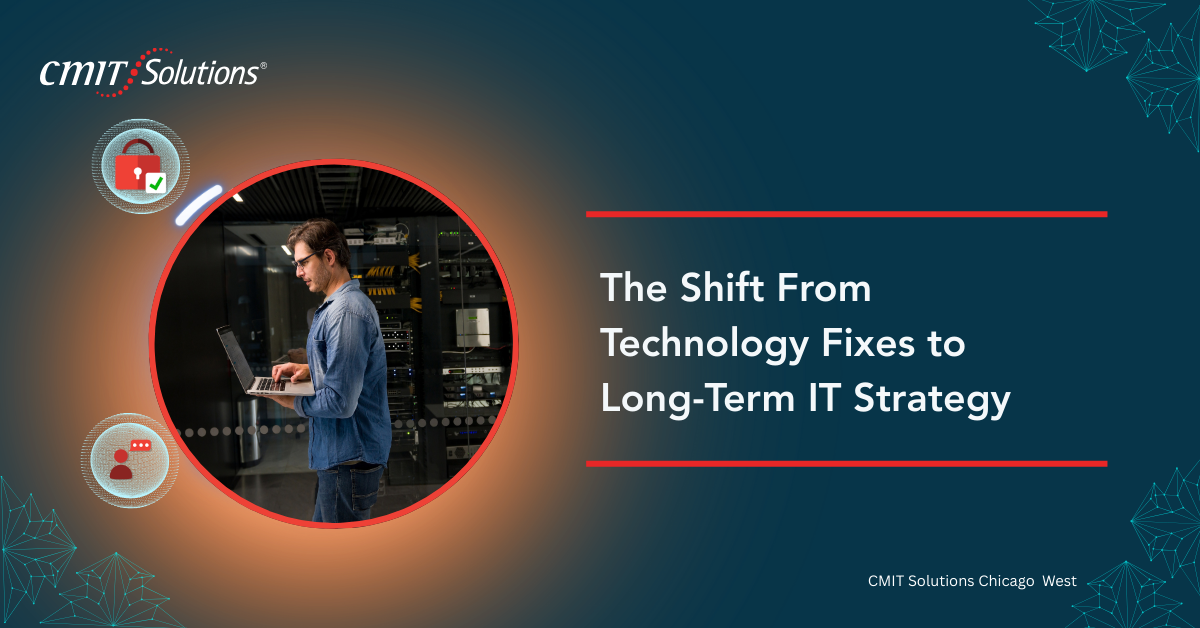
For many businesses, technology has historically been treated as a reactive necessity, something addressed only when systems fail, employees complain, or security incidents occur. This approach may have worked when technology played a smaller role in daily operations, but today, IT is deeply embedded in every business function. From communication and collaboration to customer experience and compliance, technology is no longer a background utility. It is a strategic driver of growth, efficiency, and resilience shaped by digital-first impressions.
At CMIT Solutions of Western Suburbs, we’ve seen firsthand how organizations that move beyond short-term technology fixes and adopt a long-term IT strategy gain a competitive advantage. This shift is not just about better tools, it’s about smarter planning, alignment with business goals, and building an IT environment that evolves alongside the organization. Many teams begin this transition after comparing local MSPs with larger, less personalized providers.
Below, we explore the key elements behind this shift and why long-term IT strategy has become essential for sustainable business success.
Understanding the Limitations of Reactive IT
Reactive IT focuses on solving immediate problems as they arise, fixing a server outage, responding to a cybersecurity incident, or replacing outdated hardware only when it fails. While these fixes may restore operations temporarily, they do little to prevent future disruptions or support long-term business goals. Over time, this approach leads to mounting technical debt, inconsistent systems, and higher operational risk tied to silent IT killers.
A reactive mindset often keeps businesses trapped in a cycle of constant firefighting. IT teams spend their time responding to emergencies instead of improving systems, planning upgrades, or strengthening security. As a result, technology becomes a bottleneck rather than an enabler.
To fully understand why reactive IT falls short, consider the ongoing challenges it creates for growing organizations:
- Increased downtime due to unplanned failures that could be reduced with proactive IT monitoring
- Higher long-term costs from repeated emergency fixes and poor IT lifecycle management
- Limited visibility into system performance and risks, including threats like silent breaches
- Inconsistent user experiences across departments caused by aging systems and connectivity problems
- Difficulty scaling technology as the business grows without a clear plan to address IT infrastructure
Why Long-Term IT Strategy Is a Business Imperative
A long-term IT strategy shifts the focus from fixing problems to preventing them. It aligns technology decisions with business objectives, ensuring that every investment supports productivity, security, and growth. Instead of reacting to issues, businesses proactively design systems that are resilient, scalable, and secure with cloud-first strategies.
Strategic IT planning also provides clarity. Leadership gains a roadmap that outlines where the organization is headed technologically and how each step supports operational and financial goals. This clarity allows businesses to budget more effectively, reduce risk, and make informed decisions about future initiatives especially when guided by IT strategy planning.
A well-defined IT strategy delivers tangible business benefits that extend beyond the IT department:
- Clear alignment between technology and business goals supported by managed IT services
- Predictable IT budgeting and reduced surprise expenses through smart IT spending
- Improved system reliability and performance enabled by modern infrastructure beyond the cloud
- Enhanced ability to adapt to market and operational changes using scalable cloud services
- Stronger executive-level visibility into technology decisions by tracking managed IT ROI
Aligning IT Decisions With Business Objectives
Technology should never exist in isolation. Every system, platform, and service should support broader business objectives such as revenue growth, customer satisfaction, regulatory compliance, or workforce productivity. Without this alignment, IT investments risk becoming disconnected from real business needs and can derail digital transformation.
Long-term IT strategy starts with understanding how the business operates today and where it plans to go. This includes evaluating workflows, identifying inefficiencies, and anticipating future demands. By aligning IT planning with business strategy, organizations ensure that technology enables progress rather than reacting to it especially when supported by the right infrastructure approach.
Effective alignment between IT and business strategy results in:
- Technology investments that directly support growth initiatives and IT for growth
- Improved collaboration between leadership and IT teams using modern collaboration platforms and secure communication
- Reduced spending on tools that don’t deliver value by prioritizing systems that improve operational output
- Better prioritization of IT projects and upgrades guided by data and business impact
- Stronger return on technology investments through consistent performance improvements and reduced risk

Moving From Short-Term Fixes to Proactive Planning
Short-term fixes address symptoms, not root causes. Proactive IT planning, on the other hand, identifies potential risks before they disrupt operations. This includes regular system assessments, performance monitoring, and scheduled upgrades that keep technology current and secure especially as businesses prepare for Windows 11 readiness.
Proactive planning also allows businesses to modernize at a controlled pace. Instead of rushed upgrades during a crisis, organizations can implement improvements strategically, minimizing disruption and maximizing value. This approach creates a more stable and predictable IT environment.
Proactive IT planning supports operational continuity through:
- Regular system health assessments supported by proactive oversight
- Scheduled hardware and software lifecycle management that reduces replacement surprises
- Early identification of performance bottlenecks that impact productivity
- Reduced likelihood of emergency outages through business continuity planning
- Improved long-term system reliability by strengthening network resilience
Strengthening Cybersecurity Through Strategic Design
Cybersecurity is no longer a standalone concern; it must be embedded into the overall IT strategy. Reactive security measures often focus on responding after an incident has occurred, which can result in data loss, downtime, and reputational damage. A long-term strategy prioritizes prevention, detection, and continuous improvement guided by the cybersecurity forecast.
Strategic cybersecurity planning integrates security controls across networks, endpoints, applications, and user access. It also incorporates employee training, policy development, and regular testing to ensure defenses remain effective as threats evolve especially in response to phishing evolution.
A strategic approach to cybersecurity delivers:
- Reduced exposure to cyber threats and vulnerabilities through cloud security
- Consistent security policies across all systems reinforced by endpoint security
- Improved incident detection and response capabilities using XDR
- Better protection of sensitive business data through cyber resilience
- Increased confidence among customers and stakeholders by strengthening digital trust
Supporting Scalability and Future Growth
As businesses grow, their technology needs change. Systems that worked for a small team may struggle under increased workloads, remote access demands, or new compliance requirements. Without a long-term IT strategy, growth can expose weaknesses that slow progress or increase risk.
Strategic IT planning anticipates future growth and builds systems that can scale seamlessly. This includes selecting flexible platforms, designing networks for expansion, and ensuring infrastructure can support new users, locations, or services without disruption—especially through cloud confidence.
Scalable IT environments provide businesses with:
- Flexibility to add users and services without major overhauls supported by scalable platforms
- Infrastructure that supports remote and hybrid work models through the right hybrid workforce tools
- Reduced need for costly emergency upgrades by planning infrastructure proactively
- Technology that evolves alongside business growth through modern IT design
- Greater confidence in pursuing new opportunities with reliable systems
Improving Operational Efficiency and Productivity
Technology plays a critical role in how efficiently employees work. Disconnected systems, outdated tools, and inconsistent processes create friction that slows productivity and frustrates users. A long-term IT strategy focuses on streamlining operations and improving the user experience with help from AI productivity.
By standardizing systems, automating routine tasks, and optimizing workflows, businesses can reduce inefficiencies and free employees to focus on higher-value work. Strategic IT planning ensures that technology enhances productivity instead of hindering it, especially by leveraging low-code platforms.
Operational efficiency improves when IT strategy prioritizes:
- Standardized tools and platforms across teams
- Automation of repetitive and manual tasks through smart workflow improvements
- Reliable systems that reduce employee downtime and delays
- Seamless collaboration and communication tools with secure UCaaS
- Improved user satisfaction and adoption through consistent experiences

Managing IT Costs More Effectively Over Time
Reactive IT often leads to unpredictable expenses emergency repairs, rushed purchases, and unplanned downtime costs. In contrast, a long-term IT strategy enables more controlled and transparent budgeting. Businesses can plan investments over time, avoid unnecessary spending, and maximize the lifespan of their technology.
Strategic cost management also involves evaluating total cost of ownership rather than just upfront expenses. This approach ensures that technology decisions account for maintenance, support, security, and scalability.
Effective IT cost management includes:
- Predictable budgeting aligned with business planning and long-term priorities
- Reduced emergency and downtime-related expenses through consistent planning
- Smarter investment decisions based on long-term value and reliability
- Improved visibility into IT spending and ROI using structured financial planning
- Better control over technology-related financial risk through smart IT spending
Enhancing Compliance and Risk Management
Regulatory requirements and industry standards continue to evolve, placing greater pressure on businesses to maintain compliant IT environments. Reactive approaches often address compliance only when issues arise, increasing the risk of penalties and operational disruption.
A long-term IT strategy embeds compliance and risk management into system design and operational processes. This ensures that policies, controls, and documentation are consistently applied and updated as regulations change especially when dealing with IT compliance challenges.
Strategic compliance management helps businesses achieve:
- Consistent adherence to regulatory requirements through reliable controls
- Reduced risk of audits and compliance failures with structured documentation
- Improved documentation and reporting processes that support transparency
- Better control over data access and retention using formal governance practices
- Greater organizational confidence in risk management and oversight
Partnering With a Strategic IT Provider
Executing a long-term IT strategy requires expertise, ongoing oversight, and a deep understanding of both technology and business operations. Many organizations lack the internal resources to manage this complexity effectively. Partnering with a strategic IT provider enables businesses to access experienced guidance and proactive support through managed IT partnerships.
At CMIT Solutions of Western Suburbs, we work as an extension of your team helping you move beyond short-term fixes and build a technology roadmap that supports long-term success. Our approach focuses on understanding your business, anticipating future needs, and delivering solutions that evolve with you.
A strategic IT partnership delivers value through:
- Ongoing technology planning and guidance aligned with business goals
- Proactive system monitoring and maintenance that reduces disruption
- Expert cybersecurity and compliance support designed for evolving threats
- Scalable solutions tailored to business growth and operational change
- Long-term alignment between IT and business goals supported by strategic planning
Conclusion: Building a Future-Ready IT Foundation
The shift from technology fixes to long-term IT strategy is no longer optional; it’s essential for businesses that want to remain competitive, secure, and resilient. Reactive IT may solve today’s problems, but it does little to prepare organizations for tomorrow’s challenges.
By adopting a strategic approach, businesses gain control over their technology, reduce risk, and create an IT environment that actively supports growth and innovation. CMIT Solutions of Western Suburbs is committed to helping organizations make this transition transforming IT from a reactive cost center into a strategic asset that drives long-term success.