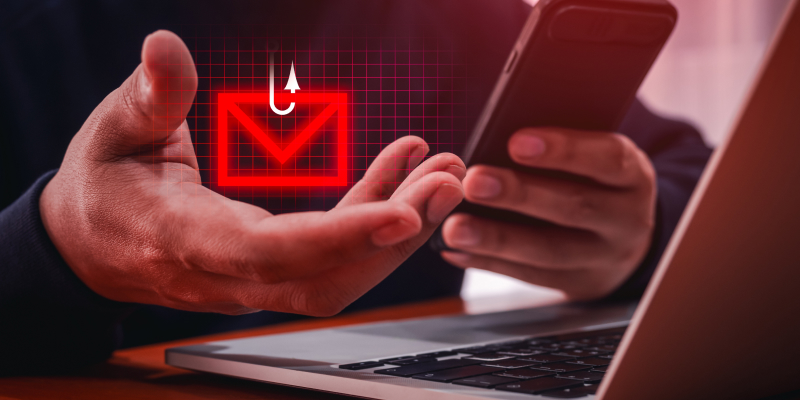
What is smishing? A combination of “SMS” and “phishing.” It is a type of cyber attack that uses text messages to target its victims. Smishing is a form of phishing, which is a social engineering tactic that manipulates a recipient into revealing sensitive information. The goal of this attack is to deceive the victim and encourage them to share personal data, send money, or download malware.
The threat of a smishing attack is growing rapidly; in fact, reports show that the majority of organizations experienced one last year as more employees use personal devices for work. Managing this modern threat landscape often requires working closely with experienced cybersecurity services providers in Mesa to establish strong protocols.
This guide will explore the psychological tactics scammers use and provide an actionable plan to protect your employees, starting with a look at the step-by-step process criminals follow.
How Attackers Craft a Deceptive Smishing Campaign
A smishing attack is not a random act; it is a multi-stage campaign in which cybercriminals follow a methodical process to harvest information. The process begins with choosing a target, where smishers build lists of active phone numbers, from purchasing them on underground markets to using bots to aggregate contact information.
Next comes infrastructure setup, where the attacker creates fake websites or malicious apps designed to capture a victim’s data. If the scam involves a financial institution, this fake login page is designed to look nearly identical, using the same fonts, logos, and color schemes the recipient expects.
Attackers use tools such as SMS gateways or spoofed numbers to send messages, allowing them to disguise their identities and evade blocks. Furthermore, writing messages has become easier for criminals, as the widespread availability of Generative AI (GenAI) provides them with powerful tools to make text sound realistic. Large Language Models (LLMs) help them craft believable messages and remove the awkward phrasing that once identified a scam.
The text message includes a malicious link, often a shortened URL, that redirects the user to an attacker-controlled server to install malware or host a fake login page. On mobile devices, spotting these malicious links is significantly harder than on a computer. Therefore, while a user can hover over a link on a computer to see its true destination, this option is unavailable on smartphones. Scammers exploit the fact that people are conditioned to trust SMS messages from brands, especially when they include familiar shortened URLs.
Ultimately, the attacker’s goal is to get the victim to enter their credentials, thereby achieving unauthorized access to the fake page. Alternatively, tapping the malicious link can trigger a malware download that steals information directly from the device. This carefully constructed technical process is designed to deliver a message that not only appears legitimate but also directly manipulates human psychology.
The Psychological Triggers Attackers Exploit in Smishing
The effectiveness of a smishing attack doesn’t rely solely on technology. It also heavily exploits human psychology, which is why social engineering is the core framework for these scams. A common implementation of this tactic is pretexting, a method that uses fake stories to manipulate your emotions and trick you into taking action. Therefore, the attacker’s primary goal is to make you feel obligated to act immediately.
Attackers achieve this by appealing to emotions; hence, they often trigger feelings like fear or greed. Common manipulation tactics include creating a sense of urgency, impersonating trusted brands, and posing as an authority figure. Case in point: an attacker might pose as a government agency and threaten you with legal action unless you comply immediately. On the other hand, some schemes lure victims with promises of prize money, but the link prompts them to provide private information.
These tactics are especially successful via SMS because of the inherent trust many people have in text messages compared to email. When analyzing smishing vs. phishing, there is also research showing this trust leads to high SMS click-through rates, which often hover between 8.9% and 14.5%. This rate is significantly higher than email’s average click-through rate of only 2%, according to industry reports.
Furthermore, it is more difficult to see a full URL on a smartphone; hence, many users do not check a link before tapping it. These powerful psychological triggers are used in many common scams you might encounter, so let’s take a look at a few examples.
Also Read : Addressing the Human Element in Cybersecurity
Spotting the Telltale Signs of Common Smishing Scams
It’s important to understand that these attacks are effective because they rely on impersonation, in which attackers mimic people and brands you trust, making their messages seem legitimate at first glance. To help you spot these threats, let’s look at five of the most common smishing scams you or your employees might encounter:
- Delivery Notification Scams – This involves an attacker impersonating a well-known courier service to send a fake alert about a failed package delivery. For instance, the text might say, “We couldn’t deliver your parcel. Please schedule a redelivery here,” with the malicious link pointing to a URL that is not an official company website.
- Bank Fraud Scams – In this prevalent scheme, scammers pose as a financial institution, claiming there is suspicious activity on your account that requires immediate verification. In fact, according to the Federal Trade Commission (FTC), impersonating a bank is the most common form of text message scam.
- Executive or Boss Scams – This is a variant of Business Text Compromise where an attacker impersonates a CEO or another senior leader. The message creates a sense of urgency, asks for help with a special task, and encourages you to bypass normal procedures, like buying gift cards for a client or making an urgent payment.
- Tech Support Scams – This alert claims to be from your IT department and notifies you of a supposed issue with a work account or device.
- Account Verification Scams – These unsolicited texts appear to be from an email service, social media app, or streaming platform you use. When you receive a message that says, “We detected a login from an unfamiliar location. If this wasn’t you, secure your account here,” fear is used to prompt an immediate click.
Therefore, while the stories change, the goal of these smishing attacks is always the same: to get you to reveal credentials, send money, or download malware. Now that you can recognize these common threats, understanding how to respond is the next critical step in your defense.
A Step-by-Step Guide for Responding to a Smishing Threat
Anything that demands you act with urgency should be questioned, so here is a simple six-step action plan to follow if you receive a suspicious text:
- Pause and Think – The most important step is to pause before reacting. Do not click links in unsolicited texts, especially from unknown or unexpected sources.
- Avoid Downloads – Never download any attached files, as this is the primary way attackers install malware.
- Do Not Reply – It is crucial that you do not respond to suspicious messages. Even a simple reply confirms your number is active, which only invites future attacks from scammers.
- Verify via Official Channels – If the message appears to be from a business you trust, verify the request independently. Log in to your account on the company’s official website or call them using a number you have safely stored, rather than one provided in the text.
- Report the Incident – As an employee, it is vital to report smishing attempts to your IT and security team. This action gives them valuable visibility into threats targeting the organization.
- Block and Delete – Finally, block the sender’s number directly on your device, then delete the message.
By following these steps, you create a powerful defense against manipulation, but true security goes beyond individual action and into building a resilient culture.
Making Human Caution Your Strongest Cyber Defense
Ultimately, a smishing attack is an assault on human psychology, which is why your most effective defense is rooted in education and vigilance, not just technology. Providing ongoing user training and security awareness education empowers your employees to confidently recognize and report threats. This vigilant culture is strongest when the employee and the security team collaborate and are supported by an instant, easy-to-use reporting process.
This human-centric defense can be enhanced by adopting a Zero Trust Security Model to help limit damage if an attack succeeds. To build this comprehensive defense, partner with an expert at an IT consulting company, such as CMIT Solutions of Mesa, AZ. Contact us today for a comprehensive IT assessment.