

For small and mid-sized businesses (SMBs), technology is driving efficiency and growth, no longer just a support function. However, without a formal plan, random and reactive technology investments become common as tools are added on an ad hoc basis. The unplanned approach leads to surprise expenses and operational friction, limiting your business growth. This is where a formal IT Strategy comes into play, shifting your focus from reactive firefighting to proactive planning. You can achieve better cost control and proactive risk management with a clear roadmap. Let’s explore the key benefits of an IT strategy and understand how tailored IT solutions turn technology into a true asset for your business.
The Hidden Costs of a Reactive Technology Approach
The mistake in technology management is simply not having a formal IT strategy for a small business. This approach results in a tangled web of overly complex IT environments, leaving you with a chaotic patchwork of systems. Sometimes you might be dealing with a mismatch of operating systems, old infrastructure that runs slowly, or software from multiple vendors that doesn’t work well together. This disorganization creates significant weaknesses that expose your business to security breaches and data Breaches. Even worse, outdated servers and aging systems fail to support modern security updates, leaving glaring vulnerabilities that cyber threats can easily exploit.
Beyond security, every growing business faces new demands, and a reactive tech setup creates bottlenecks that hold back your ability to scale. Instead, you’re stuck dealing with massive, time-consuming surprises as your team struggles with disruptive tech that kills productivity and drives up costs. The rise of Shadow IT is another problem. Shadow IT is when individual departments purchase unapproved IT solutions because central IT support isn’t meeting their needs.
Therefore, these unsanctioned applications create even more security vulnerabilities and integration headaches, compounding the risks of an unplanned approach. Ultimately, this cycle of reactive fixes and operational friction shows that a lack of strategy isn’t just inefficient; it’s a significant and ongoing financial risk.
How an IT Strategy Controls Costs and Manages Risk
A clear IT strategy provides a framework to manage the financial uncertainties discussed earlier, focusing on two key benefits:
- Cost control
- Proactive risk management.
Instead of reacting to emergencies with expensive, unplanned purchases, this approach transforms technology from an unpredictable operational expense into a planned investment. Therefore, your business can effectively budget for technology and optimize spending by choosing the right systems from the start.
Furthermore, effective IT risk management is a core component of this strategic plan. This includes taking proactive steps to enhance security, ensure data protection, and meet industry compliance standards. These steps are meant to spot and fix existing weak spots in your setup and significantly reduce your exposure to potential cyberattacks.
Here is a practical look at how an IT strategy delivers these benefits:
- Planned Hardware Refresh Cycles – Implementing a clear schedule to replace aging hardware before it fails prevents expensive downtime. This proactive approach helps you avoid the high costs associated with emergency repairs and potential data recovery.
- Predictable Software Budgeting – Creating an annual budget for software and shifting to subscription-based models or Hardware-as-a-Service eliminates large capital outlays. This move toward predictable operational expenses greatly improves cost efficiency and makes financial planning more reliable.
- Robust Business Continuity – Establishing and regularly testing robust backup and business continuity plans ensures you can protect sensitive data. It also guarantees that you can resume operations quickly after unanticipated changes or emergencies.
- Technology Standardization – Standardizing IT solutions across the company simplifies your entire IT environment. This strategic choice reduces ongoing support, training, and integration expenses while boosting overall productivity and improving cost efficiency.
By managing risks and controlling costs, a solid IT strategy lays a stable financial and operational foundation, which then allows you to enhance day-to-day business efficiency.
Also Read: IT Roadmap For Business Growth
Driving Operational Efficiency and Team Productivity
The stability created by your IT Strategy flows directly into increased operational efficiency, which is one of the most significant benefits of IT strategy for your daily operations. An effective plan is a process that starts when you Assess Current IT Infrastructure, including your tools and business processes. This evaluation helps identify gaps and eliminate redundancies, such as multiple software platforms doing a similar job.
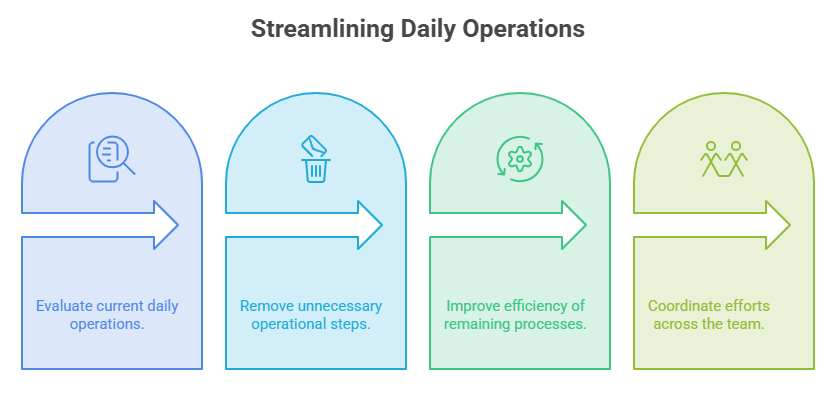
By reviewing your workflows, you can also identify potential bottlenecks that hinder your team’s daily progress. By eliminating these redundancies and standardizing key systems, you allow your teams to collaborate more seamlessly and effectively, reducing daily friction.
The strategy also finds opportunities to automate routine tasks. For Improved Productivity to be realized, this automation needs to free up your employees to focus on higher-value, revenue-generating activities. These enhancements directly boost employee morale, as staff is empowered by efficient technology instead of being frustrated by it.
Ultimately, this is where a solid IT strategy gives leaders real clarity. The data feeding your leadership team stays unified, accurate, and reliable because a technology roadmap ensures new software meshes smoothly with your current setup. This is why better data sharpens your analytical capabilities, leading to smarter and more confident decision-making. With these immediate efficiency gains creating a more stable and productive environment, your business is better prepared to plan for long-term, scalable growth.
Building a Foundation for Scalability and Future Growth
Defining your IT strategy contributes directly to shaping your business’s Long-term Vision. This foresight helps answer the critical question every business owner faces: will the technology chosen today support the company when it doubles in size? In short, it provides scalability, ensuring your infrastructure can handle expansion into new markets or services with confidence and without a costly overhaul.
This is where a technology roadmap comes into play. This roadmap is a practical 3–5 year plan that outlines investments and upgrades over time to guarantee Future Readiness. Crucially, this plan aligns technology initiatives with your core Business Goals. For example, it ensures that when you launch an e-commerce platform in Year 2, the necessary cloud IT solutions are already in place to support it.
This ability to plan and effectively use technology gives your business a significant competitive advantage. With a visionary roadmap, your business can adapt rapidly to market shifts and harness change without disrupting its flow. Ultimately, this forward-thinking approach ensures your tech setup grows right alongside your business, supporting steady success and getting you ready for whatever comes next.
Moving From Reactive IT to a Strategic Business Asset
A documented IT Strategy is the comprehensive business guide that aligns technology with overarching business objectives. This plan transforms technology from an unpredictable cost center into a powerful tool for cost control, proactive risk management, and increased operational efficiency. Organizing your technology this way supports sustainable business growth and a lasting competitive advantage.
If you’re ready to build this plan for your business, our expert team is here to help. We provide reliable CMIT solutions in Silver Spring to transform your IT into a true strategic asset. Contact us today for a comprehensive IT assessment, and IT services can support your team.