
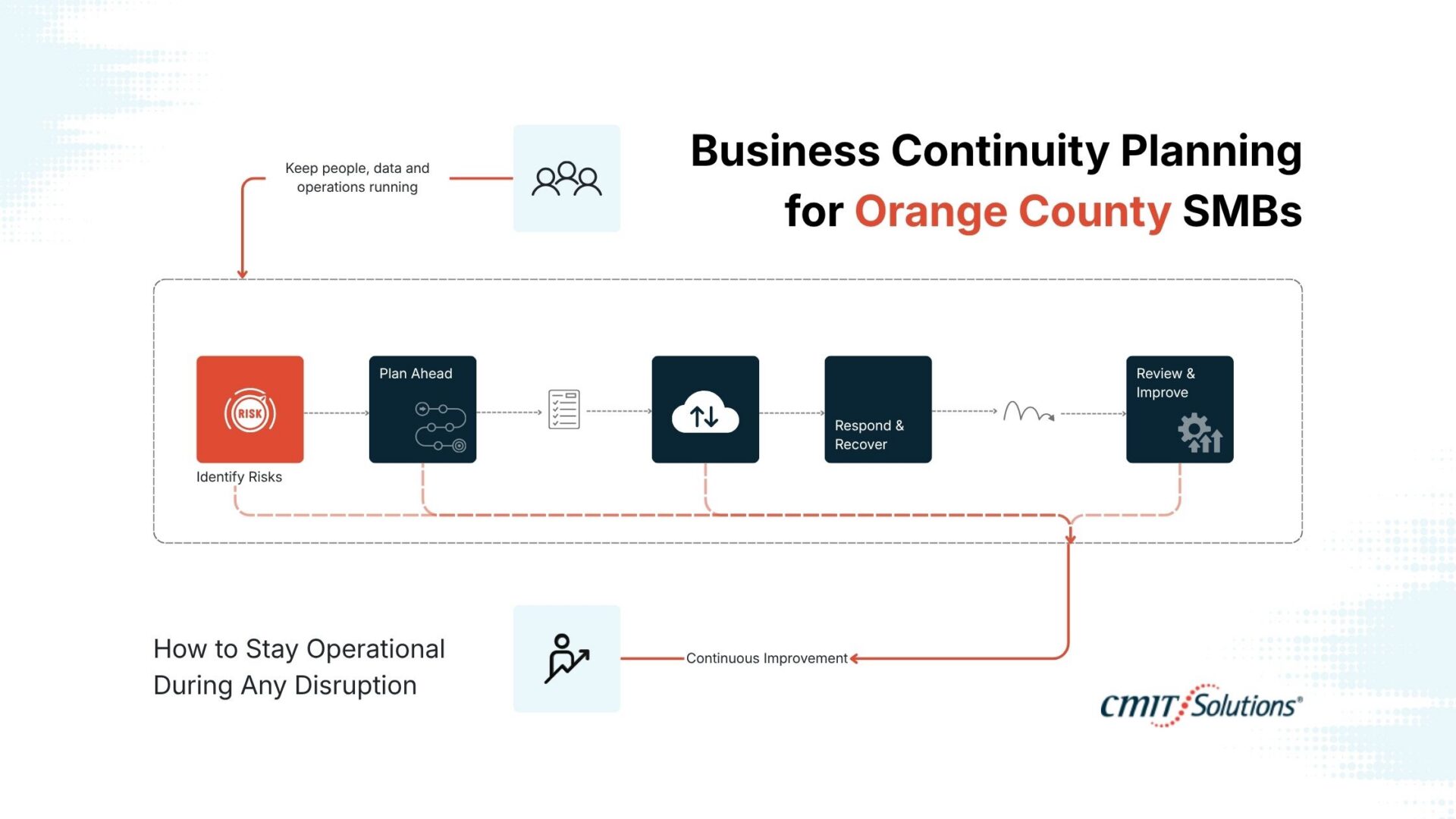
For most small and mid-sized businesses, disruption does not arrive with a warning.
- It looks like a ransomware email opened at 8:42 AM
- A server outage during payroll processing
- Internet downtime before a client presentation
- A cloud platform failure that locks employees out for hours.
The problem is not only the disruption itself. It is how unprepared most businesses are when it happens. That is why demand for business continuity IT support Orange County companies can rely on has increased significantly over the last few years. SMBs are realizing that reactive IT support is no longer enough when downtime directly impacts revenue, operations, and customer trust.
Whether you operate a law firm, healthcare clinic, logistics company, manufacturing business, or professional services team in Anaheim or across Orange County, business continuity planning has become essential operational infrastructure.
What Is Business Continuity Planning?
Business continuity planning is the process of keeping your business operational during unexpected disruptions. The goal is simple: reduce downtime, protect critical systems, and recover operations quickly when issues happen.
A strong continuity strategy helps businesses prepare for:
- Cyberattacks and ransomware
- Hardware failures
- Internet outages
- Human error
- Natural disasters
- Cloud platform disruptions
- Power interruptions
- Remote workforce issues
Modern businesses rely heavily on cloud systems, remote collaboration, digital communication, and real-time data access. Without a continuity strategy, even a short outage can create major operational disruption. This is why many SMBs are now investing in IT managed services Orange County providers that focus on prevention, recovery, and operational resilience.
Why Orange County SMBs Are Increasingly Vulnerable
Many SMBs assume continuity planning is only necessary for large enterprises. In reality, smaller businesses are often more vulnerable because they lack:
- Internal IT departments
- Dedicated cybersecurity teams
- Recovery infrastructure
- Backup verification systems
- Incident response planning
- Proactive monitoring
Most disruptions today are no longer isolated technical issues. They affect operations across the entire business.
For example: A ransomware attack does not only impact files. It affects invoicing, payroll, communication, scheduling, customer service, and vendor coordination simultaneously. Without proper backup disaster recovery Orange County planning, businesses can remain offline for days or even weeks.
The Real Cost of Downtime
Most businesses underestimate the cost of downtime because they focus only on lost sales. The operational impact is usually much larger.
Downtime often leads to the following:
- Employee productivity loss
- Delayed customer communication
- Interrupted financial operations
- Missed project deadlines
- Compliance risks
- Data accessibility issues
- Reputational damage
- Customer trust erosion
For industries like healthcare, legal services, accounting, logistics, and manufacturing, operational downtime can create long-term business consequences beyond immediate revenue loss. Business continuity planning helps reduce these risks before they escalate.
The Core Components of a Strong Continuity Strategy
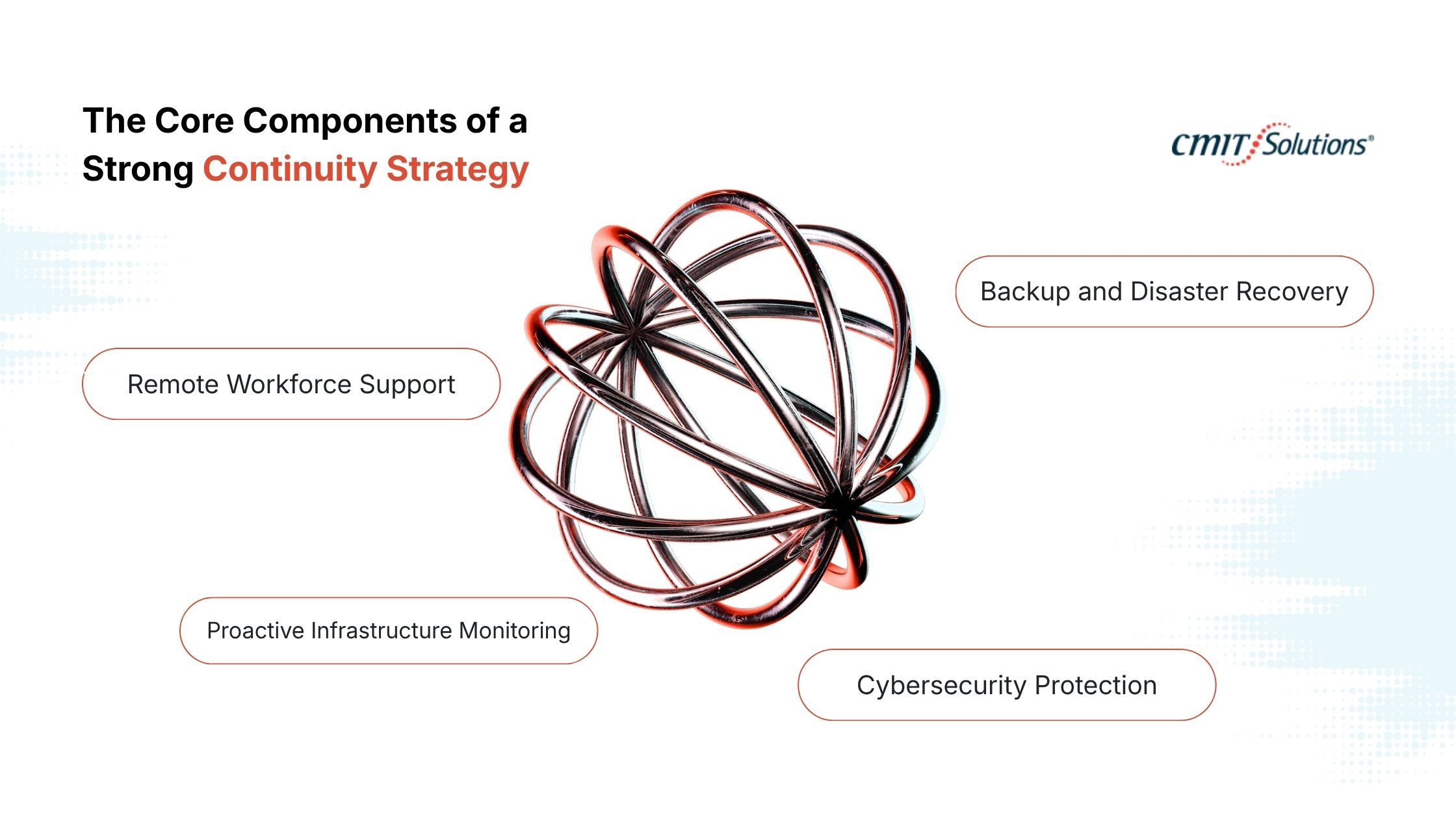
1. Backup and Disaster Recovery
Backups are the foundation of continuity planning. However, many businesses make the mistake of assuming backups alone are enough. A proper backup disaster recovery Orange County strategy should include:
- Automated cloud backups
- Off-site data redundancy
- Recovery testing
- Fast restoration systems
- Backup monitoring
- Version history protection
- Ransomware-resistant storage
The biggest issue many SMBs face is discovering their backups failed only after an incident occurs. Recovery testing matters just as much as backup creation.
2. Cybersecurity Protection
Cybersecurity and continuity planning now work together. Most operational disruptions today involve some form of cyber threat, including phishing attacks, ransomware, credential theft, or compromised devices. A continuity-focused IT environment should include:
- Endpoint monitoring
- Firewall management
- Multi-factor authentication
- Email protection
- Patch management
- Employee security training
- Threat detection systems
Businesses working with managed IT services Anaheim providers often gain access to proactive cybersecurity management that reduces operational risk significantly.
3. Remote Workforce Support
Remote and hybrid work environments have created new operational challenges for SMBs. Employees need secure, reliable access to systems regardless of location. This is where remote-managed IT services Orange County businesses use become critical. Remote continuity support may include:
- Secure VPN access
- Cloud collaboration systems
- Device monitoring
- Remote troubleshooting
- Access management
- Endpoint security
Without proper remote infrastructure, operational disruptions can quickly impact productivity across distributed teams.
4. Proactive Infrastructure Monitoring
Most major IT failures show warning signs before systems go down completely. Examples include:
- Slow network performance
- Failing hardware
- Backup errors
- Storage issues
- Security vulnerabilities
- Unpatched systems
Proactive monitoring helps businesses detect these problems early and resolve them before they become operational disruptions. This is one reason businesses increasingly choose IT managed services Orange County providers that offer continuous monitoring instead of reactive break-fix support.
Why Reactive IT Support No Longer Works
Traditional break-fix IT support focuses on solving problems after damage has already occurred. That model no longer aligns with modern business operations.
Today, SMBs need proactive support that prevents downtime before it affects customers and employees.
Businesses across Orange County are shifting toward long-term managed support because it helps:
- Reduce operational disruptions
- Improve cybersecurity posture
- Increase uptime
- Support remote work
- Improve recovery readiness
- Lower long-term IT risk
Managed IT support is no longer just a technical service. It has become part of operational continuity planning.
How Managed IT Services Support Business Continuity
Businesses using managed IT services Anaheim providers often benefit from a more structured and proactive approach to continuity planning. A managed IT partner can help SMBs:
- Build continuity plans
- Implement backup systems
- Monitor infrastructure
- Improve cybersecurity
- Support remote teams
- Respond to incidents quickly
- Reduce downtime risk
- Maintain compliance requirements
The right provider focuses on long-term operational resilience, not only technical support tickets.
Final Thoughts
Disruptions are unavoidable. The businesses that stay operational are the ones that prepare before problems happen. Whether it is cybersecurity protection, backup disaster recovery Orange County planning, proactive monitoring, or remote-managed IT services Orange County support, continuity planning has become essential for modern SMB operations. For businesses across Anaheim and Orange County, investing in proactive business continuity IT support Orange County services is no longer optional.
It is part of protecting growth, operations, customer trust, and long-term business stability.
FAQs
What is business continuity IT support?
Business continuity IT support helps businesses remain operational during disruptions like cyberattacks, outages, hardware failures, or natural disasters. It includes backup systems, disaster recovery planning, cybersecurity, infrastructure monitoring, and recovery strategies.
Why is backup disaster recovery important for SMBs?
Backup disaster recovery Orange County solutions help businesses recover critical data and restore operations quickly after disruptions. Without reliable recovery systems, downtime can lead to financial losses, compliance issues, and operational delays.
What industries benefit most from managed IT services in Orange County?
Industries like healthcare, legal, accounting, manufacturing, logistics, and professional services benefit significantly from IT managed services Orange County providers because they rely heavily on operational uptime and secure data access.
How do remote-managed IT services help businesses?
Remote-managed IT services Orange County businesses help support hybrid and remote teams through secure remote access, cloud collaboration tools, device monitoring, cybersecurity protection, and remote troubleshooting.
What should SMBs look for in managed IT services Anaheim providers?
Businesses should look for providers offering proactive monitoring, cybersecurity management, backup disaster recovery, fast response times, remote workforce support, and long-term continuity planning expertise.
How often should businesses test disaster recovery systems?
Businesses should test recovery systems regularly to ensure backups are functioning correctly and recovery timelines meet operational needs. Many managed IT services Anaheim providers recommend quarterly or biannual testing depending on business complexity.