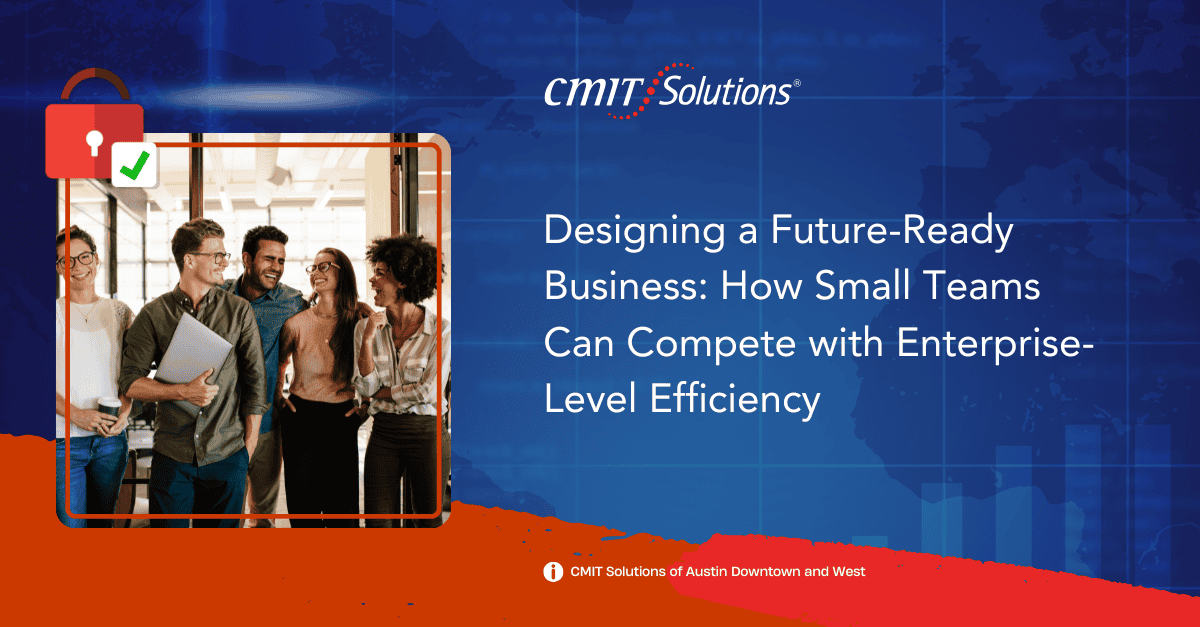
Enterprise-level efficiency used to require enterprise-level resources large IT departments, massive budgets, and complex infrastructure. Today, that reality has changed. Small teams now have access to technologies and strategies that allow them to operate with the same speed, reliability, and intelligence as much larger organizations.
The difference isn’t size. It’s design.
Future-ready businesses aren’t built by adding more tools or working longer hours. They’re built by intentionally designing digital systems that remove friction, automate routine work, and support growth without chaos.
What “Future-Ready” Really Means for Small Teams
A future-ready business isn’t one that constantly chases the latest technology. It’s one that can adapt quickly, scale smoothly, and stay resilient under pressure.
For small teams, future-readiness means:
- Technology that supports growth instead of slowing it
- Systems that are easy to manage and secure
- Clear visibility into operations and performance
- Minimal downtime and disruption
- The ability to pivot without rebuilding everything
This level of readiness starts with strong foundations similar to intentional future-proof infrastructure rather than reactive fixes.
Why Small Teams Often Struggle to Match Enterprise Efficiency
Small teams don’t lack talent or motivation. What they often lack is structure. As businesses grow, tools are added quickly to solve immediate problems, creating fragmented environments.
Common efficiency killers include:
- Too many disconnected applications
- Manual workflows
- Unclear system ownership
- Limited visibility into performance
- Technology decisions made under pressure
These challenges create the same slowdowns seen in organizations suffering from weak network management, where inefficiency compounds over time.
Strategic Technology Design Levels the Playing Field
Enterprise efficiency comes from alignment not size. Large organizations succeed because systems are designed to work together.
Small teams can replicate this by:
- Standardizing core platforms
- Reducing tool sprawl
- Centralizing data and communication
- Designing workflows around how people work
This approach allows small teams to move faster than larger competitors weighed down by complexity.

Cloud Done Right Gives Small Teams Big Capabilities
Cloud platforms give small teams access to scalability, collaboration, and resilience once reserved for enterprises. The key is using the cloud intentionally.
When implemented with purpose, cloud environments enable:
- Secure remote work
- Real-time collaboration
- Scalable infrastructure
- Built-in redundancy
- Predictable performance
These benefits emerge when cloud adoption follows a strategy rooted in thoughtful cloud innovation instead of rapid, unplanned migration.
Automation Turns Limited Headcount into a Strength
Small teams can’t afford repetitive manual work. Automation allows them to operate with enterprise efficiency by eliminating busywork and reducing errors.
Smart automation supports:
- User onboarding and offboarding
- System updates and patching
- Security monitoring
- Workflow approvals
- Backup and recovery processes
These efficiencies mirror the operational discipline found in modern IT automation strategies.
Security Is No Longer an Enterprise-Only Concern
Cyber threats don’t scale based on company size. In fact, small teams are often targeted because attackers expect weaker defenses.
Future-ready small businesses build security into their design by:
- Enforcing strong identity controls
- Monitoring systems continuously
- Securing endpoints and cloud access
- Reducing unnecessary exposure
This layered approach aligns with modern digital defense practices used by larger organizations.

Data Visibility Drives Faster, Better Decisions
Enterprise efficiency depends on real-time insight. Small teams can achieve the same advantage by centralizing data and eliminating silos.
Clear data visibility enables:
- Faster decision-making
- Better forecasting
- Improved accountability
- Reduced reporting errors
This clarity supports the transition toward smarter data-driven growth without requiring large analytics teams.
Hybrid Work Demands Enterprise-Grade Reliability
Many small teams operate in hybrid or remote environments. Without reliable systems, productivity suffers quickly.
Future-ready businesses design for flexibility by ensuring:
- Secure remote access
- Consistent performance across locations
- Centralized collaboration tools
- Reliable connectivity
These environments reflect the operational stability seen in well-designed hybrid office models.
Compliance and Governance Can’t Be an Afterthought
As businesses grow, compliance expectations increase. Future-ready design makes governance easier by embedding controls into systems from the start.
Strong design supports:
- Clear access management
- Consistent policies
- Audit readiness
- Secure data handling
This structure is critical for organizations navigating evolving IT compliance requirements.
Why Managed IT Helps Small Teams Think Big
Small teams don’t need massive IT departments but they do need strategic oversight. Managed IT services provide enterprise-level planning, monitoring, and security without enterprise overhead.
Managed IT partners help small teams:
- Design scalable systems
- Monitor performance proactively
- Strengthen security posture
- Reduce downtime
- Align technology with business goals
This support model reflects the value delivered by strategic managed IT services that focus on long-term efficiency.
What Enterprise Efficiency Really Looks Like for Small Teams
When technology is designed intentionally, small teams gain advantages that large organizations often struggle to achieve:
- Faster execution
- Less bureaucracy
- Clear ownership
- Greater adaptability
Efficiency isn’t about having more it’s about having less friction.
Conclusion: Future-Ready Design Is a Competitive Advantage
Small teams don’t need to become enterprises to compete with them. They need systems designed for clarity, resilience, and growth.
By investing in intentional infrastructure, automation, security, and visibility, small businesses can operate with enterprise-level efficiency—without enterprise-level complexity.
The future belongs to businesses that are:
- Lean
- Flexible
- Secure
- Insight-driven