As digital transformation accelerates, businesses are generating more data than ever. The challenge? Processing that data fast enough to make meaningful, real-time decisions.
Enter edge computing, a technology that brings computation and data storage closer to where data is created, reducing latency and unlocking the full potential of the Internet of Things (IoT).
For organizations in Austin and beyond, edge computing isn’t just a trend; it’s a competitive advantage. It allows faster insights, smarter automation, and improved customer experiences all while easing the strain on centralized systems.
What Is Edge Computing?
Edge computing refers to the practice of processing data near its source – whether that’s a sensor, mobile device, or local gateway rather than sending it all to a distant cloud or data center.
By decentralizing data processing, businesses can achieve instant responsiveness and minimize network congestion.
Key benefits include:
- Dramatically reduced latency for faster decision-making
- Lower bandwidth costs by processing data locally
- Improved security through localized data control
- Enhanced reliability for critical applications
This distributed architecture works hand in hand with cloud innovation in Austin, allowing businesses to optimize performance while maintaining scalability. When the cloud and edge operate together, efficiency and speed reach unprecedented levels.
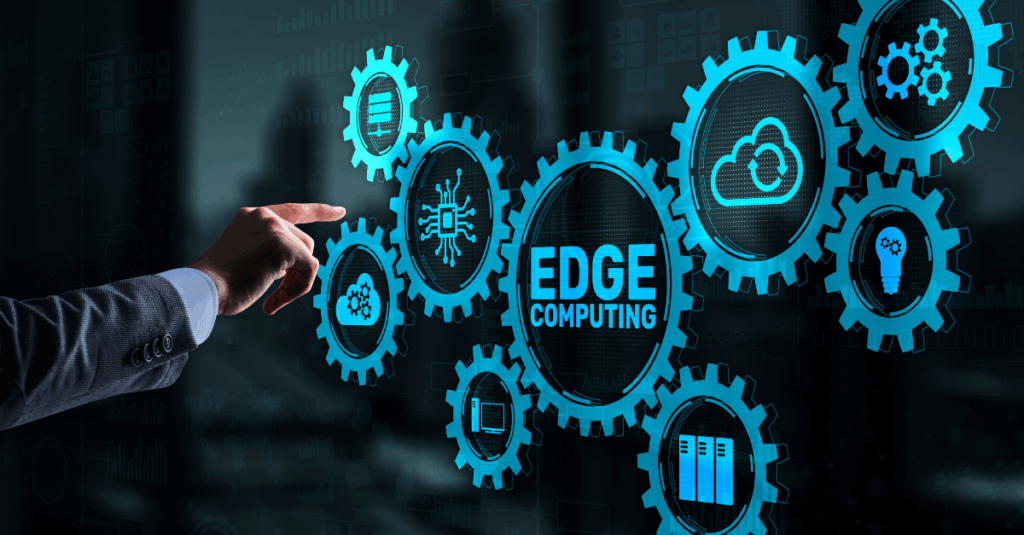
Why Edge Computing Matters for Modern Businesses
In the digital economy, milliseconds matter. Whether monitoring industrial equipment, managing smart buildings, or supporting real-time financial transactions, slow data processing can lead to costly downtime. Edge computing mitigates these risks by processing critical data instantly before it ever reaches the cloud. Businesses using insights from data to decisions understand how important immediate analysis is for competitive performance.
When implemented correctly, edge computing:
- Increases operational efficiency
- Improves IoT scalability
- Enables faster automation decisions
- Reduces dependence on centralized systems
For Austin’s growing tech ecosystem, the ability to combine edge innovation with managed IT services has become an essential step toward smarter, more responsive business operations.
The Connection Between Edge Computing and IoT
The Internet of Things (IoT) thrives on real-time data that sensors, cameras, and devices generate every second. Sending all that data to a remote cloud can create bottlenecks. Edge computing solves this by processing it locally, closer to the source.
IoT gains from edge computing include:
- Faster feedback for devices and systems
- Improved performance for connected products
- Greater autonomy for smart devices
- Lower cloud storage and transmission costs
When IoT devices work with edge tech in Austin, businesses gain localized intelligence smart factories that self-adjust, vehicles that react in milliseconds, and healthcare systems that monitor patients instantly. Edge computing makes IoT not just connected, but truly intelligent.
Reducing Latency: The Business Impact
Latency the delay between an input and a response can make or break business-critical applications. From autonomous vehicles to industrial robotics, delays of even a few milliseconds can have serious consequences. By adopting distributed architectures and strategies like those detailed in future-ready networking, companies can enhance data transmission and optimize connectivity at every level. With edge nodes processing locally, organizations reduce delays, improve reliability, and support more devices simultaneously.
In real-world terms, lower latency means:
- Faster AI-driven analytics
- Real-time customer personalization
- Safer automated systems
- Seamless integration across IoT ecosystems
For SMBs relying on real-time decision-making, edge computing delivers the responsiveness that centralized systems simply can’t match.
Managed IT Services: Making Edge Adoption Seamless
Implementing edge computing requires more than just hardware – it demands expertise, security, and ongoing management. That’s where managed IT services in Austin provide a major advantage.
By partnering with professionals experienced in why managed IT services, organizations gain:
- End-to-end deployment support for edge networks
- Secure configuration of IoT and edge systems
- Proactive monitoring and optimization
- Continuous updates to meet performance goals
A reliable IT partner ensures that edge computing integrates smoothly with existing infrastructure, aligns with compliance requirements, and delivers maximum ROI.
The result: smarter systems, lower risk, and more sustainable scalability.
Edge Computing and Cybersecurity: Protecting Distributed Systems
While edge computing decentralizes processing for efficiency, it also introduces new security challenges. More endpoints mean more potential vulnerabilities. Leaders must therefore pair innovation with robust cybersecurity strategies.
Following zero trust frameworks like those described in zero trust maximum security helps ensure that every connection between devices, networks, and applications—is verified and protected.
Best practices for edge cybersecurity:
- Encrypt all transmitted and stored data
- Regularly update firmware and software
- Segment networks to isolate threats
- Employ AI-based monitoring for anomaly detection
When security becomes an integrated part of the edge, organizations can innovate confidently without compromising data integrity.
The Role of Artificial Intelligence in Edge Computing
AI is the brain that makes edge computing intelligent. By running machine learning algorithms directly on local devices, AI allows for faster, context-aware decisions.
Examples of AI-powered edge applications:
- Predictive maintenance for industrial machinery
- Real-time fraud detection in financial transactions
- Smart traffic management systems
- Intelligent health monitoring
Businesses leveraging boosting cybersecurity with AI demonstrate how localized intelligence can process and respond to threats instantly. Similarly, AI on the edge transforms raw sensor data into actionable insights, minimizing the need for cloud processing while maximizing speed and relevance.
Edge and Cloud: A Perfect Partnership
Despite their differences, the cloud and the edge complement each other beautifully. The cloud offers centralized power and scalability, while edge computing provides real-time responsiveness.
Together, they create a hybrid architecture that’s both agile and robust.
Through cloud innovation in Austin, businesses gain the ability to store, analyze, and distribute data efficiently while edge devices handle local processing.
This dual approach:
- Reduces latency while maintaining global access
- Enables AI model training in the cloud and execution at the edge
- Provides redundancy for business continuity
- Balances cost, performance, and sustainability
Hybrid ecosystems ensure organizations harness the best of both worlds—speed from the edge, scalability from the cloud.
Edge Computing Use Cases: Transforming Industries
Edge computing is no longer experimental; it’s operational across multiple industries. From retail to manufacturing, it’s reshaping business models with real-time insights and responsive infrastructure.
Key examples include:
- Manufacturing: Predictive analytics at the edge prevent equipment failures.
- Healthcare: Connected devices monitor patients continuously, reducing emergency response times.
- Retail: Smart shelves and cameras manage inventory automatically.
- Construction: Field sensors integrated with cybersecurity in construction systems protect project data and site safety.
These use cases show how localized computing power drives faster responses, higher accuracy, and stronger business outcomes especially when backed by expert IT support.
Building Future-Ready Infrastructure for Edge Success
To fully leverage edge computing, businesses must modernize their networks, security, and compliance systems. This transformation starts with reliable infrastructure.
Austin companies implementing strategies from startups to scaleups demonstrate the importance of flexible design.
A future-ready network should:
- Support high data throughput and device density
- Integrate AI-driven monitoring for proactive optimization
- Maintain compliance with evolving IT regulations
- Prioritize energy efficiency and sustainability
With expert IT guidance and proactive managed support, businesses can implement edge ecosystems that evolve alongside their digital goals.
Overcoming Edge Computing Challenges
Challenges include:
- Device management at scale
- Data synchronization between edge and cloud
- Security across distributed networks
- Integration with legacy systems
Working with experts in managed IT services in Austin ensures seamless coordination between local processing and central management. With frameworks similar to those used in it compliance in Texas, companies can overcome these hurdles while staying compliant and cost-efficient.
The Future of Edge: Where Speed Meets Intelligence
Edge computing is paving the way for intelligent automation and next-generation connectivity, especially as 5G and 6G technologies become mainstream. Businesses leveraging insights from edge tech in Austin are positioning themselves at the forefront of digital transformation.
The future edge landscape will feature:
- Smarter devices with embedded AI capabilities
- Greater interoperability between IoT and enterprise systems
- Enhanced cybersecurity built into every layer
- Greener, energy-efficient infrastructures
For organizations ready to innovate, the edge represents limitless potential faster, smarter, and more sustainable.
Conclusion: Bringing Intelligence to the Edge
Edge computing isn’t just a technological shift—it’s a business revolution. By processing data closer to where it’s created, organizations reduce latency, increase agility, and unlock the full value of IoT. With managed IT services, zero trust frameworks, and cloud innovation in Austin, businesses can deploy scalable edge systems that balance speed, security, and sustainability. In the era of real-time intelligence, the future of digital success lies not just in the cloud—but at the edge.