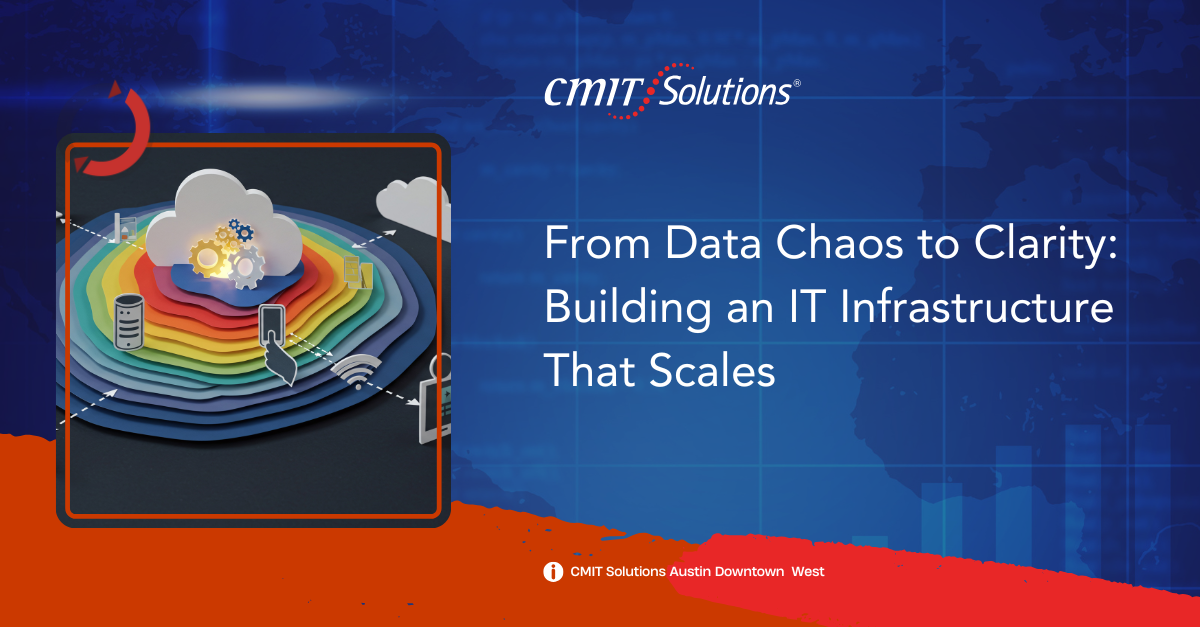
Modern businesses generate more data than ever, but much of it ends up scattered across inboxes, cloud folders, chat tools, and disconnected apps. Instead of empowering teams, this scattered data creates confusion, delays, and frustration. As companies grow, unmanaged data becomes a roadblock to performance. That’s why more organizations are shifting toward structured IT foundations inspired by future-proof infrastructure strategies that eliminate chaos and support long-term scalability.
Why Data Chaos Happens in Growing Businesses
Data chaos occurs when organizations add tools, apps, or processes without a long-term plan. Over time, this leads to:
- Multiple versions of the same document
- Lost files
- Shadow IT created by employees
- Unmanaged cloud storage
- Disconnected communication channels
- Slow reporting and decision-making
These symptoms mirror what many SMBs experience when they operate with weak network management practices.
Why Scalable IT Infrastructure Is Essential
A scalable IT foundation supports predictable growth. It adapts as the business adds employees, locations, tools, or data sources. A scalable environment brings:
- Consistent performance
- Seamless cloud adoption
- Stronger security
- Easier collaboration
- Reduced downtime
- Better long-term cost control
These capabilities are closely aligned with best practices in cloud innovation, which enable businesses to expand without technical limitations.

Standardization: The First Step From Chaos to Clarity
You cannot scale chaos. Standardization is the foundation for every high-performing infrastructure. It includes:
- Consistent file naming conventions
- Standard storage locations
- Approved communication platforms
- Defined cybersecurity rules
- Clear onboarding/offboarding procedures
These standards help organizations maintain governance and audit readiness similar to the expectations outlined in IT compliance.
Centralizing Data Through Cloud and Hybrid Architecture
Centralization means having a predictable structure for where information lives and how it flows. Cloud and hybrid setups provide:
- Real-time access
- Reduced data duplication
- Faster collaboration
- Stronger version control
- Unified storage
- Consistent security
Many companies achieve this by implementing connected collaboration systems inspired by unified communications.
Modernizing Network Infrastructure for High-Performance Workflows
Today’s cloud-based workloads demand reliable speed, uptime, and bandwidth. A modernized network includes:
- SD-WAN routing
- Segmented Wi-Fi
- Secure remote access
- Dynamic bandwidth allocation
- 24/7 monitoring
- Automated updates
Modern networks enhance visibility and performance, enabling data-driven operations similar to what businesses achieve through smart insights.
Securing Data as Systems Scale
As businesses centralize and modernize, cybersecurity becomes even more critical. Cyber threats now target cloud apps, collaboration platforms, endpoints, and backups. Strong security requires:
- Zero trust identity
- Multi-factor authentication
- Endpoint detection and response
- Encrypted cloud storage
- Access-based permissions
- Immutable backups
These multi-layer defenses follow the same blueprint used in modern digital defense strategies.
Transforming Organized Data Into Actionable Insight
Once data is centralized and standardized, it becomes useful for decision-making. Organized data enables:
- Real-time dashboards
- Accurate reports
- Forecasting
- Automated insights
- Department-level analytics
Businesses adopting analytics-powered tools experience similar improvements to those outlined in AI-driven productivity workflows.

Automating Workflows to Reduce Errors and Improve Efficiency
Manual processes cause delays and introduce mistakes. Automation solves this by ensuring:
- Consistent device setup
- Automatic updates
- Faster ticket handling
- Standardized onboarding
- Compliance enforcement
- Routine task elimination
This is the same philosophy used in modern IT automation environments, which reduce workload and boost productivity.
How Managed IT Services Power Scalable Infrastructure
Most SMBs cannot maintain scalable infrastructure alone. Managed IT partners bring:
- 24/7 monitoring
- Proactive maintenance
- Strategic planning
- Cloud migration support
- Security management
- Infrastructure optimization
This partnership creates the same upward momentum businesses see from effective managed IT services, which help them grow without disruption.
Building a Culture That Supports Scalable Growth
Technology alone cannot solve data chaos. People must be trained and aligned with the systems in place. A scalable culture includes:
- Consistent workflow adoption
- Cyber awareness training
- Use of approved tools
- Fast reporting of issues
- Understanding of data policies
Without cultural buy-in, even the best infrastructure fails.
Conclusion: Clarity Is the New Competitive Advantage
Data chaos slows companies down, but scalable infrastructure unlocks the opposite clarity, speed, reliability, and growth. By standardizing systems, centralizing data, modernizing networks, enforcing security, automating workflows, and partnering with strategic IT teams, businesses turn their IT environment into a powerful engine for productivity. In a world where speed and accuracy win, clarity is no longer optional. It’s the foundation of long-term success.