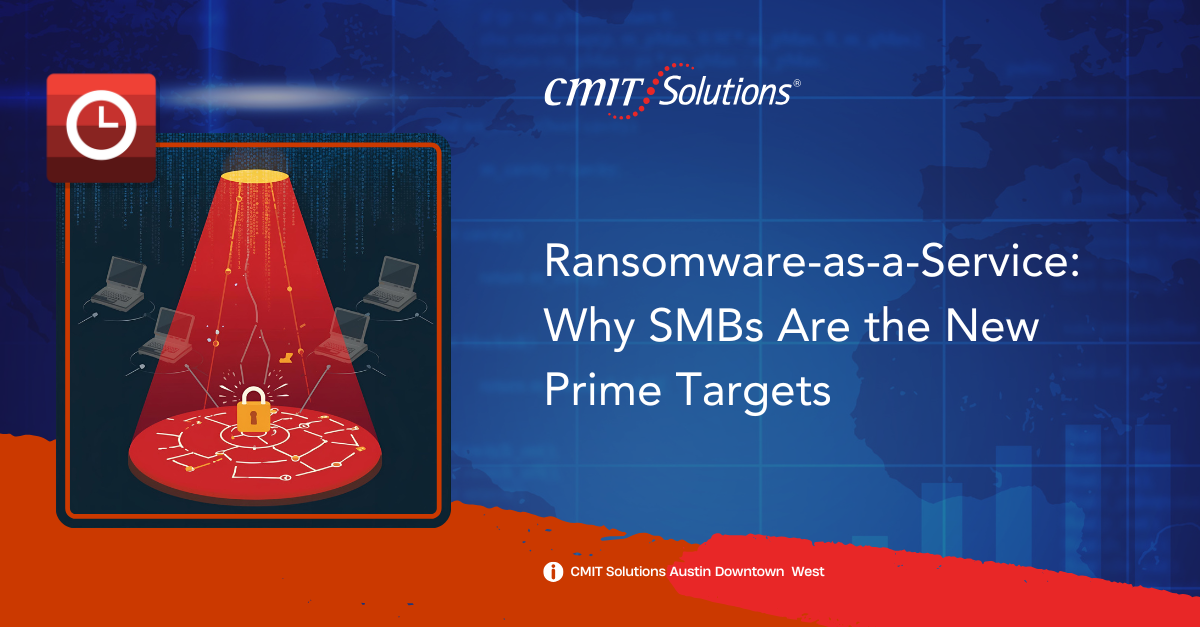
Cybercrime has evolved into an organized business model, and Ransomware-as-a-Service (RaaS) is leading the charge. Once limited to highly skilled hackers, ransomware attacks are now available “on demand,” giving even low-level cybercriminals the power to devastate small and midsized businesses (SMBs).
For Austin’s thriving business community, understanding this threat is critical. SMBs are now prime targets not because they hold the most data but because they are the easiest to exploit. The rise of RaaS marks a turning point in cybersecurity, demanding smarter defenses, faster detection, and proactive recovery planning.
Understanding Ransomware-as-a-Service (RaaS)
Ransomware-as-a-Service operates much like legitimate Software-as-a-Service (SaaS) platforms. Developers create and sell ready-to-launch ransomware kits to affiliates, who then distribute them to victims.
Affiliates pay a subscription or share profits with the developer, who provides technical support, infrastructure, and encryption updates. This model makes cyber extortion accessible to anyone with malicious intent.
RaaS platforms often include:
- Easy-to-use dashboards for attack deployment
- Built-in payment systems for collecting cryptocurrency
- Automated encryption and data leak functions
- Technical “support” for affiliates
This criminal innovation mirrors legitimate business models complete with branding, pricing tiers, and service guarantees. As seen in boosting cybersecurity with AI, automation isn’t limited to good actors; it’s now a weaponized tool in the hands of cybercriminals.

Why SMBs Are the New Favorite Targets
Limited Cybersecurity Budgets
Large corporations invest heavily in layered defenses and 24/7 security teams. SMBs, by contrast, often rely on basic antivirus software and outdated firewalls. Attackers know this—and exploit it.
Many SMBs underestimate their value, believing they’re too small to be targeted. However, cybercriminals recognize that smaller firms still hold sensitive data client information, payroll systems, and financial records all easily monetized on the dark web. That’s why so many Austin-based SMBs are now adopting managed IT services from trusted providers to close these security gaps before RaaS affiliates exploit them.
Easier Entry Points
Unlike global enterprises with strict compliance policies, SMBs often have weak password protocols, limited patch management, unsecured remote access, and overlooked cloud configurations. This makes them low-effort, high-reward targets. RaaS operators favor scalability—thousands of small attacks are more profitable than one complex corporate breach.
The reality mirrors the findings in the cost of poor network management, where unmaintained systems directly lead to downtime and vulnerability exposure.
Faster Payouts
Cybercriminals thrive on speed. SMBs facing downtime can’t afford days of disruption, making them more likely to pay ransoms quickly. Attackers exploit this urgency through double extortion encrypting data and threatening to leak it publicly.
This has made SMBs a preferred victim type in the RaaS economy: small enough to panic, yet financially stable enough to pay.
How RaaS Works: The Business of Cybercrime
RaaS has formalized ransomware operations into structured hierarchies. Each campaign involves multiple actors, each playing a defined role.
The RaaS ecosystem includes:
- Developers – Create and maintain ransomware code
- Affiliates – Purchase or subscribe to deploy attacks
- Access brokers – Sell stolen credentials and network access
- Negotiators – Manage ransom demands and communications
Each attack runs like a business efficient, scalable, and globally distributed. Through cloud-based command-and-control systems, RaaS operators automate every phase of the attack. Businesses adopting zero trust frameworks from zero trust maximum security can disrupt this model by limiting access and preventing attackers from moving laterally once inside the network.
The Growing Threat to Austin’s SMB Landscape
Austin’s business ecosystem driven by innovation and startups is especially vulnerable. Rapid digital growth often outpaces cybersecurity investments.
Companies scaling through cloud platforms or remote collaboration tools inadvertently expand their attack surfaces. Unsecured endpoints, unmanaged IoT devices, and exposed APIs give RaaS affiliates numerous entry points. That’s why proactive SMBs are turning to cloud innovation in Austin leveraging secure, scalable cloud solutions that integrate encryption, redundancy, and automated threat detection. This shift doesn’t just mitigate risk, it enables smarter business continuity across hybrid environments.
The Role of AI in Ransomware Detection and Response
Ironically, AI is both a weapon and a shield in the ransomware arms race. Attackers use artificial intelligence to automate phishing campaigns, evade antivirus detection, and optimize ransom pricing. Fortunately, defenders are adapting just as quickly. AI-driven cybersecurity systems can identify anomalies, isolate infected systems, and prevent spread within seconds.
As outlined in from data to decisions, intelligent analytics allow SMBs to predict vulnerabilities before they’re exploited. When combined with automated backup solutions, AI transforms ransomware defense from reactive to predictive keeping data secure and downtime minimal.
The Financial and Operational Impact of RaaS Attacks
Ransomware doesn’t just lock data it locks operations. The consequences for SMBs can be catastrophic, with damages including:
- Extended downtime and revenue loss
- Customer distrust after data exposure
- Costly ransom payments
- Legal and compliance violations
- Permanent data loss if backups fail
One dangerous misconception is that paying the ransom guarantees recovery. In reality, many victims never regain full access or discover secondary infections later. By implementing data backup isn’t optional strategy, businesses can ensure reliable, immutable backups that remain untouched by ransomware even during active encryption events.
RaaS and the Evolution of Double and Triple Extortion
Ransomware has grown far beyond simple encryption. Today’s RaaS attacks often involve double extortion criminals not only encrypt files but also steal data and threaten to release it.
Some groups now use triple extortion, targeting a victim’s customers or vendors to amplify pressure. This evolution means that even businesses with strong backups must adopt cybersecurity in construction-style defenses layered, resilient, and continuously tested. Attackers have learned that fear, not just encryption, drives payment. Education, readiness, and proactive security are the only effective countermeasures.
Compliance and Legal Consequences
In regulated sectors like healthcare, finance, and law, ransomware incidents trigger more than downtime they can cause compliance breaches. Firms adhering to it compliance in Texas understand that breach disclosure laws and data protection mandates heighten post-attack liability.
RaaS affiliates often exploit compliance deadlines, threatening to leak data to pressure faster payments. Having a compliant disaster recovery plan ensures businesses can respond effectively and meet regulatory obligations simultaneously.

The Role of Managed IT Services in Ransomware Prevention
Managed IT providers play a vital role in defending against ransomware by delivering expertise and continuous monitoring.
Through why managed IT services, SMBs gain:
- 24/7 network surveillance and real-time alerts
- Automated patch management
- Verified backup testing and validation
- AI-enhanced threat prevention
- Rapid data recovery during incidents
Outsourcing IT management empowers small businesses to defend at an enterprise level without enterprise costs.
Building Resilience: What SMBs Must Do Now
Ransomware isn’t disappearing, it’s adapting. SMBs must prepare by reinforcing both technology and awareness.
Key resilience strategies include:
- Implementing zero trust access policies
- Enforcing MFA and encryption
- Isolating backups in secure environments
- Conducting regular phishing and response training
- Partnering with cybersecurity experts for audits and monitoring
As demonstrated in from startups to scaleups, modern SMBs that build scalable, secure infrastructures can grow confidently while minimizing exposure to evolving ransomware threats.
The Future of Ransomware: AI Meets Quantum
Emerging technologies like post-quantum encryption will soon redefine the cybersecurity battlefield. RaaS developers are expected to deploy self-learning malware capable of adapting to defenses in real time.
Austin-based companies leveraging Austin’s AI advantage are already testing AI-powered defense systems that predict, isolate, and neutralize ransomware threats before they spread. The next era of cybersecurity will hinge on automation, intelligence, and preparation qualities that separate the secure from the vulnerable
Conclusion: Staying Ahead of the RaaS Wave
Ransomware-as-a-Service has permanently reshaped the threat landscape. It’s scalable, profitable, and ruthlessly efficient especially against SMBs without comprehensive protection.
But every evolution in cybercrime invites an evolution in defense. By combining cloud innovation in Austin, zero trust maximum security, and AI-driven prevention, businesses can safeguard operations and recover swiftly when attacks occur. In the age of RaaS, success belongs not to the lucky but to the prepared. Partnering with CMIT Solutions ensures your systems stay one step ahead of even the most sophisticated cyber adversaries.