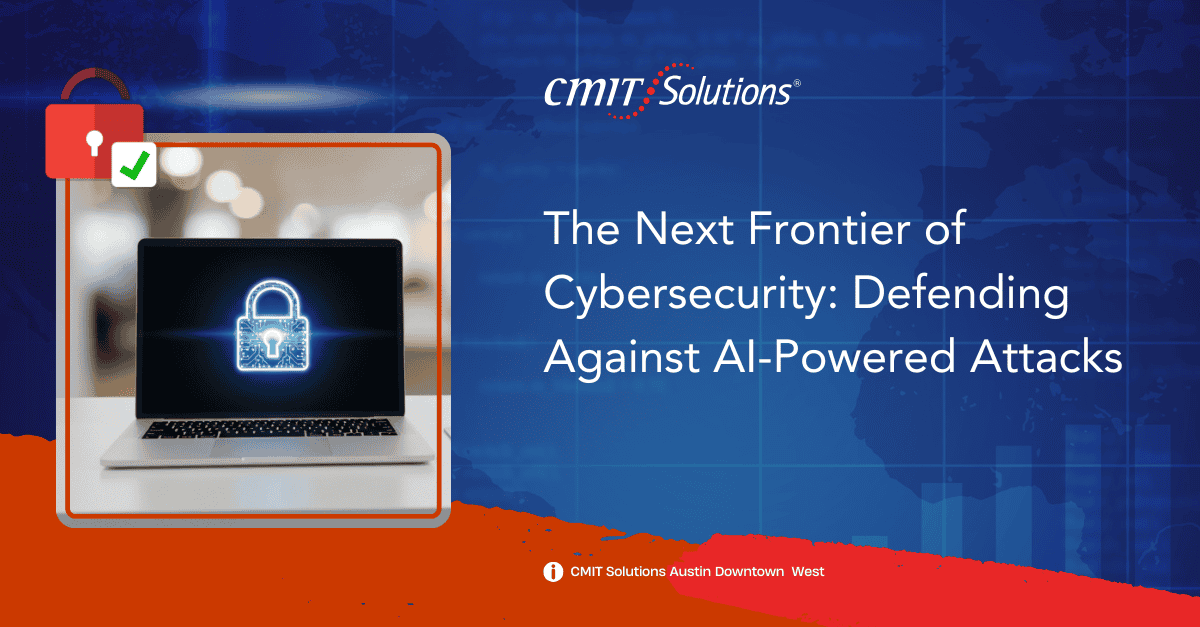
Artificial intelligence is reshaping the digital landscape in powerful ways. While businesses are leveraging AI for automation, productivity, workflow optimization, and decision-making, cybercriminals are using the same technologies to create more advanced, adaptive, and destructive cyberattacks. These AI-powered threats represent the next stage of cyber risk—one that evolves automatically, learns from environment behavior, and targets organizations of every size with precision.
Small and midsize businesses (SMBs) are especially vulnerable. Attackers no longer need deep skills—AI handles everything, from writing phishing emails to generating malware. This makes understanding AI-powered cyberattacks essential for every organization that depends on digital systems.
What Are AI-Powered Cyber Attacks?
AI-powered cyberattacks use machine learning, automation, and large language models to create and execute threats that adapt in real time. Attackers use AI to analyze employee behavior, scan networks, bypass security controls, and generate malicious content that looks authentic.
Business leaders exploring data insights often reference tools like smart insights, which help companies grow and automate decisions. However, attackers use similar analytic capabilities to identify weaknesses much faster than traditional hacking methods.
Even industries with complex project workflows such as construction have become prime targets, as explained in cybersecurity in construction, where infrastructure plans can be intercepted or manipulated.
Why AI Has Become a Cybercrime Weapon
AI Makes Attacks Faster
AI can create thousands of phishing messages instantly, each tailored to an employee’s writing tone, job role, and habits. A process that once took hours now takes seconds.
AI Increases Attack Accuracy
Deepfake voice tools can recreate a CEO’s voice. Generative AI can mimic communication patterns. Malware can disguise itself as legitimate software.
AI-driven tools used in modern IT operations similar to those shown in AI-driven productivity are now used by criminals to fine-tune their attacks.
AI Enables Self-Learning Malware
Traditional malware runs on predefined instructions. AI malware adapts dynamically. If blocked on one path, it reroutes automatically. If detected, it hides or delays activity.
Attackers No Longer Need Expertise
AI platforms can write malicious code, generate phishing content, and build payloads for inexperienced criminals dramatically increasing the number of threats.
How AI Targets SMBs Specifically
SMBs often lack enterprise-level cybersecurity budgets or dedicated security teams. They also rely heavily on cloud systems, remote work tools, and operational technologies that are easy to misconfigure.
Many SMBs struggle with outdated networks exactly the issue explained in poor network management, where outdated devices and misconfigurations create high-risk vulnerabilities.
Attackers know SMBs often:
- Delay security updates
- Use unmanaged devices
- Have limited cybersecurity awareness
- Rely heavily on email communication
- Lack 24/7 threat monitoring
This makes SMBs easy and profitable targets.
Types of AI-Powered Attacks Harming Businesses Today
AI-Generated Phishing
AI crafts highly personalized, tone-matched emails that appear convincingly authentic. Messages may look like they came from HR, your CEO, or a long-term client.
Deepfake Fraud
Using AI-generated voice or video, attackers pretend to be company executives and request urgent actions like wire transfers or password resets.
Self-Adapting Malware
AI malware learns from the network environment and adjusts its behavior to stay hidden. It can disable detection tools, encrypt data slowly, or steal information quietly.
Automated Vulnerability Scanning
AI continuously probes networks for weaknesses, exploiting configuration issues in cloud systems similar to gaps addressed through cloud innovation.
Identity-Based Attacks
AI analyzes login behavior to guess credentials and bypass authentication, especially in companies still transitioning away from outdated operating systems without reviewing hidden Windows features.
The Rising Cost of Ignoring AI Threats
Failing to upgrade cybersecurity defenses can result in:
Financial Devastation
Ransomware attacks cost SMBs an average of hundreds of thousands of dollars. Downtime is even more expensive, especially in companies already struggling with poor network management.
Long-Term Data Loss
Without a strong backup strategy, AI-powered ransomware can corrupt files and backups. This reinforces the importance of strategies covered in data backup.
Compliance Violations
Industries such as healthcare must follow strict data rules. AI-driven threats make compliance even harder, similar to challenges outlined in HIPAA cyber defense.
Reputation Damage
Customers rarely forgive data breaches. Loss of trust can impact sales for years.
Why SMBs Need Managed IT Services in the Age of AI
AI attacks require AI-level defense. This is where managed IT services become crucial.
24/7 Security Monitoring
AI attacks don’t sleep. Managed IT services detect and respond instantly.
AI-Enhanced Cybersecurity Tools
MSPs deploy:
- Advanced threat detection
- Behavioral analytics
- Email filtering powered by AI
- Zero-trust frameworks
These match the proactive strategies shown in boosting cybersecurity with AI.
Strong Data Backup & Recovery
A good MSP ensures continuous, secure backups—exactly why businesses must prioritize data backup.
Secure Unified Communication
Modern teams rely on cloud-based collaboration tools. MSPs secure these environments, much like systems highlighted in unified communications.
Industry-Specific Security
From real estate to construction, every industry has different risk points. This is why insights like digital trust in real estate help businesses build correct frameworks.
Scalable IT Planning
MSPs support long-term growth strategies similar to the guidance found in scaleup infrastructure.
How to Build a Strong AI Defense Framework
Strengthen Access Controls
Use MFA, passwordless login, and zero-trust verification to reduce identity-based attacks.
Invest in Behavioral Detection
Signature-based antivirus won’t stop AI malware. Behavioral analytics detects unusual activity instantly.
Implement Zero Trust
Never trust always verify. Zero trust is essential and aligns with insights shared in zero trust security.
Automate Vulnerability Patching
AI attacks exploit outdated systems instantly. Automated patching closes the gaps.
Train Employees Against AI Phishing
Regular simulations help staff recognize trickier, AI-enhanced attacks.
Work with a Cyber-Ready MSP
A strong MSP provides security operations, rapid response, strategic upgrades, and continual improvement key to staying ahead of evolving AI threats.
Conclusion
AI-powered cyberattacks represent the next major evolution of digital threats. They are faster, more adaptive, and more damaging than anything SMBs have faced before. But with the right managed IT partner, the same AI capabilities that enable attackers can be used to defend your organization.
By strengthening backup strategies, adopting zero trust frameworks, securing unified communication systems, and applying behavioral analytics, SMBs can build a cybersecurity posture that evolves as fast as the threats.
Cybersecurity is no longer about reacting to attacks—it’s about anticipating them. Businesses that adopt proactive AI-powered defense today will be the ones protected tomorrow.