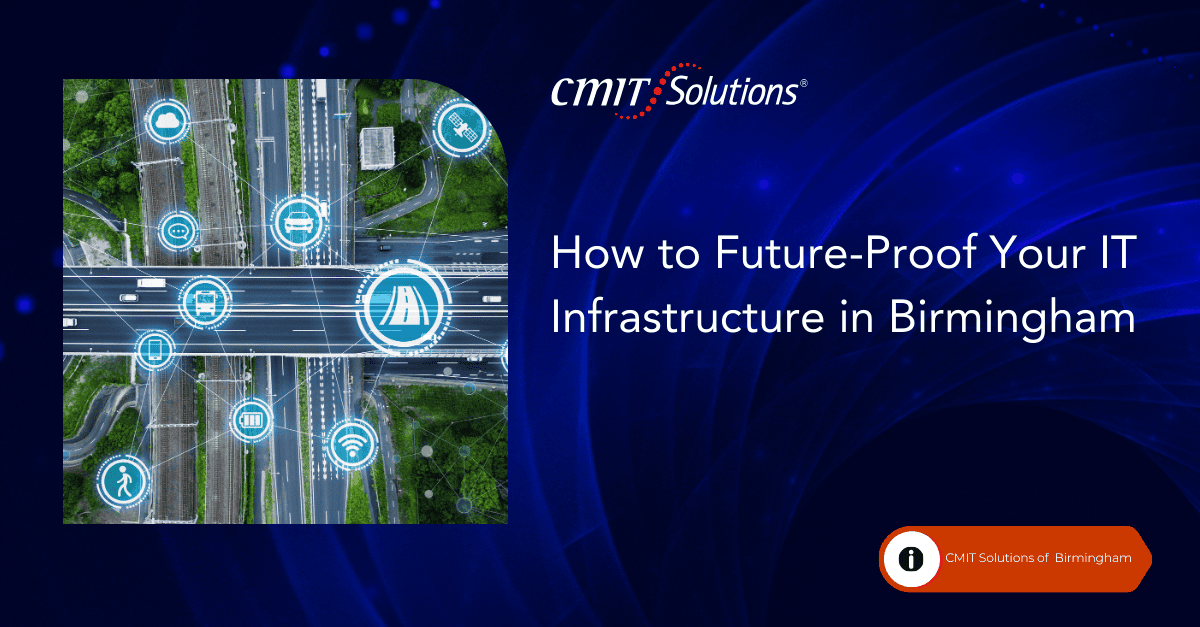
For Birmingham businesses, technology is both an opportunity and a challenge. The pace of digital change means yesterday’s IT strategies no longer guarantee tomorrow’s success. Future-proofing your IT infrastructure is about more than upgrades it’s about building systems that adapt, scale, and remain secure in the face of rapid change.
This guide explores what executives and SMB leaders in Birmingham must consider now to ensure their IT investments remain relevant and resilient in the years ahead.
Moving Beyond Legacy Systems
Too many businesses still rely on outdated servers, unsupported operating systems, and patched-together solutions. While these systems may function today, they create long-term risks: downtime, cyberattacks, and higher maintenance costs.
CMIT Birmingham’s piece on Windows 10 retirement highlights the dangers of running unsupported platforms. Once updates stop, vulnerabilities multiply.
Future-proofing requires:
- Phasing out legacy hardware and software before end-of-life
- Prioritizing investments in scalable systems
- Documenting transition timelines to avoid rushed upgrades

Integrating AI Into Infrastructure
Artificial intelligence is no longer a buzzword—it is embedded into everyday IT systems. From predictive maintenance to automated security alerts, AI helps businesses stay ahead.
CMIT Birmingham explains in AI inbox how automation improves efficiency. Their article on AI systems reinforces that businesses must treat AI as an essential part of infrastructure, not an add-on. By adopting AI-driven monitoring, Birmingham SMBs can:
- Detect anomalies before they become outages
- Automate patching and updates
- Use analytics for smarter capacity planning
Network Resilience in a 6G Future
As 6G and next-generation connectivity approaches, networks must be designed for far greater bandwidth and lower latency. Businesses that fail to prepare now may find their infrastructure obsolete within a few years.
CMIT Birmingham’s article on network management shows how automation improves reliability. Their 6G insights highlight the scale of change coming.
Executives should prioritize:
- Redundant network pathways for uptime
- Segmented networks to isolate threats
- Investments in 5G/6G-ready hardware
Cybersecurity Built for Tomorrow
Cyber threats evolve daily. Attackers now use AI-driven phishing, ransomware-as-a-service, and deepfakes to target businesses. Traditional firewalls are no longer enough.
CMIT Birmingham’s Zero Trust coverage stresses the importance of continuous verification. Their article on cybersecurity in the boardroom reinforces that security is now a leadership responsibility.
Future-ready cybersecurity should include:
- Zero Trust frameworks
- AI-driven threat detection
- Multi-factor authentication across all systems
Data Architecture for Scalability
Data is growing faster than most SMBs can manage. Without a plan, businesses risk drowning in unstructured information that is costly to store and difficult to analyze.
CMIT Birmingham’s insights on Microsoft 365 sprawl highlight how unmanaged systems waste resources.
A scalable data architecture should:
- Separate critical data from temporary files
- Use tiered storage solutions
- Integrate analytics platforms for real-time insight
Automating Compliance and Governance
Compliance is not static—it evolves as regulations tighten. Businesses that only address compliance at year-end risk costly fines.
CMIT Birmingham’s compliance automation guide shows how automation reduces chaos. Their piece on audit readiness confirms that auditors expect real-time reporting.
For SMBs, compliance automation future-proofs governance and strengthens client trust.
Smarter Vendor and IT Partnerships
Technology is only as good as the partners supporting it. Relying on the wrong vendor creates risks in reliability and security.
CMIT Birmingham emphasizes tech consulting as a key strategy for SMBs that want scalable growth. Their article on tailored solutions demonstrates how customized MSP packages prepare businesses for the future.
Future-proof IT requires ongoing partnerships not one-off purchases.

Preparing for Windows 10 Retirement and Beyond
With Windows 10 reaching end-of-life, businesses that don’t migrate risk running unsupported systems. This is not only a security issue but also a compliance and productivity risk.
CMIT Birmingham warns in its Windows 10 article that regulated industries face added dangers if they delay upgrades.
Sustainability as an IT Priority
Future-proofing isn’t only about speed and security it’s also about sustainability. Green IT practices reduce energy costs, extend equipment life, and support corporate responsibility goals.
CMIT Birmingham’s IT trends highlight sustainability as a growing focus for SMBs.
Conclusion: Building Tomorrow’s IT Today
Future-proofing IT infrastructure in Birmingham requires proactive leadership. By moving beyond legacy systems, embedding AI, preparing for next-gen networks, automating compliance, and partnering with the right IT experts, SMBs can ensure they’re ready for whatever comes next.
The lesson is clear: future-proofing isn’t about guessing the future it’s about building adaptable systems that thrive in it.