The rapid evolution of work culture has brought one undeniable truth to the forefront: hybrid work is here to stay. For small to mid-sized businesses (SMBs) in Birmingham, embracing this shift isn’t just about remote flexibility—it’s about implementing the right technology infrastructure to support it. Enter the hybrid cloud: a powerful blend of on-premises and cloud services that enables scalability, security, and agility.
This blog unpacks how SMBs in Birmingham can build a scalable cloud strategy to support hybrid work, improve productivity, and stay competitive in a digitally driven marketplace.
Understanding the Hybrid Cloud Model
A hybrid cloud combines public cloud services (like AWS, Azure, or Google Cloud) with private cloud or on-premises infrastructure. This setup enables businesses to move workloads across environments as needs change. For Birmingham SMBs with limited IT budgets, the hybrid model offers both cost efficiency and flexibility.
Rather than overcommitting to a single solution, a hybrid strategy allows for:
- Scalability as business needs evolve
- Improved security by keeping sensitive data in a private environment
- Greater control over compliance and performance
Local businesses benefit from hybrid cloud solutions because they provide the agility to quickly respond to market trends without major infrastructure investments.
Why Hybrid Work Demands Hybrid Cloud
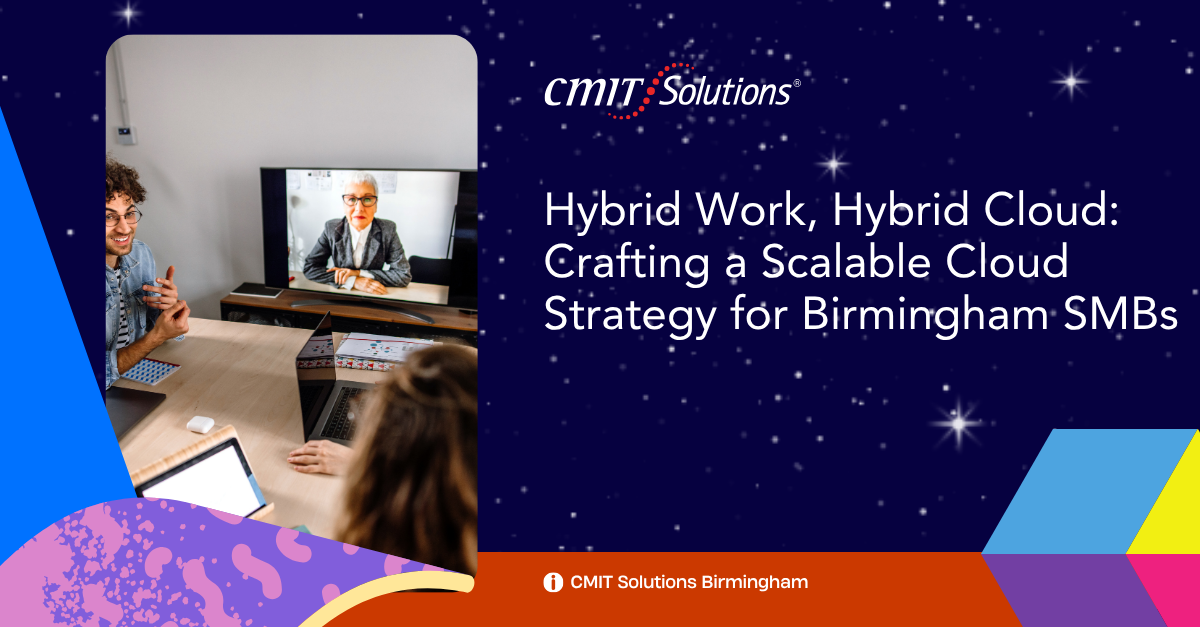
The hybrid workforce—split between remote and in-office employees—has become the new standard. This shift introduces unique IT challenges:
- Data accessibility from various locations
- Consistent cybersecurity practices across all endpoints
- Seamless collaboration tools regardless of employee location
A well-managed hybrid cloud environment ensures that these challenges are met with resilience. For instance, cloud services in Birmingham can provide secure file-sharing platforms, virtual desktops, and collaboration tools like Microsoft 365 and Google Workspace.
Moreover, when integrated with managed IT services, a hybrid cloud setup allows SMBs to automate updates, reduce downtime, and enhance team productivity.

Building Blocks of a Scalable Cloud Strategy
A scalable cloud strategy requires more than just moving data to the cloud. It involves a multi-faceted approach that includes:
1. Assessing Your Current IT Infrastructure
Before transitioning to the cloud, businesses must perform a comprehensive audit of their existing systems. This includes identifying:
- Legacy software dependencies
- Bandwidth constraints
- Existing security protocols
This analysis helps determine what stays on-premises and what migrates to the cloud. Partnering with experts in IT support services in Birmingham ensures that your migration is smooth and strategic.
2. Choosing the Right Cloud Mix
Not all cloud platforms are created equal. Depending on your industry, you may need a different balance of public, private, and hybrid options. For example:
- A medical practice may prefer private cloud storage for HIPAA compliance.
- A retail business may use public cloud for its point-of-sale systems.
The key is flexibility. Managed cloud solutions in Birmingham can help tailor your environment for optimal performance.
3. Implementing a Zero Trust Security Model
Security should never be an afterthought. A Zero Trust Architecture ensures that all users, devices, and apps are verified before gaining access to your network.
This model supports hybrid work by:
- Requiring multi-factor authentication
- Monitoring access points
- Segmenting data and networks to minimize breach risk
Cybersecurity services in Birmingham can help implement and manage this advanced security posture.
4. Automating Backup and Disaster Recovery
Data loss can cripple any SMB. With hybrid work increasing dependency on digital access, it’s crucial to deploy a robust backup and disaster recovery plan.
This should include:
- Automated daily backups
- Cloud-based disaster recovery
- Local server restoration options
An expert in data backup solutions in Birmingham can help your business stay protected and compliant.

Real Benefits for Birmingham Businesses
SMBs adopting hybrid cloud strategies stand to gain significantly. Here’s how:
Enhanced Productivity
Employees can work seamlessly across devices and locations without latency or access issues. Integrated productivity apps like Microsoft Teams and Google Drive allow for real-time collaboration.
Cost Efficiency
Instead of investing in expensive hardware upgrades, companies can subscribe to pay-as-you-go cloud services that scale with demand.
Faster Innovation
With flexible infrastructure, your business can deploy new applications and services faster, reaching new customers and markets more efficiently.
Business Continuity
Redundant systems and automated backups ensure your business keeps operating even during an outage or cyber incident.
Birmingham-based firms using IT guidance services can confidently navigate these transformations.
Common Hybrid Cloud Pitfalls to Avoid
Transitioning to a hybrid model is not without its hurdles. To build a successful cloud strategy, SMBs should watch out for:
- Underestimating cloud costs: It’s easy to overspend without proper monitoring tools.
- Ignoring compliance standards: Different industries have varying rules for data storage and access.
- Inadequate training: Employees must be trained on new platforms to ensure adoption.
- Neglecting IT governance: Without consistent oversight, hybrid environments can become chaotic.
This is why strategic IT consulting in Birmingham is essential for long-term success.
Case Study: A Birmingham SMB Success Story
Take the example of a local architectural firm. Facing issues with remote collaboration and outdated hardware, they partnered with a managed service provider for a hybrid cloud transformation. Here’s what changed:
- Migrated design files to a secure cloud server
- Deployed Microsoft 365 for cross-team communication
- Implemented endpoint security across all devices
The result? A 40% increase in productivity and a measurable decrease in IT downtime. This firm leveraged cloud computing services in Birmingham to modernize its operations and grow sustainably.
Future-Proofing Your Business
Hybrid work and hybrid cloud are not just trends—they represent a permanent evolution in how businesses operate. Birmingham SMBs that act now will position themselves ahead of competitors.
Consider implementing:
- AI-powered analytics for customer data
- Cloud-native app development
- Unified communications platforms
Whether you’re scaling up or stabilizing operations, expert IT procurement in Birmingham can align your investments with long-term goals.
Steps to Get Started
Here’s a simplified roadmap for Birmingham SMBs ready to embrace hybrid cloud:
- Partner with a Managed IT Provider Work with professionals who understand local compliance, industry standards, and the nuances of hybrid infrastructure. IT consulting in Birmingham is a smart first step.
- Audit Your Infrastructure Determine what can move to the cloud, what must stay on-premises, and which applications need upgrading.
- Secure Your Systems Use best-in-class cybersecurity tools, regular updates, and employee training to reduce vulnerabilities.
- Deploy and Optimize Launch your hybrid environment in phases, testing and refining along the way.
- Monitor and Adapt Use analytics tools and IT support to continually improve and adjust your strategy.
Final Thoughts
The hybrid cloud is more than a tech solution—it’s the foundation for how modern businesses operate in a hybrid work world. For Birmingham SMBs, the path forward is clear: invest in scalable, secure, and flexible IT infrastructure that evolves with your needs.
By working with experienced professionals offering network management and cloud services in Birmingham, your business can unlock the full potential of hybrid cloud technology.
Ready to future-proof your operations? Let expert support guide your journey into the hybrid future.