Cybersecurity awareness training has never been more important for small and medium-sized businesses. While organizations continue to invest in advanced security tools, employees remain one of the most common entry points for cyberattacks.
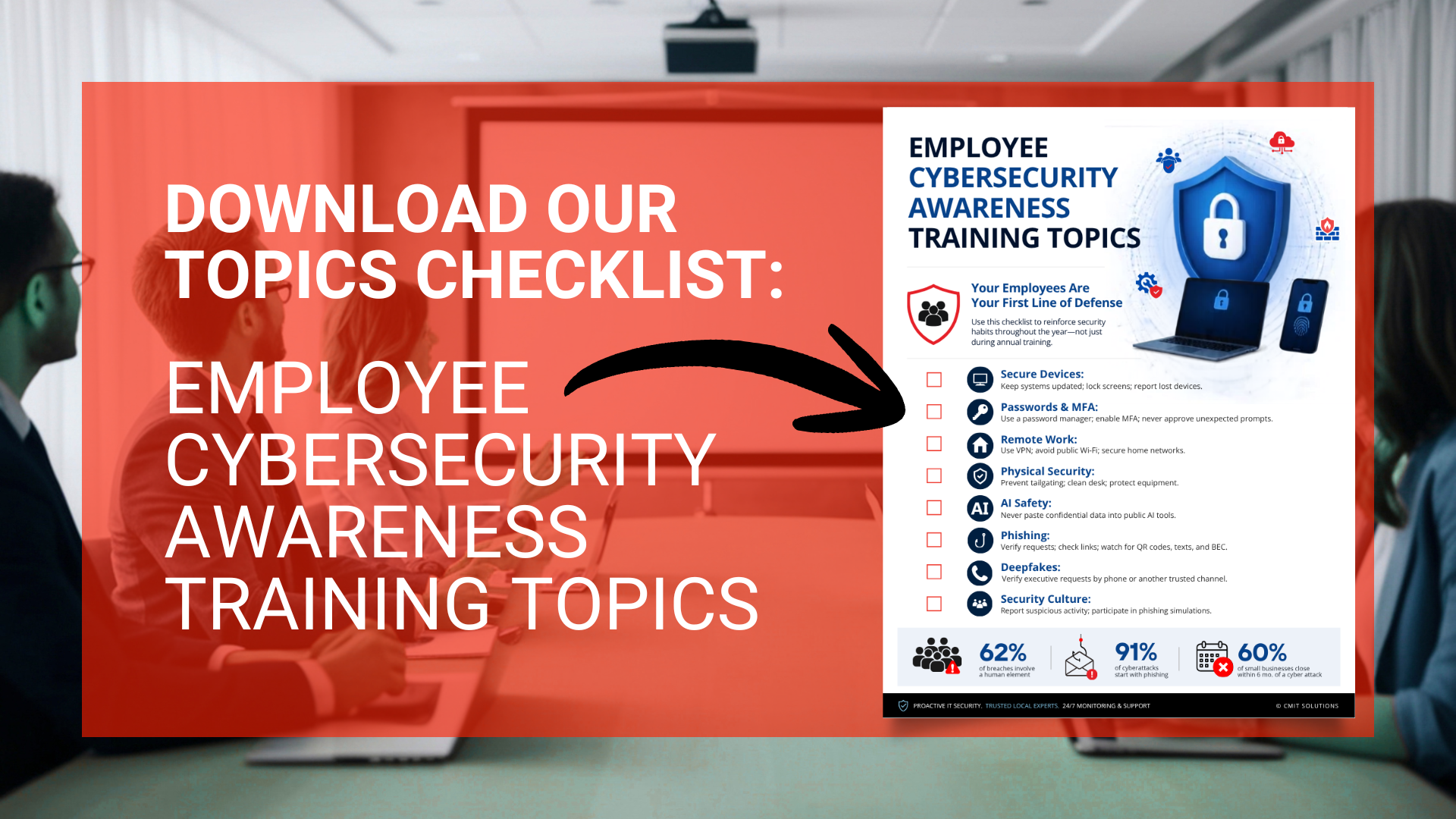
According to the 2026 Verizon Data Breach Investigations Report (DBIR), the human element was involved in 62% of data breaches, reinforcing that cybersecurity is just as much about people as it is technology.
Today’s cybercriminals aren’t just sending poorly written phishing emails. They’re using artificial intelligence to craft convincing messages, impersonating executives with deepfake voice technology, and targeting employees through text messages, QR codes, and collaboration platforms like Microsoft Teams.
The good news? With ongoing cybersecurity awareness training, your employees can become one of your strongest lines of defense.
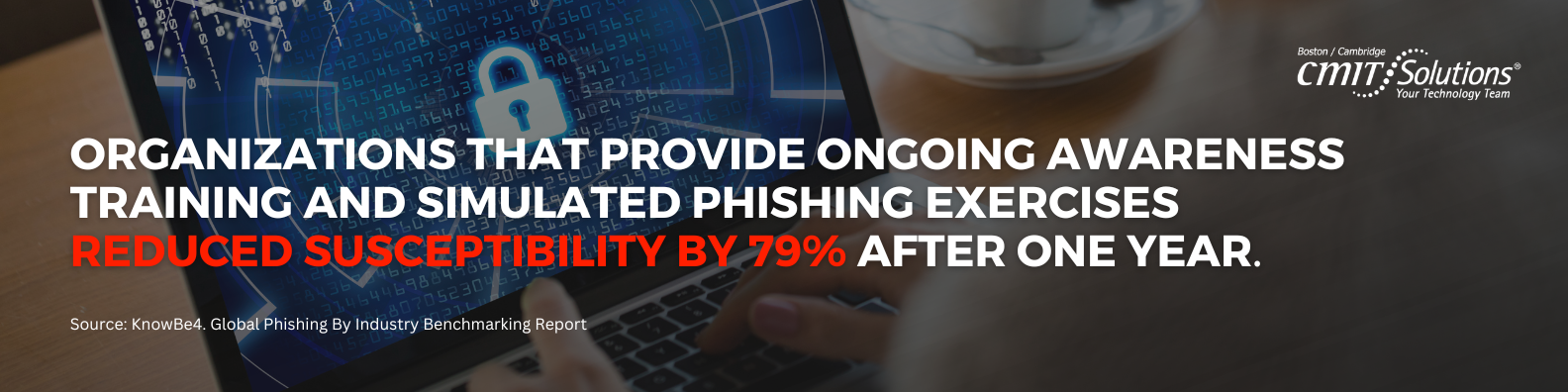
Research analyzing more than 42 million phishing simulations found that organizations conducting ongoing security awareness training reduced employee phishing susceptibility from 33.2% to just 4.2% within one year. That’s a compelling reminder that cybersecurity awareness training isn’t just another compliance requirement—it’s one of the smartest investments an organization can make.
Essential Cybersecurity Awareness Training Topics
Below are the essential topics every organization should include in its employee cybersecurity awareness training program.
Device & Endpoint Security
Main Focus: Protecting company computers, laptops, smartphones, and tablets from unauthorized access.
Employees should understand how to:
- Keep operating systems and applications updated
- Recognize the importance of endpoint protection software
- Secure remote and hybrid work devices
- Lock devices whenever they leave their workspace
- Report lost or stolen devices immediately
As more employees work from multiple locations, endpoint security has become critical to protecting company data. Every device connected to your network represents a potential entry point for attackers if it isn’t properly secured.
Password Security & Multi-Factor Authentication (MFA)
Main Focus: Creating strong authentication habits that protect business accounts.
Employees should learn:
- How to create strong, unique passwords or passphrases
- Why password reuse is dangerous
- How password managers simplify secure password practices
- Why Multi-Factor Authentication (MFA) is essential
- How to recognize MFA fatigue attacks, where attackers repeatedly send authentication requests hoping users will approve one accidentally
Passwords alone are no longer enough. Attackers increasingly rely on stolen credentials, password reuse, and MFA fatigue attacks to gain access to business systems. Organizations should pair strong passwords with phishing-resistant MFA whenever possible. The latest Verizon research also shows attackers continue shifting toward exploiting software vulnerabilities and identity-based attacks, making strong authentication more important than ever.
Wireless Network & Remote Work Security
Main Focus: Safely connecting to company resources from anywhere.
Training should include:
- Risks associated with public Wi-Fi
- Safe VPN usage
- Home network security best practices
- Secure file sharing
- Avoiding unsecured personal devices for business activities
With hybrid work now standard for many organizations, employees need to understand that home offices and coffee shops don’t provide the same protections as corporate networks. Safe remote work habits help prevent attackers from exploiting unsecured connections.
Physical Security
Main Focus: Preventing unauthorized physical access to devices and sensitive information.
Employees should understand the importance of:
- Locking computers when unattended
- Protecting company-issued devices
- Proper visitor procedures
- Clean desk policies
- Recognizing in-person social engineering attempts, such as tailgating or unauthorized individuals requesting access to secure areas
Cybersecurity extends beyond software. Simple habits like locking a workstation or challenging an unfamiliar visitor can prevent unauthorized access to sensitive business information.
Data Privacy & Responsible AI Use
Main Focus: Protecting sensitive company and customer information.
Employees should know:
- Which information is confidential
- How to securely share files
- Proper data handling procedures
- Copyright and intellectual property considerations
- Why confidential company information should never be entered into public AI tools without approval
Generative AI tools like ChatGPT, Microsoft Copilot, and Google Gemini are transforming workplace productivity. However, organizations should establish clear guidelines for their safe and responsible use to prevent accidental exposure of confidential business information or customer data.
Phishing, Smishing, Vishing & QR Code Scams
Main Focus: Identifying and reporting today’s most common social engineering attacks.
Training should cover:
- Email phishing
- Text message phishing (smishing)
- Voice phishing (vishing)
- QR code phishing (“quishing”)
- Fake login pages
- Suspicious attachments
- Business Email Compromise (BEC)
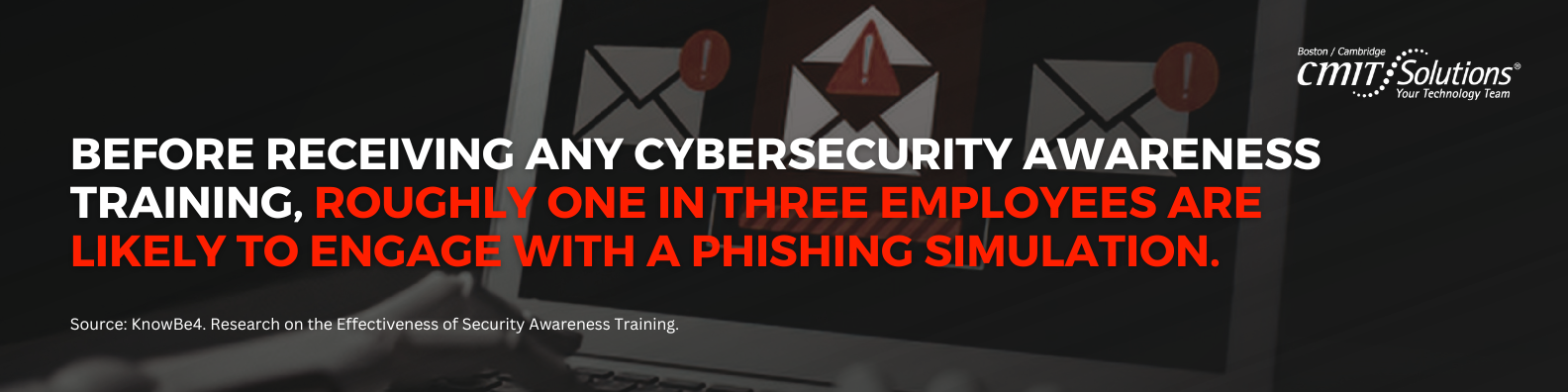
Phishing remains one of the most effective attack methods because it targets people rather than technology. Before receiving any cybersecurity awareness training, roughly one in three employees (33.2%) are likely to engage with a phishing simulation. Organizations that provide ongoing awareness training and simulated phishing exercises reduce that susceptibility by 79% after one year, demonstrating that continuous education significantly changes employee behavior.
Employees should also be trained to verify unexpected requests involving payments, credentials, or sensitive information through a second communication method before taking action.
AI-Powered Social Engineering & Deepfake Scams
Main Focus: Recognizing emerging threats powered by artificial intelligence.
One of the fastest-growing cyber risks in 2026 involves AI-generated voice and video impersonation. Criminals can now convincingly imitate executives, vendors, or coworkers to pressure employees into transferring money, sharing confidential information, or bypassing established security procedures.
The 2026 Verizon DBIR also highlights the growing use of AI to enhance phishing and social engineering attacks, making it increasingly difficult to distinguish legitimate communications from fraudulent ones.
Employees should always verify urgent or unusual requests—even when they appear to come from trusted leadership.
Build a Security-First Culture
Main Focus: Making cybersecurity everyone’s responsibility.
The most effective cybersecurity awareness programs don’t rely on annual compliance training alone. Instead, they reinforce good security habits throughout the year through:
- Monthly security awareness reminders
- Simulated phishing campaigns
- Examples of current scams targeting businesses
- Short training sessions focused on emerging threats
- A culture where employees feel comfortable reporting suspicious activity without fear of blame
Annual training simply isn’t enough to keep pace with today’s rapidly evolving threats. Organizations with mature security awareness programs are significantly less likely to experience publicly reported data breaches, and consistent training has been shown to reduce breach likelihood by 65%.
Cybersecurity awareness isn’t about turning employees into IT experts—it’s about helping them recognize common threats, pause before acting, and know when to report suspicious activity.
Invest in Your Organization’s First Line of Defense
Cybersecurity isn’t just an IT responsibility—it’s a business responsibility. Every employee plays a role in protecting your organization from evolving cyber threats.
By providing continuous cybersecurity awareness training and keeping employees informed about today’s attack techniques, businesses can significantly reduce risk while building a stronger security culture.
Your employees aren’t just potential targets—they’re your first line of defense.
Download our PDF of Employee Cybersecurity Awareness Training Topics to help get you started.