For many small and midsize businesses, cybersecurity conversations tend to focus on prevention — stronger passwords, better antivirus software, employee training, and the latest security tools. Those investments matter. But there’s a growing problem many organizations overlook:
What happens after a cyberattack begins?
The reality is that most SMBs are far less prepared for incident response than they realize. According to Gartner, 48% of SMBs have experienced a cyberattack, but many don’t have the resources to build an effective incident response strategy. While companies often invest in preventive security measures, very few have a tested, practical plan for how to respond when systems go down, data is exposed, or operations suddenly grind to a halt. And in today’s threat landscape, response readiness can determine whether a business experiences a manageable disruption — or a full operational crisis.
Why Incident Response Readiness Matters
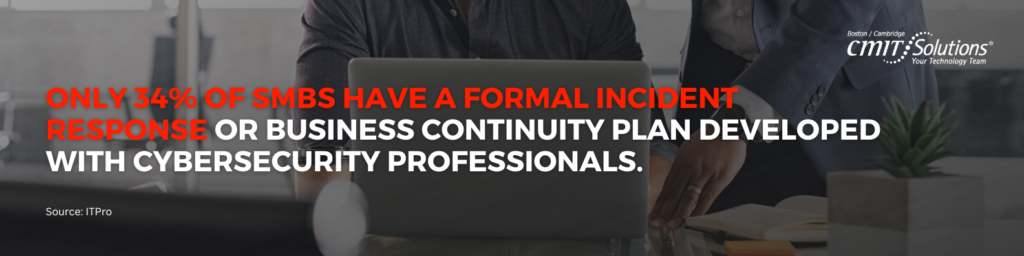
When a cyber incident happens, the first 24 hours are critical. Only 34% of SMBs have a formal incident response or business continuity plan developed with cybersecurity professionals. Without a clear response plan, businesses can quickly face communication breakdowns, delayed decision-making, prolonged downtime, and confusion around who is responsible for what.
Many organizations assume their IT team or backups will simply “handle it.” But backups alone are not an incident response strategy. If recovery procedures haven’t been tested recently, restoration timelines may take far longer than expected — especially during a live incident.
Cyber resilience today is about more than prevention. It’s about how quickly your business can detect, respond to, and recover from disruption.
The Hidden Problem: Operational Chaos
One of the biggest weaknesses in many SMB cybersecurity plans has nothing to do with technology. It’s operational readiness.
During a cyberattack, leadership teams are often forced to make high-pressure decisions quickly:
- Should systems be shut down?
- Who communicates with employees or customers?
- When should cyber insurance providers be notified?
- Which systems need to come back online first?
Without a documented plan, uncertainty can create costly delays.
That’s why incident response planning should involve more than just IT. Leadership, operations, communications, and business stakeholders all play a role in recovery.
Why Testing Your Plan Matters
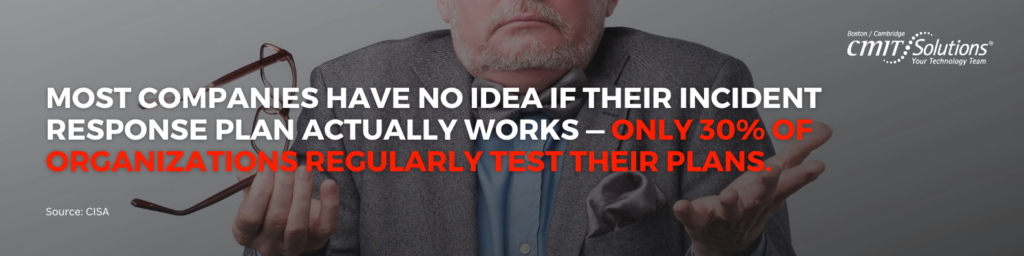
Many businesses have some form of incident response documentation, but very few have tested it in a real-world scenario. Only 30% of organizations regularly test their incident response plans—meaning most companies have no idea if their plan actually works.
Tabletop exercises — guided simulations of a cyber incident — help organizations identify gaps before a real crisis happens. These exercises often reveal unclear responsibilities, communication issues, recovery bottlenecks, and unrealistic assumptions about downtime.
Think of it like a fire drill for cybersecurity. The goal isn’t perfection — it’s preparation.
A Practical Incident Response Checklist
If your business experienced a cyberattack tomorrow, could your team confidently answer these questions?
Incident Response Readiness Checklist
- Do we have a documented incident response plan?
- Who is responsible for leading the response?
- Have we tested our backups and recovery timelines recently?
- Do employees know how to report suspicious activity?
- Do we have a communication plan if email systems go down?
- Are critical business systems clearly prioritized?
- Do we know when to contact cyber insurance, legal counsel, or vendors?
- Have we conducted a tabletop exercise within the last year?
Download our Incident Response Readiness Checklist:
Incident Response Readiness Checklist 2026
Be Prepared For A Crisis
Cyberattacks are no longer rare events reserved for large enterprises. SMBs are increasingly targeted because attackers know many organizations lack mature response plans and recovery processes.
The good news is that improving incident readiness doesn’t always require massive investments in new technology. Often, the biggest gains come from preparation, planning, testing, and clarity.
The businesses that recover fastest are the ones that prepare before a crisis occurs — not during it.