
Introduction: The Next Industrial Revolution Is Here
For decades, each industrial revolution has reshaped the world of work. From steam engines to smart factories, technology has always pushed the boundaries of what’s possible. But now, a new era is emerging in Industry 5.0, where human intuition meets machine precision.
Unlike its predecessor, Industry 4.0 which focused heavily on automation, robotics, and data analytics Industry 5.0 brings people back into the equation. It’s not about replacing humans; it’s about enhancing human capabilities with intelligent systems that understand, adapt, and collaborate.
In this new industrial era, companies that balance automation with empathy, and algorithms with ethics, will define the future of innovation.
From Industry 4.0 to 5.0: Understanding the Shift
Industry 4.0 revolutionized manufacturing and business operations with smart factories, IoT devices, and artificial intelligence. Machines became smarter, networks became faster, and data became the new oil. However, as technology advanced, many organizations realized something crucial was missing the human touch. Industry 5.0 addresses that imbalance by reuniting people and machines into a collaborative force.
The Core of Industry 5.0: Human-Machine Collaboration
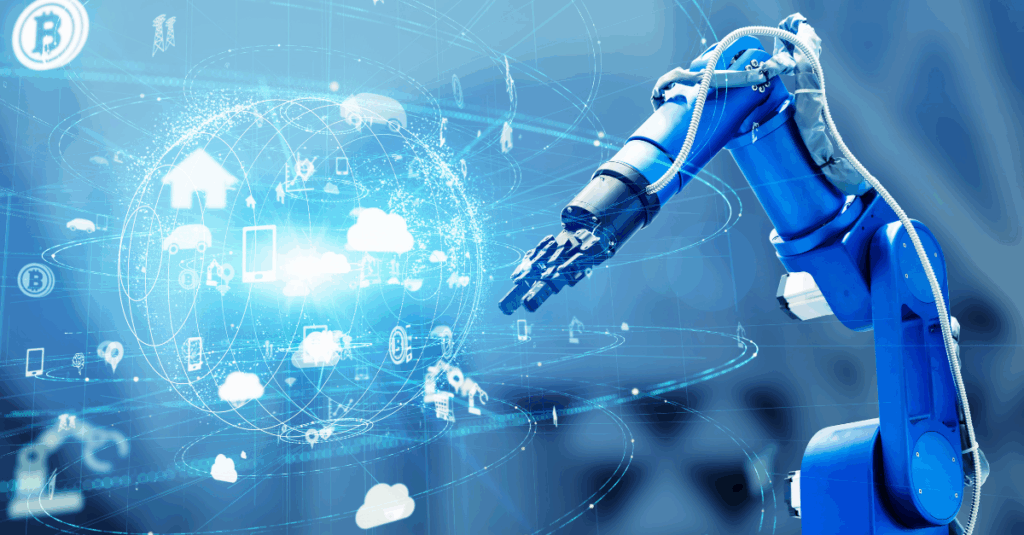
Industry 5.0 marks a cultural and operational shift from automation to collaboration. Machines no longer act independently; they now serve as partners in innovation.
Artificial intelligence and robotics handle repetitive, high-precision tasks, while humans focus on creativity, problem-solving, and ethics.
This symbiosis transforms productivity and personalization. As explored in AI Copilot integration, tools like Microsoft Copilot are enabling seamless cooperation between workers and AI-driven platforms leading to smarter decisions and faster outcomes.
Together, human insight and machine intelligence create solutions that are more efficient, ethical, and empathetic.
The Role of Artificial Intelligence in Industry 5.0
Artificial Intelligence (AI) is the engine of Industry 5.0. But its role is evolving from automation to augmentation. Instead of replacing workers, AI acts as a co-creator, enhancing human judgment and creativity.
Applications of AI in the New Era
- Predictive analytics for better decision-making
- Real-time monitoring of production environments
- Automated cybersecurity defenses
- Personalized customer interactions
- Data-driven innovation in design and product development
In CMIT Charleston’s analysis on AI threat evolution, it’s clear that as AI becomes more autonomous, companies must maintain control through ethical governance and transparent algorithms. Industry 5.0 will succeed only if AI serves humanity not the other way around.
Cybersecurity and Ethics: The Foundation of Responsible Innovation
As humans and machines work closer than ever, cybersecurity becomes paramount. Every connected device, sensor, and algorithm introduces new vulnerabilities. In Cybersecurity compliance frameworks, CMIT Charleston emphasizes that businesses must integrate security and ethics into the core of their digital transformation strategy — not as afterthoughts.
Key Ethical Challenges in Industry 5.0:
- Data privacy and AI surveillance concerns
- Algorithmic bias and fairness
- Accountability for autonomous decisions
- Digital rights for employees and consumers
Building a culture of cyber resilience ensures that innovation is safe, trustworthy, and sustainable.
Human-Centric Design: Technology with Empathy
One of the hallmarks of Industry 5.0 is human-centric design creating systems that prioritize user experience and emotional intelligence.
This concept extends beyond product design to the way businesses interact with clients, partners, and employees. In CMIT Charleston’s insights on smarter app experiences, personalization and intuitive interfaces are essential to building trust and engagement.
In practical terms, this means:
- Designing interfaces that adapt to user needs
- Implementing accessibility features for inclusivity
- Using AI to personalize interactions
- Applying emotional analytics to predict customer sentiment
The Role of Cloud and Connectivity
Industry 5.0 relies on connected intelligence and the cloud is what makes that possible.
Cloud computing provides the backbone for seamless collaboration, scalability, and real-time data access. Businesses are increasingly adopting hybrid and multi-cloud models to improve flexibility and reduce costs. CMIT Charleston’s guide on choosing the perfect cloud provider stresses the importance of aligning cloud architecture with organizational goals ensuring performance, compliance, and cost-efficiency.
Benefits of Cloud-Driven Industry 5.0 Systems:
- Faster data exchange between humans and machines
- Enhanced remote collaboration
- Greater cybersecurity visibility
- On-demand scalability for production
Managed IT Services: Enabling Human-Machine Balance
Behind every successful Industry 5.0 initiative lies a strong IT foundation. Managed service providers like CMIT Solutions of Charleston ensure that businesses maintain stable, secure, and adaptable systems while integrating emerging technologies.
As discussed in managed IT support models, outsourcing IT allows companies to focus on strategic innovation instead of technical maintenance.
Managed IT empowers organizations to:
- Automate routine updates and monitoring
- Secure data through proactive cybersecurity
- Implement AI tools with expert oversigh
- Scale resources as operations expand
Sustainability and the “Human Touch”
Unlike previous industrial revolutions that prioritized profit and scale, Industry 5.0 emphasizes sustainability and social responsibility. The goal is not just smarter factories, but smarter societies. Machines can optimize efficiency, but humans ensure ethical direction balancing innovation with environmental and social awareness. CMIT Charleston’s insights on smart scaling for growth highlight how sustainable scaling strategies can protect both business longevity and ecological impact.
Sustainability in Industry 5.0 means:
- Reducing energy consumption with smart sensors
- Minimizing waste through AI-driven resource planning
- Leveraging data for transparent reporting
- Designing technology with circular economy principles
Workforce Transformation: Upskilling for Industry 5.0
As industries evolve, so must the workforce. The transition to Industry 5.0 requires a blend of technical proficiency and emotional intelligence.
Automation may handle repetitive labor, but humans excel in creativity, ethics, and decision-making. This shift demands continuous learning not just technical upskilling, but reskilling for new collaborative roles.
In security awareness training insights, CMIT Charleston emphasizes that education is the foundation of resilience. Training workers to operate and secure advanced systems is as crucial as the systems themselves.
The new workforce will include:
- AI interpreters — bridging human logic and machine output
- Ethical technologists — guiding responsible AI development
- Automation managers — overseeing robot-human workflows
- Data storytellers — turning analytics into action
The Road Ahead: Collaboration as a Competitive Advantage
The next decade will belong to organizations that master collaborative intelligence — blending machine speed with human sensitivity. Businesses that embrace Industry 5.0 principles will gain:
- Greater innovation capacity
- Higher employee engagement
- Stronger customer relationships
- Enhanced cybersecurity and compliance
- Sustainable, long-term growth
As CMIT Charleston’s research in proactive IT continuity reveals, proactive technology leadership enables companies to adapt, anticipate, and thrive amid constant change. Industry 5.0 is not the future it’s the present frontier of digital transformation.
Conclusion: Humanity and Technology, in Harmony
Industry 5.0 represents the culmination of centuries of progress where the precision of machines enhances the intuition of humans. It’s a movement rooted in balance: automation that empowers people, intelligence that respects emotion, and innovation that honors ethics.
At CMIT Solutions of Charleston, this philosophy drives every service, strategy, and partnership. From AI-powered collaboration tools to cyber-resilient cloud solutions, our mission is clear help businesses thrive in a world where humans and machines work better together. The future isn’t just automated. It’s connected, intelligent, and deeply human.