In today’s digital-first business landscape, data protection and privacy compliance are not optional they’re essential. From patient records in healthcare to customer payment data in retail, businesses must follow strict laws like HIPAA, PCI DSS, and GDPR to safeguard sensitive information and maintain customer trust.
However, compliance can be overwhelming for small and mid-sized businesses (SMBs). Each framework comes with different requirements, audits, and technical safeguards and noncompliance can lead to hefty penalties or data breaches. With the right strategy and support from experts like CMIT Solutions of Charleston, staying compliant doesn’t have to be complex or costly.
Understanding Regulatory Compliance in Today’s Digital World
Regulatory compliance ensures businesses handle, store, and process data securely while adhering to legal standards. Each regulation focuses on protecting specific types of data:
- HIPAA (Health Insurance Portability and Accountability Act): Protects medical and patient information.
- PCI DSS (Payment Card Industry Data Security Standard): Governs credit card transactions and financial security.
- GDPR (General Data Protection Regulation): Ensures privacy rights for individuals in the European Union.
Managed IT partners simplify compliance by implementing cybersecurity compliance frameworks that align technical safeguards with industry laws reducing risk, improving efficiency, and maintaining data integrity.
Why Compliance Matters More Than Ever
The rise in cyberattacks and digital transactions has made data protection a top business priority.
Here’s why compliance is critical:
- Avoid costly fines and penalties from regulators.
- Protect customer trust by showing commitment to data privacy.
- Reduce downtime and reputational damage caused by breaches.
- Meet client and partner expectations in regulated industries.
Businesses that adopt proactive support and auditing systems can identify compliance gaps before they become violations, ensuring smooth operations and peace of mind.

HIPAA Compliance: Safeguarding Patient Health Information
For healthcare organizations and any business handling medical data, HIPAA compliance is mandatory. It defines how Protected Health Information (PHI) must be stored, transmitted, and accessed.
HIPAA Best Practices Include:
- Encrypting all digital records during transfer and storage.
- Limiting access using role-based permissions.
- Maintaining secure backups and recovery options.
- Conducting annual risk assessments.
- Training employees on data handling and privacy policies.
Using encrypt everything strategies, healthcare providers and administrators ensure patient data remains secure against unauthorized access or accidental leaks. A reliable MSP also ensures HIPAA compliance documentation and audit trails are maintained accurately for inspections or reviews.
PCI DSS Compliance: Protecting Financial Transactions
Any company that processes, stores, or transmits credit card information must comply with PCI DSS. This standard protects customers’ financial data and prevents fraud. Businesses can achieve compliance through secure network management, encrypted payment systems, and frequent vulnerability scans.
Core PCI Requirements:
- Maintain a secure network infrastructure.
- Encrypt cardholder data across all systems.
- Regularly update and patch payment software.
- Implement multi-factor authentication for payment systems.
- Monitor and log all system access.
Working with MSPs helps automate PCI reporting and maintain continuous compliance across multiple platforms.
GDPR Compliance: Protecting Customer Privacy Worldwide
GDPR applies to any company handling personal data of EU citizens, even if the business operates outside Europe. This regulation emphasizes transparency, consent, and data minimization.
Key principles include:
- Data must be collected for a specific purpose.
- Customers have the right to access and delete their data.
- Companies must report breaches within 72 hours.
Organizations can maintain GDPR compliance with data governance solutions and proactive monitoring to ensure ongoing privacy standards.
Common Compliance Challenges Businesses Face
Despite understanding the importance of compliance, many organizations struggle with execution.
Common Issues Include:
- Complex and changing regulations.
- Lack of in-house cybersecurity expertise.
- Manual reporting processes prone to human error.
- Limited visibility into data flows across cloud environments.
A smart scaling approach, powered by Managed IT Services, ensures compliance processes adapt as businesses expand, maintaining security without compromising agility.
Leveraging Managed IT Services for Compliance Success
For SMBs, compliance isn’t just about passing audits, it’s about maintaining a secure, trustworthy infrastructure. Managed IT Services providers deliver compliance-focused solutions that automate security controls, audits, and documentation.
How MSPs Simplify Compliance:
- Continuous monitoring of systems for suspicious activity.
- Automatic patch management and software updates.
- Secure cloud-first solutions for data protection.
- Centralized dashboards for compliance reporting.
- Integration with existing IT infrastructure.
Managed IT support gives SMBs the advantage of enterprise-grade compliance tools — without the overhead costs of in-house management.
Building a Culture of Compliance
Technology alone isn’t enough. Employees play a vital role in maintaining compliance. Regular training and communication create awareness and accountability across the organization.
Actionable Steps:
- Conduct quarterly data privacy workshops.
- Implement phishing defense simulations.
- Enforce password rotation policies and MFA.
- Review and update compliance policies regularly.
A culture of compliance ensures employees understand both the “why” and “how” behind data protection, turning human risk into human defense.

Continuous Monitoring and Auditing
Compliance isn’t a one-time effort — it’s an ongoing process that evolves with technology. Regular audits, assessments, and continuous monitoring keep systems compliant as regulations change. Using proactive monitoring, MSPs detect irregularities early, ensuring compliance metrics are always met. Automation tools help track:
- Access control and login activities.
- Data sharing between applications.
- Changes in compliance status.
- Real-time alerts on breaches or anomalies.
This proactive approach ensures that SMBs stay compliant not just during audits, but every single day.
Why SMBs Can’t Afford Noncompliance
The consequences of ignoring compliance are far-reaching. From loss of customer trust to devastating fines, the financial and reputational impact can cripple a business.
A single data breach can result in legal action, customer churn, and massive recovery costs. However, with disaster recovery and managed cybersecurity frameworks, SMBs can minimize risks and strengthen their resilience against violations.
Conclusion: Simplifying Compliance for Lasting Success
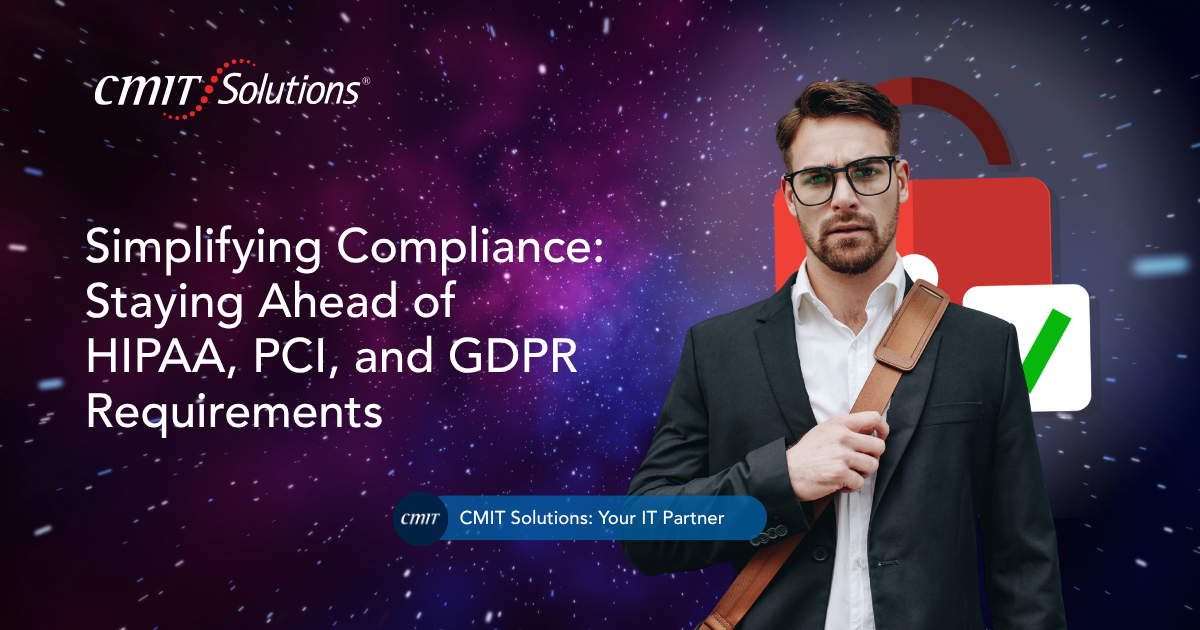
Staying compliant with HIPAA, PCI, and GDPR may seem daunting, but with the right technology and partner, it becomes a seamless, proactive process.
CMIT Solutions of Charleston helps SMBs simplify compliance through automation, cybersecurity, and proactive management keeping your systems secure, your clients confident, and your business audit-ready at all times. In a world where data is currency, compliance isn’t just a requirement it’s a strategic advantage. Partner with experts who make it simple, secure, and scalable.