
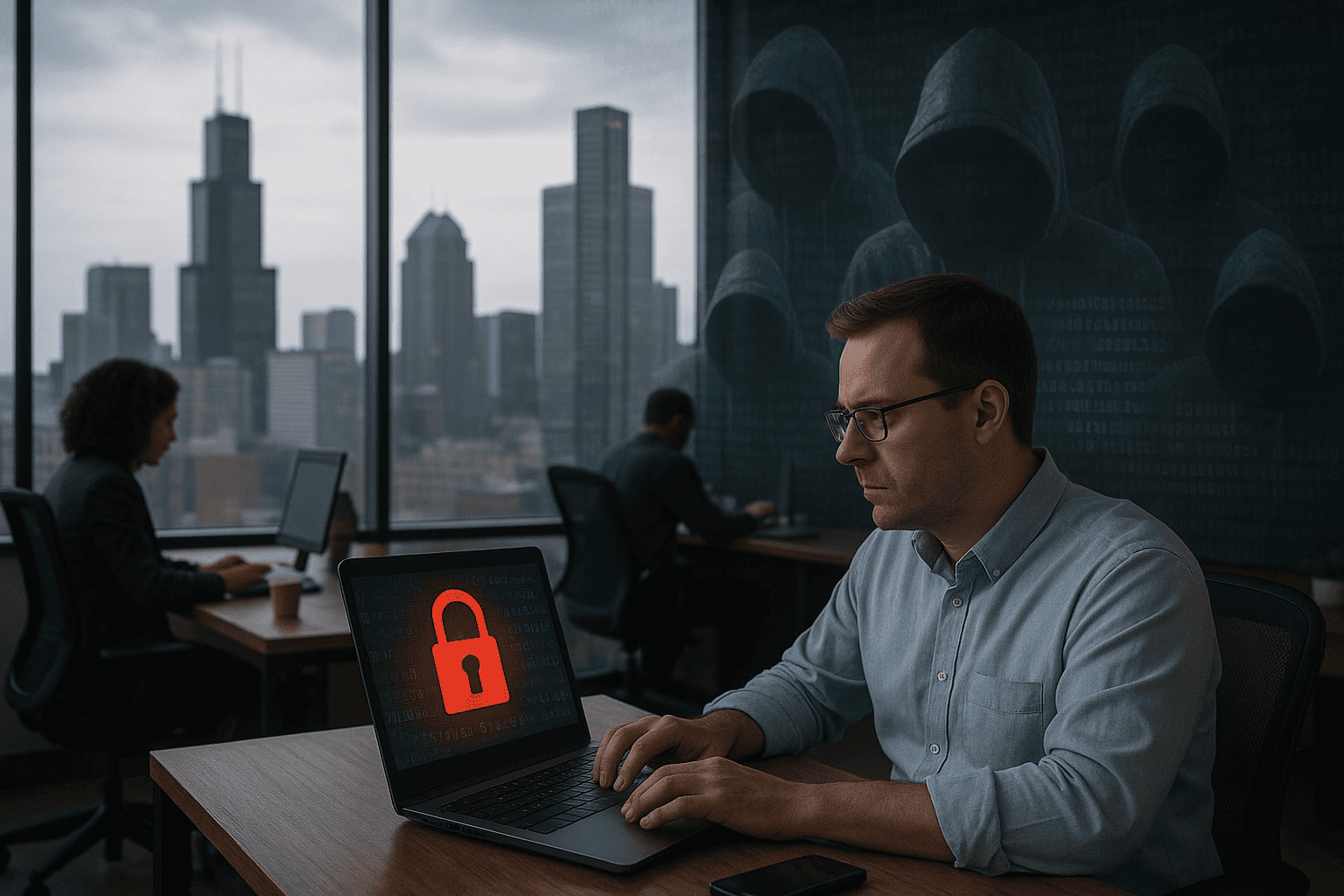
Chicago small businesses face an alarming reality: cyberattacks are increasing at an unprecedented rate, targeting organizations of all sizes with sophisticated schemes designed to steal data, disrupt operations, and demand ransom payments. For small and medium-sized businesses operating in the Windy City, understanding these threats and implementing robust protection measures isn’t just recommended, it’s essential for survival.
This guide will help Chicago SMBs identify the most pressing cybersecurity threats, implement effective protection strategies, and maintain compliance with industry regulations through proven security frameworks.
The Current Cybersecurity Landscape for Chicago Businesses
Chicago’s thriving business ecosystem, from financial services in the Loop to architectural firms in River North, presents an attractive target for cybercriminals. Small businesses often assume they’re too small to attract attention, but statistics reveal the opposite: 43% of cyberattacks specifically target small businesses, with the average cost of a data breach reaching $4.45 million in 2023.
Professional service firms including law practices, financial advisory groups, and healthcare organizations face particularly high risks due to the sensitive client data they handle. These businesses must navigate complex compliance requirements like FINRA, HIPAA, and SOX while maintaining operational efficiency.
Top Cybersecurity Threats Facing Chicago SMBs
Phishing and Social Engineering Attacks
Phishing remains the most common attack vector, with cybercriminals crafting increasingly sophisticated emails that appear to come from trusted sources. These attacks often target employees with access to financial systems or sensitive client information. Chicago businesses should implement email security filters and conduct regular employee training to recognize suspicious communications.
Ransomware Attacks
Ransomware can cripple business operations within hours, encrypting critical files and demanding payment for their release. Manufacturing firms, healthcare practices, and professional service organizations are frequent targets. A comprehensive backup strategy combined with network segmentation can significantly reduce ransomware impact.
Cloud Security Vulnerabilities
As Chicago businesses increasingly adopt Microsoft 365, Google Workspace, and other cloud platforms, misconfigured security settings create entry points for attackers. Regular security audits and proper access controls help maintain cloud environment integrity.
Insider Threats
Whether intentional or accidental, insider threats pose significant risks to Chicago SMBs. Disgruntled employees or contractors with system access can cause substantial damage. Implementing role-based access controls and monitoring user activity helps mitigate these risks.
CMIT Chicago’s Cybersecurity Framework for SMB Protection
CMIT Chicago’s comprehensive cybersecurity approach addresses the unique challenges facing small and medium-sized businesses through a multi-layered security strategy:
Managed Detection and Response (MDR): 24/7 monitoring identifies threats before they impact operations, providing rapid incident response when security events occur.
Regular Security Updates and Patching: Automated patch management ensures systems remain protected against known vulnerabilities without disrupting daily operations.
Employee Security Training: Regular training sessions help staff recognize and respond appropriately to phishing attempts and social engineering tactics.
Cloud Security Management: Proper configuration and ongoing monitoring of cloud environments protect data stored in Microsoft 365, Google Workspace, and secure cloud solutions like EGNYTE.
Vendor Management: Comprehensive oversight of third-party applications and service providers ensures the entire technology ecosystem maintains appropriate security standards.
Compliance Considerations for Chicago Professional Services
Chicago’s professional service firms must balance cybersecurity protection with strict regulatory compliance requirements. Financial advisory firms need FINRA compliance, healthcare organizations require HIPAA adherence, and nonprofit organizations often handle sensitive donor information requiring careful protection.
A structured approach to compliance includes regular security assessments, documented policies and procedures, employee training programs, and incident response planning. Working with experienced Chicago IT support providers ensures businesses maintain both security and compliance without overwhelming internal resources.
Building Your Cybersecurity Defense Strategy
Effective cybersecurity protection starts with understanding your specific risk profile and implementing appropriate safeguards. Begin by conducting a comprehensive security assessment to identify vulnerabilities in your current infrastructure.
Next, develop policies covering acceptable use, password management, data handling, and incident response. Regular employee training ensures everyone understands their role in maintaining security, while automated monitoring and response systems provide continuous protection.
Finally, establish relationships with experienced IT services Chicago il providers who understand local business challenges and can provide ongoing support as threats evolve.
Protecting Your Chicago Business Today
Cybersecurity threats continue evolving, but Chicago small businesses don’t have to face these challenges alone. Implementing comprehensive protection strategies, maintaining regulatory compliance, and partnering with experienced small businesses that support Chicago providers creates a strong defense against cyberattacks.
Don’t wait for a security incident to prompt action. Schedule a free cybersecurity consultation with CMIT Chicago today to assess your current security posture and develop a customized protection strategy for your business.
Our local team combines national resources with personalized Chicago cybersecurity expertise to ensure your technology works for you, not against you.