For many years, IT strategy was primarily focused on keeping systems running. If email worked, files were accessible, and users could log in, technology was considered successful. Today, that definition is no longer enough. Businesses operate in fast-moving environments where interruptions, inefficiencies, and security gaps directly impact revenue, reputation, and growth. Modern IT strategy must do more than support operations it must protect business momentum.
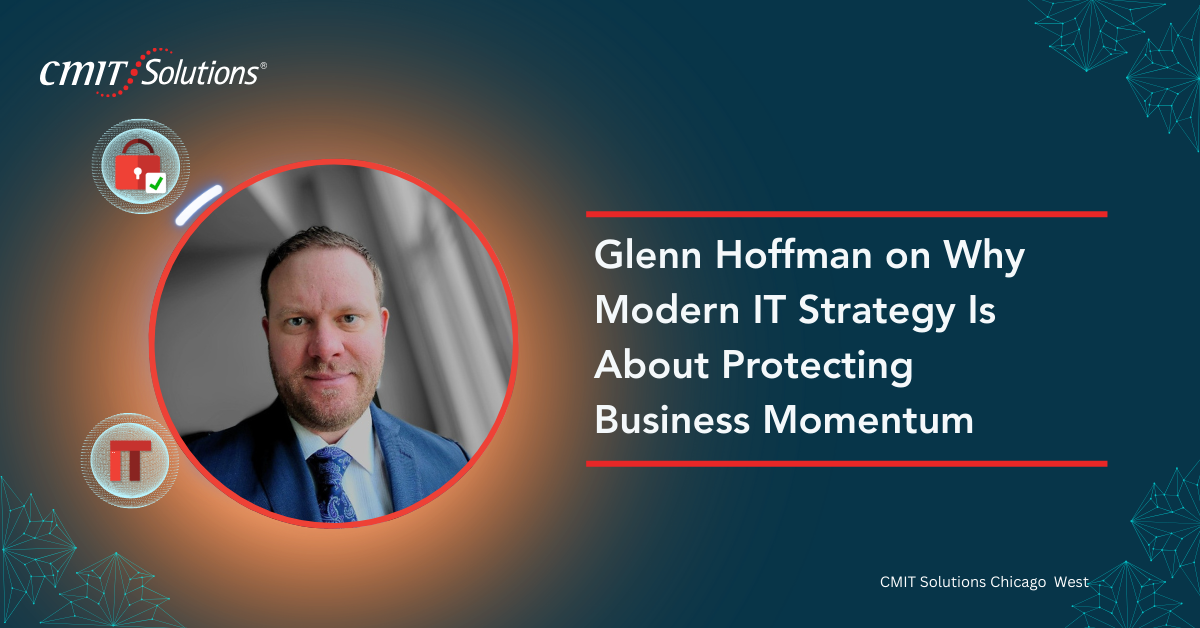
According to Glenn Hoffman, President of CMIT Solutions of Western Suburbs, the role of IT has fundamentally changed. Technology is no longer a background utility; it is a continuous driver of productivity, client experience, and competitive advantage. When IT fails to keep pace, business momentum slows. When IT strategy is aligned and proactive, momentum is preserved even during disruption.
Why Business Momentum Has Become a Strategic Priority
Business momentum refers to an organization’s ability to keep moving forward without unnecessary friction. It shows up in consistent productivity, reliable service delivery, and the confidence to pursue growth opportunities. In today’s environment, momentum is fragile. Small disruptions slow systems, security incidents, or poor technology decisions—can quickly compound into larger setbacks.
Glenn Hoffman emphasizes that modern IT strategy must be designed to protect momentum, not just infrastructure. The goal is to ensure technology never becomes the reason progress stalls.
To understand why momentum matters so much today, businesses must recognize how easily it can be disrupted by:
- Unplanned downtime or outages
- Security incidents that interrupt operations and increase the need for stronger cyber resilience
- Inefficient or outdated systems
- Poor technology alignment with workflows
- Reactive decision-making
Moving Beyond “Fixing Problems” as an IT Strategy
Traditional IT approaches often revolve around fixing issues after they occur. While problem resolution is still important, it does little to protect momentum long-term. Constant firefighting creates instability, unpredictability, and frustration for both leadership and staff.
Glenn Hoffman points out that modern IT strategy is about anticipation, not reaction. When IT teams focus only on fixing problems, they remain one step behind the business. Strategic IT works ahead of issues, reducing their likelihood and impact.
A reactive IT mindset often leads to:
- Repeated disruptions from preventable issues
- Inconsistent system performance
- Higher long-term costs
- Limited visibility into risks
- Slower business execution and delayed proactive IT monitoring
Aligning IT Strategy With How the Business Actually Operates
One of the most common causes of lost momentum is misalignment between technology and real-world workflows. When systems don’t reflect how people work, productivity suffers. Employees create workarounds, inefficiencies grow, and frustration builds.
According to Glenn Hoffman, effective IT strategy starts with understanding the business first. Technology decisions should be informed by daily operations, client expectations, and long-term goals—not by trends or one-off requests.
Strong alignment between IT and operations helps protect momentum by:
- Supporting existing workflows rather than disrupting them
- Reducing friction in daily tasks
- Improving adoption and satisfaction
- Enabling faster execution
- Keeping teams focused on client work through a clearer digital transformation playbook
Protecting Momentum Through Proactive Infrastructure Planning
Infrastructure problems often surface at the worst possible times during peak workloads, critical deadlines, or growth phases. These disruptions are rarely sudden; they usually stem from aging systems, capacity limits, or deferred upgrades.
Glenn Hoffman stresses that proactive infrastructure planning is one of the most effective ways to protect business momentum. When systems are reliable and scalable, businesses can operate confidently without fear of unexpected slowdowns.
Proactive infrastructure strategy focuses on:
- Preventing performance bottlenecks
- Reducing unplanned downtime
- Supporting growth without disruption
- Improving system reliability
- Creating a stable operational foundation using cloud-native infrastructure

Security as a Momentum Protector, Not a Productivity Barrier
Security is often viewed as a necessary constraint something that slows users down in the name of protection. Glenn Hoffman challenges this perception. In modern IT strategy, security should protect momentum, not restrict it.
When security is integrated thoughtfully, it reduces disruption by preventing incidents that halt operations, damage trust, or require costly recovery efforts. The key is balancing protection with usability.
Security strategies that protect momentum prioritize:
- Preventing incidents before they disrupt operations
- Embedding security into workflows
- Reducing reliance on manual processes
- Supporting flexible work environments
- Maintaining visibility without adding friction through XDR
Minimizing Disruption Through Standardization and Simplification
Complexity is the enemy of momentum. Over time, businesses often accumulate too many tools, vendors, and systems, each solving a narrow problem. This fragmentation increases risk and slows execution.
Glenn Hoffman believes modern IT strategy should focus on simplification. Standardized systems are easier to support, more secure, and less disruptive to daily work.
Simplification protects momentum by enabling:
- Faster issue resolution
- More consistent user experiences
- Reduced training requirements
- Stronger security and governance
- Better operational clarity by optimizing managed IT services
Supporting Teams So Technology Never Slows Them Down
Technology should enable employees to do their best work, not slow them down or create unnecessary friction. When systems are unreliable or confusing, productivity suffers and morale declines.
According to Glenn Hoffman, protecting momentum means designing IT environments that support people not the other way around. This includes responsive support, intuitive systems, and clear expectations.
Team-focused IT strategy helps maintain momentum by:
- Reducing frustration and downtime
- Supporting efficient collaboration
- Improving confidence in technology
- Encouraging adoption rather than resistance
- Enabling better communication with secure UCaaS security
Maintaining Client Confidence Through Reliable Technology
For many businesses, momentum is closely tied to client trust. Missed deadlines, communication breakdowns, or service disruptions caused by technology can quickly erode confidence.
Glenn Hoffman emphasizes that IT strategy plays a direct role in client experience. Reliable systems, secure collaboration, and consistent performance all contribute to maintaining trust and protecting relationships.
Client-centric IT strategy protects momentum by ensuring:
- Consistent service delivery
- Secure handling of client information with stronger cloud security
- Reliable communication channels
- Minimal disruption during critical engagements
- Professional, dependable operations

Using IT Strategy to Support Growth Without Stalling Progress
Growth introduces complexity. New employees, locations, services, and clients all place additional demands on technology. Without a clear IT strategy, growth can strain systems and slow momentum instead of accelerating it.
Glenn Hoffman views scalability as a core component of modern IT strategy. Technology should support expansion smoothly, without forcing disruptive changes.
Growth-ready IT strategy protects momentum by:
- Supporting seamless onboarding
- Scaling systems without major overhauls
- Maintaining performance during expansion
- Reducing risk during change
- Enabling confident decision-making with scalable cloud services
Why Strategic IT Partnerships Are Essential to Momentum
Protecting business momentum requires continuous attention, expertise, and planning. Many businesses lack the internal resources to manage this alone. Strategic IT partnerships provide the structure and insight needed to keep technology aligned with business needs.
As President of CMIT Solutions of Western Suburbs, Glenn Hoffman works closely with organizations to help them shift from reactive IT to momentum-focused strategy. The goal is long-term stability, clarity, and confidence.
A strategic IT partner helps protect momentum by providing:
- Proactive planning and guidance
- Continuous monitoring and improvement
- Alignment between IT and business goals
- Reduced disruption during change
- Long-term technology leadership grounded in local MSP expertise
Conclusion: Modern IT Strategy Is About Keeping Business Moving Forward
Modern IT strategy is no longer about maintaining systems, it’s about maintaining momentum. Businesses that protect momentum operate with confidence, adapt more easily to change, and deliver consistent value to clients.
As Glenn Hoffman explains, when IT strategy is proactive, aligned, and business-focused, technology becomes a stabilizing force rather than a source of disruption. CMIT Solutions of Western Suburbs helps businesses design IT strategies that protect progress, reduce friction, and support long-term success. CMIT Solutions of Western Suburbs partners with organizations to build preparedness strategies that support stability, growth, and long-term success.