Most business owners believe their team can spot a phishing attempt because they look for suspicious links, poor grammar, or urgent threats from unknown senders. This is a dangerous misconception in 2026. The most sophisticated threats today carry no malicious attachments and come from the people you trust most: your long-term vendors.
The illusion of the trusted voice
For years, cybersecurity training focused on the "red flags" of a fake email. We taught employees to look for spelling errors, strange formatting, or generic greetings like "Dear Customer." However, Artificial Intelligence has rendered these indicators obsolete. Attackers now use generative AI to analyze years of hijacked email correspondence, allowing them to perfectly replicate the tone, syntax, and specific vocabulary of a specific individual.
When an email arrives from a vendor you have worked with for a decade, and it uses the same shorthand and "voice" you expect, the natural human impulse is to trust it. This is not a failure of intelligence; it is a calculated exploitation of human psychology. This tactic, known as Vendor Email Compromise (VEC), is one of the most difficult threats to detect because it relies on legitimate communication channels to deliver fraudulent instructions.
The business risk of perfect mimicry
The primary goal of these attacks is financial redirection. Once an attacker has successfully mimicked a vendor’s writing style, they insert themselves into an existing conversation thread. They do not send a new, random email; they reply to a legitimate discussion about an upcoming payment or a contract renewal.
The risk to a business in Des Moines or Overland Park is significant and direct:
- Direct Financial Loss: Funds are wired to fraudulent accounts that are nearly impossible to recover once the transaction is cleared.
- Operational Disruption: When a vendor is not paid because the funds were diverted, services may be suspended, leading to project delays and supply chain issues.
- Reputational Damage: If your business is the one that fell for the scam, it can strain the relationship with your vendor and signal to partners that your internal controls are weak.
- Compliance Violations: For businesses in regulated industries like healthcare or finance, a successful social engineering attack can trigger mandatory reporting requirements and potential fines.
This is not a theoretical threat. Statistics show that conversational attacks, which lack the traditional markers of "spam," now comprise a significant portion of all malicious email traffic. Because these emails originate from a compromised but legitimate mailbox, they carry the highest level of authority possible.
Why traditional email filters are failing
Most businesses rely on traditional email security gateways to protect their inboxes. These tools work by scanning for known "bad" elements: blacklisted IP addresses, malicious URLs, or recognized malware signatures in attachments.
AI-driven vendor impersonation bypasses these filters for three specific reasons:
- Identity Legitimacy: The email is often sent from the vendor’s actual compromised account. To a standard filter, the sender is authenticated and trusted.
- Lack of "Payload": There is no virus to catch. The email is simply text. It asks for a change in banking details or a PDF invoice update, which are standard business activities.
- Linguistic Accuracy: In the past, filters could flag emails with unusual sentence structures. Modern AI produces text that is indistinguishable from human writing, meaning there are no "tells" for an algorithm to find based on language alone.
In this environment, a business it services company must look beyond simple filtering and move toward behavioral analysis and strict process-driven security.
How AI-driven social engineering works
To understand the danger, you must understand the process an attacker follows. It is no longer a "spray and pray" approach where millions of generic emails are sent out. It is a highly targeted, multi-stage operation.
First, an attacker gains access to a vendor’s email account, often through a simple credential theft or a brute-force attack on a poorly secured login. Once inside, they do not act immediately. They remain silent, using AI tools to scan the inbox history. They learn who the high-value clients are, what the typical invoice amounts look like, and how the vendor speaks to their customers.
When the time is right, usually when a large invoice is due, the attacker uses AI to draft a reply in an existing thread. They might say, "Hi Jim, we’re actually transitioning our accounts to a new bank this month. Please use the attached updated wiring instructions for the invoice we discussed yesterday. Thanks!"
Because the context is correct and the tone is perfect, the recipient often processes the request without a second thought. This is the "new phishing," and it is designed specifically to defeat the human element of your cybersecurity strategy.

Actionable advice for CEOs and leadership teams
Protecting your organization from these attacks requires a shift from technical reliance to a combination of advanced technology and rigid operational protocols.
- Implement Out-of-Band Verification: This is the most effective defense against financial fraud. Establish a firm policy that any change to payment instructions, bank accounts, or sensitive data handling must be verified through a second, independent communication channel. This means calling a known contact at a known phone number: not the one listed in the suspicious email: to confirm the request.
- Deploy AI-Powered Email Analytics: While traditional filters fail, newer security tools use AI to fight AI. These systems build a profile of "normal" communication patterns for every user. If a vendor suddenly changes their login location, sends an email at an unusual time, or uses slightly different phrasing, the system flags the message for review.
- Establish a Zero-Trust Culture: Shift the internal mindset from "trust by default" to "verify then trust." Employees should feel empowered, and even rewarded, for questioning an unusual request from a senior executive or a long-term partner.
- Enforce Multi-Factor Authentication (MFA): While you cannot control your vendor’s security, you must secure your own. MFA is the baseline requirement for preventing your own accounts from being used to attack your customers and partners.
- Conduct Context-Specific Training: General cybersecurity awareness is no longer enough. Staff who handle accounts payable and procurement need specific training on Vendor Email Compromise and the psychological tactics used in conversational phishing.
- Review Your Managed Security Layers: Work with a business it provider to ensure your security stack includes endpoint detection and response (EDR) and proactive monitoring that can catch the lateral movement of an attacker if a link is eventually clicked.
The role of local expertise in a global threat landscape
For businesses operating in Des Moines and Overland Park, the threat feels global, but the impact is local. Our regional economy relies heavily on established relationships and mid-market vendor networks. This interconnectedness is a strength, but it also creates a wider "attack surface" for cybercriminals.
A local partner understands the specific challenges of SMBs in this region. We see the patterns of attacks targeting local industries, from manufacturing to professional services. This local context allows for a more tailored approach to backup and disaster recovery and overall risk management.
Position of CMIT Solutions as a governance partner
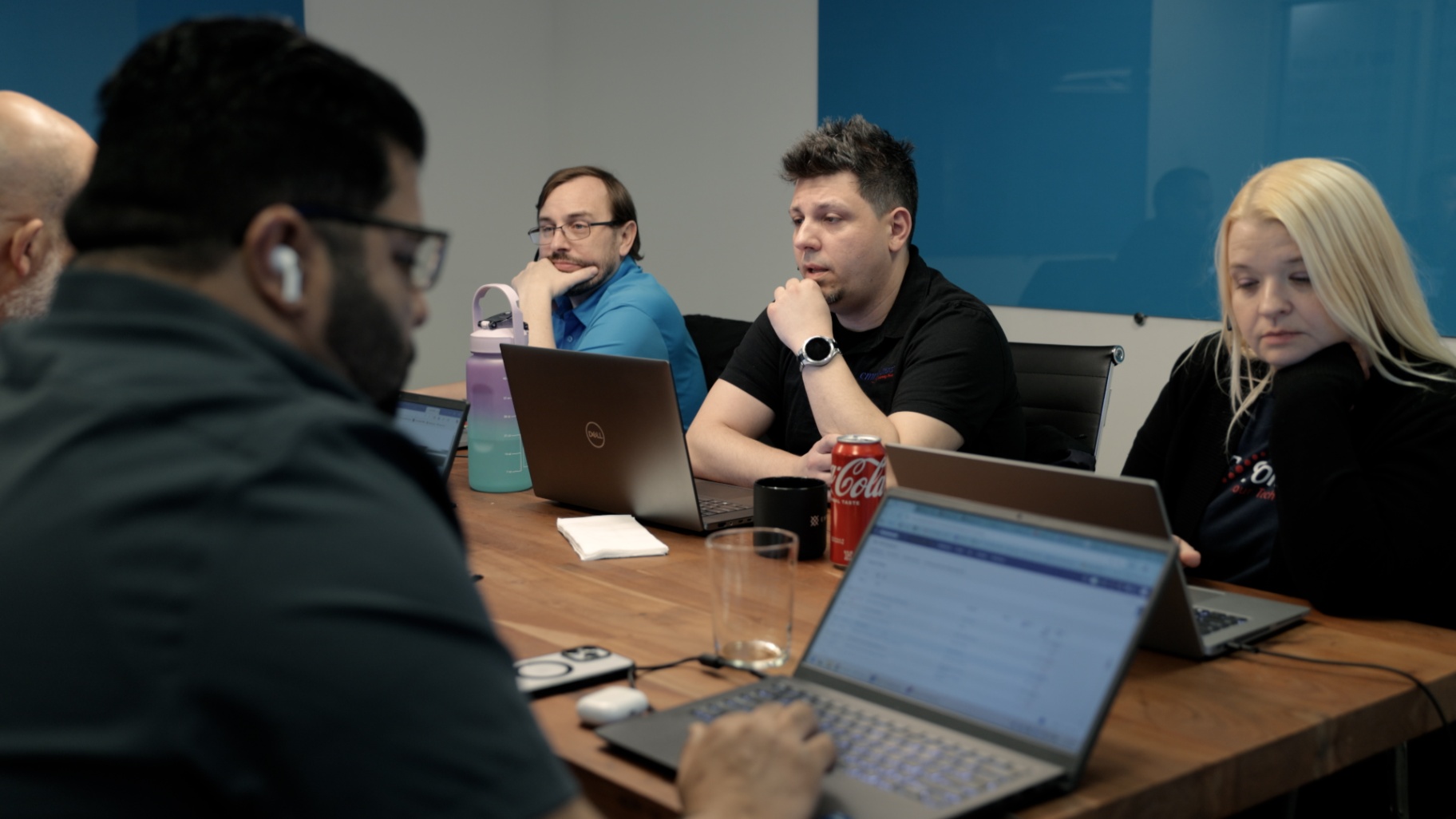
Technology is only one part of the solution. True security comes from governance and oversight. This is why businesses work with partners like CMIT Solutions of Des Moines and Overland Park. We do not just install software; we help leadership teams define the processes that prevent a single human error from becoming a catastrophic financial loss.
In the age of AI-driven threats, your IT strategy must be as dynamic as the attacks themselves. We focus on the "safe adoption" of technology, ensuring that as AI makes attackers more efficient, it also makes your defenses more resilient. This involves regular cybersecurity assessments to identify where your current protocols might be lagging behind modern tactics.
Addressing the threat before it becomes urgent
The transition of phishing from "obvious scam" to "perfect mimicry" is one of the most significant shifts in the threat landscape in recent years. It moves the battleground from the server room to the inbox of your most trusted employees.
Addressing this risk is not a matter of buying more software; it is a matter of refining your business operations to account for a world where you cannot always believe what you read. If you are concerned that your current email security or internal payment processes are not equipped to handle AI-powered social engineering, it is worth addressing before a fraudulent invoice reaches your desk.
This is a complex challenge, but it is one that can be managed with the right combination of technology, process, and expert guidance. If this is something you want to understand better for your organization, start with a conversation.