
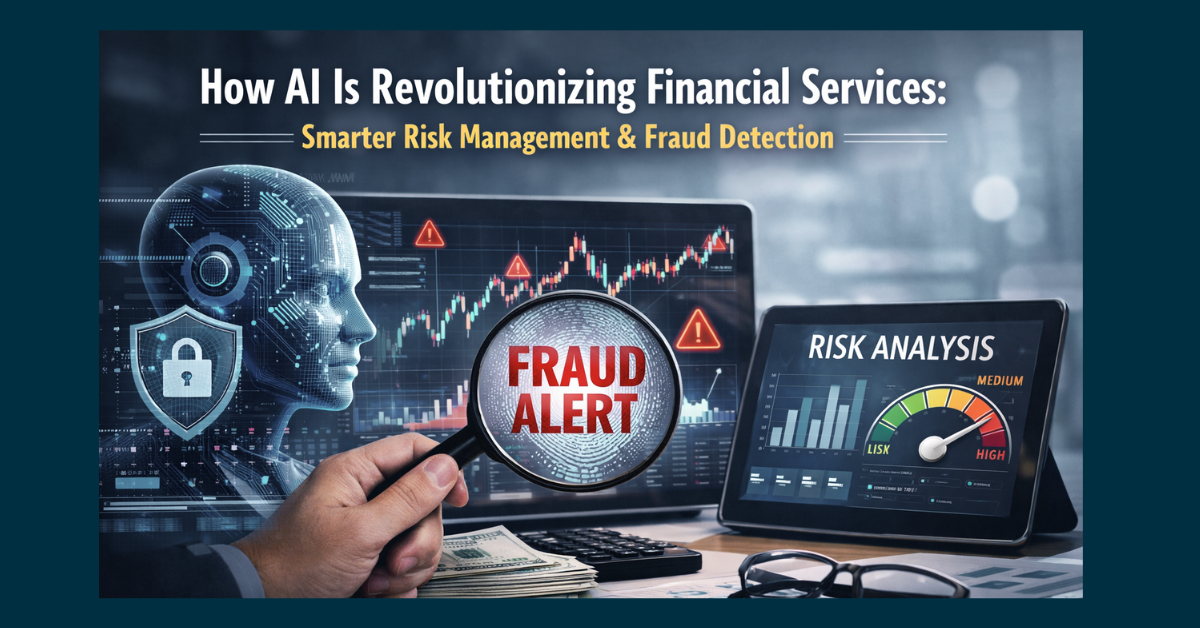
The financial services industry has always relied on data. But in 2026, the volume, speed, and complexity of that data have reached unprecedented levels. From digital banking and online lending to mobile payments and investment platforms, financial institutions process millions of transactions daily.
With this growth comes increased risk. Fraud schemes are more sophisticated. Regulatory expectations are higher. Customers demand instant service and secure experiences.
Artificial intelligence (AI) is transforming how financial institutions manage risk and prevent fraud. For banks, credit unions, accounting firms, and investment companies across Southeast Wisconsin, AI-driven IT strategies are becoming essential, not optional.
Through advanced analytics and automation, organizations working with CMIT Solutions of Southeast Wisconsin are strengthening security while improving operational efficiency.
The Growing Complexity of Financial Risk
Financial services firms face multiple layers of risk, including:
- Credit risk
- Market volatility
- Operational risk
- Regulatory compliance exposure
- Cybersecurity threats
- Fraudulent transactions
Traditional risk management models often rely on historical data and static rule-based systems. While these methods provide a foundation, they struggle to detect emerging threats in real time.
Modern financial ecosystems require systems that can learn, adapt, and respond instantly. That is where AI becomes transformative.
AI-Driven Risk Assessment
AI enhances risk management by analyzing massive datasets far faster than human analysts or traditional software systems.
Machine learning models can:
- Identify unusual transaction patterns
- Assess borrower creditworthiness using diverse data points
- Predict potential loan defaults
- Detect anomalies in trading behavior
- Monitor regulatory compliance indicators
Unlike static systems, AI models continuously improve as they process new data. This dynamic learning enables more accurate predictions and reduced false positives.
For financial firms across Kenosha, Racine, Burlington, Lake Geneva, Milwaukee, and surrounding areas, this means stronger decision-making supported by real-time insights.
Smarter Fraud Detection in Real Time
Fraud has evolved rapidly in recent years. Cybercriminals now use automation, social engineering, and AI-generated tactics to bypass traditional security systems.
Common fraud threats include:
- Account takeover attacks
- Phishing schemes
- Wire transfer fraud
- Identity theft
- Payment manipulation
- Insider threats
AI-powered fraud detection systems monitor transactions continuously and flag suspicious activity immediately.
For example:
- A login attempt from an unusual location triggers verification steps.
- A transaction significantly outside a customer’s normal spending pattern is temporarily held.
- Rapid fund transfers between linked accounts are automatically investigated.
Because AI evaluates behavior rather than relying solely on predefined rules, it can detect subtle irregularities that human review might miss.
Behavioral Analytics: Understanding User Patterns
One of AI’s strongest advantages in financial services is behavioral analytics.
Instead of focusing only on transaction data, AI systems evaluate user behavior, including:
- Login frequency
- Device usage patterns
- Transaction timing
- Geographic location
- Interaction habits
When behavior deviates from established patterns, the system identifies potential risk.
This proactive detection helps prevent fraud before financial losses occur.

Reducing False Positives
While fraud prevention is critical, excessive false alerts can frustrate customers and slow operations.
AI systems improve accuracy by refining detection models over time. As patterns become clearer, unnecessary alerts decrease.
This balance is crucial for financial institutions that must maintain both security and seamless customer experiences.
Enhancing Regulatory Compliance
Financial institutions operate in highly regulated environments. Compliance requirements related to data protection, anti-money laundering (AML), and know-your-customer (KYC) regulations are complex and continuously evolving.
AI supports compliance by:
- Automating transaction monitoring
- Generating detailed audit logs
- Identifying suspicious activities linked to AML concerns
- Monitoring internal policy adherence
- Flagging documentation gaps
By automating compliance processes, financial firms reduce manual workload while improving audit readiness.
Organizations across Kenosha, Racine, Walworth, Milwaukee, Waukesha and other Southeast Wisconsin counties increasingly rely on these technologies to maintain regulatory transparency.
AI and Cybersecurity Integration
Financial services organizations are prime targets for cyberattacks due to the value of sensitive data.
AI strengthens cybersecurity through:
- Real-time network monitoring
- Anomaly detection
- Automated threat containment
- Intelligent email filtering
- Endpoint protection monitoring
If suspicious activity occurs—such as abnormal data access or repeated failed login attempts—AI systems can isolate affected systems instantly.
This layered protection minimizes the impact of potential breaches.
Predictive Analytics for Strategic Decision-Making
Beyond fraud detection, AI enhances long-term strategy.
Predictive analytics allow financial institutions to:
- Forecast market trends
- Evaluate investment risk
- Anticipate customer behavior
- Optimize portfolio management
- Identify emerging business opportunities
By analyzing patterns across large datasets, AI provides leadership teams with actionable insights that improve competitiveness.
Operational Efficiency Through Automation
AI reduces administrative workload by automating repetitive processes such as:
- Data entry validation
- Document verification
- Customer onboarding screening
- Transaction categorization
- Report generation
This automation allows staff to focus on high-value activities like client engagement and strategic planning.
For small and mid-sized financial firms across Kenosha, Racine, Burlington, Lake Geneva, Milwaukee, and surrounding areas, automation can significantly improve productivity without expanding headcount.

Supporting Digital Transformation in Finance
Customer expectations have shifted dramatically. Clients expect:
- Instant transaction approvals
- Secure mobile banking
- Seamless online account access
- Immediate fraud alerts
- Transparent communication
AI enables financial institutions to meet these expectations while maintaining strict security standards.
As digital transformation continues, AI becomes central to maintaining trust and operational stability.
The Importance of a Secure IT Foundation
While AI tools are powerful, their effectiveness depends on a stable IT infrastructure.
Financial services firms must ensure:
- Secure cloud environments
- Regular patch management
- Multi-factor authentication
- Encrypted data storage
- Reliable backup and disaster recovery plans
AI solutions perform best when integrated into a proactive managed IT framework.
At CMIT Solutions of Southeast Wisconsin, financial institutions receive AI-driven security tools supported by continuous monitoring and strategic oversight.
Signs Your Financial Firm May Need AI-Driven Solutions
Your organization may benefit from AI integration if:
- Fraud attempts are increasing
- Manual review processes are overwhelming staff
- Compliance documentation is difficult to maintain
- False alerts are disrupting customer service
- Security monitoring lacks real-time visibility
- Growth is outpacing infrastructure stability
Recognizing these indicators early allows firms to strengthen defenses before incidents escalate.
The Future of Financial Services Security
AI is not replacing financial professionals it is enhancing their capabilities.
By combining human expertise with machine intelligence, financial institutions achieve:
- Faster threat detection
- More accurate risk assessments
- Improved compliance management
- Reduced operational costs
- Stronger customer trust
In a competitive and regulated industry, these advantages are essential for long-term success.
Conclusion
Artificial intelligence is revolutionizing financial services by transforming how institutions manage risk and detect fraud. From real-time behavioral analysis to predictive risk modeling, AI provides a smarter, faster, and more adaptive approach to security and operational efficiency.
For financial firms across Southeast Wisconsin, adopting AI-powered IT strategies strengthens resilience, improves compliance, and protects client trust.
If your organization is ready to enhance fraud detection and risk management with intelligent technology, contact CMIT Solutions of Southeast Wisconsin today to explore secure, AI-driven managed IT solutions built for the future of finance.