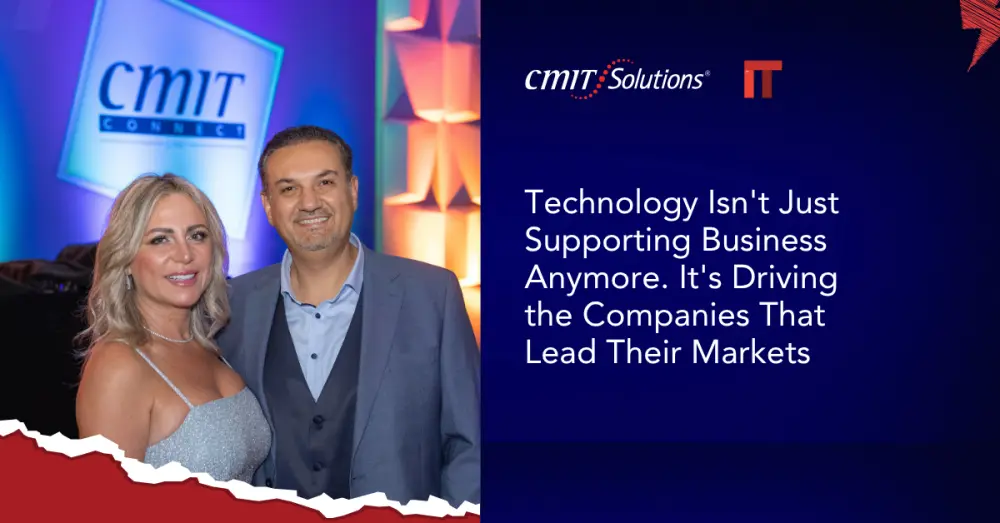
There is a shift happening inside Long Beach businesses that does not always make the headlines but shows up clearly in operational results. The companies pulling ahead are not necessarily the ones with the biggest budgets or the most staff. They are the ones where the person responsible for operations has stopped treating technology as a support function and started treating it as a strategic lever.
For COOs and operations leaders in Long Beach, the conversation around IT and AI has changed in the past two years. It used to be about keeping systems running. Now it is about what technology can actually do for growth, efficiency, and competitive positioning. The leaders having that conversation clearly are the ones building advantages that compound over time.
The ones still treating IT as a cost center to be minimized are falling behind in ways that will take real effort to close.
The COO’s Technology Problem Has Changed
The operational technology challenges facing Long Beach COOs today look different from what they looked like five years ago.
Five years ago the primary concern was reliability. Keep the systems up. Handle incidents quickly. Make sure remote access works. Those remain real concerns, but they have become table stakes rather than the ceiling.
The new layer of challenge is strategic. How do you evaluate which AI tools are worth adopting and which are noisy? How do you build a technology environment that scales with the business rather than requiring constant reinvestment? How do you make sure the technology decisions being made today do not create compliance exposure or security debt that surfaces later?
These are not IT questions in the traditional sense. They are operational and business questions that require technology fluency to answer well. COOs who have developed that fluency, or who have the right partner helping them think through it, are making better decisions faster than those who have not.
IT guidance built for strategic decision making is different from tactical IT support. It means having informed input on technology choices before they get made rather than managing the consequences of decisions made without that context.
What AI Actually Looks Like Inside a Well-Run Long Beach Operation
The AI conversation in most business circles still carries more hype than substance. That is starting to change for operations leaders who have moved past the noise and gotten specific about what AI tools actually do inside their business.
For Long Beach COOs who have implemented AI thoughtfully, the results show up in specific operational areas:
Reporting and analysis cycles are faster. Finance teams using tools like Microsoft 365 Copilot are producing reports in a fraction of the time. The analyst’s job shifts from assembling data to interpreting it, which is where the actual value lives.
Client communication is more consistent. AI-assisted drafting tools help smaller teams maintain communication quality and response speed that used to require more headcount. The output still gets reviewed and approved by a human. It just starts from a better place.
Operational bottlenecks are more visible. AI tools embedded in project management and operations platforms surface patterns in data that manual review would miss. Recurring delays, resource allocation inefficiencies, and workflow gaps become identifiable before they compound.
Onboarding and knowledge transfer move faster. AI tools that can surface relevant documentation, answer procedural questions, and guide new staff through processes reduce the time experienced staff spend on repetitive training tasks.
None of these outcomes happen by turning on a tool. They happen when AI tools are deployed into a technology environment that is properly structured to support them. Productivity applications that include AI capabilities deliver their full value when the underlying platform is configured correctly and staff understand how to use them effectively.
The Infrastructure Question COOs Cannot Afford to Skip
AI strategy and IT infrastructure are not separate conversations. They have the same conversation.
COOs who approach AI adoption without addressing the state of their underlying technology environment are building on a foundation that will limit what they can achieve. Specifically, there are three infrastructure questions that need honest answers before AI tools can deliver meaningful operational value.
Is your data clean and accessible? AI tools are only as useful as the data they can work with. If your operational data is scattered across disconnected systems, inconsistently formatted, or sitting in environments that AI tools cannot access, the output reflects those limitations. Getting data governance right is not glamorous work, but it is the prerequisite for AI that actually helps.
Is your environment secure enough to trust with sensitive data? AI tools that access client information, financial data, or proprietary operational content need to be deployed into an environment where access controls are properly configured. The productivity gain is not worth it if the deployment creates data exposure that did not exist before.
Is your team actually ready to use new tools effectively? Technology adoption fails more often because of change management than because of technical problems. COOs who account for training, adoption support, and the reality that some staff will need more time than others get better results from the same tools.
Managed IT services that include strategic advisory alongside technical management help COOs work through these questions with someone who understands both the technology and the operational context.
Cloud Strategy Is Where Competitive Advantage Gets Built or Lost
For Long Beach COOs, the cloud conversation has moved past whether to use cloud tools and into how to use them strategically.
The businesses that adopted cloud tools without a coherent strategy now find themselves managing a fragmented environment. Multiple platforms with separate credentials. Data in different places depending on which tool was used for which project. Security configurations that vary across platforms because each was set up independently. Licensing costs accumulating without clear visibility into utilization.
The businesses that approached cloud strategically have a different situation. A coherent environment where tools are integrated rather than parallel. Identity management that works across platforms rather than requiring separate logins everywhere. Security controls applied consistently rather than varying by platform. A clear picture of what is being used and what it costs.
The operational difference between these two situations is significant. The first creates friction that taxes your team constantly. The second creates leverage that compounds as the business grows.
Cloud services strategically mean building an environment where your tools work together rather than tolerating a collection of tools that happen to all be cloud-based. For COOs thinking about scalability, the architecture of that environment matters as much as the individual tools within it.
Network management that supports a cloud-first environment also needs to be built for how the business actually operates, including remote and hybrid work patterns that are now permanent rather than temporary.

Security Is a Strategic Issue Not Just an IT Issue
COOs who have not fully made this mental shift are carrying risk they may not have fully priced.
A cybersecurity incident is not just an IT problem that the IT team handles. It is an operational event that affects revenue, client relationships, regulatory standing, and leadership credibility. The COO who finds out about a breach after it has already caused significant damage and then has to manage the client notifications, the regulatory response, and the internal recovery process understands this in a way that is hard to learn another way.
The COOs who have made security a strategic priority are thinking about it differently:
- Security posture is part of how they evaluate technology decisions before making them
- Incident response planning is documented and tested rather than theoretical
- Security requirements from clients and contracts are met proactively rather than scrambled for
- Staff security awareness is treated as an ongoing operational discipline rather than an annual training box to check
Cybersecurity approached this way is not a separate workstream from operations strategy. It is embedded in it. The COO does not need to become a security expert. They need to ensure the right expertise and monitoring is in place and that security considerations are part of how technology decisions get made.
Data backup and recovery is part of this picture. COOs who have tested their recovery capability and know their actual recovery time objectives are in a different position than those who assume the backup is working because nobody has said otherwise.
Compliance as Competitive Positioning
The COOs thinking most clearly about compliance are not treating it as a cost of doing business. They are treating it as a differentiator.
In Long Beach’s professional services landscape, healthcare sector, financial services environment, and construction and engineering industries, clients are increasingly asking about security posture before signing contracts. Enterprise clients have vendor security assessment processes. Government contracts include security requirements. Healthcare adjacent businesses face HIPAA obligations that extend to their vendors and partners.
A business that can answer these questions clearly and produce documentation that supports its answers wins contracts that businesses without that posture lose. The compliance investment that felt like overhead becomes a revenue enabler.
Compliance support that is connected to ongoing IT management means the documentation exists because the controls exist, rather than being assembled under pressure when a contract asks for it. For COOs thinking about competitive positioning in their market, that difference matters in real bid situations.
The Talent and Retention Angle COOs Are Starting to Factor In
This is a dimension of technology strategy that does not always make it into the IT conversation but belongs there.
Staff expectations around technology have shifted. Professionals in Long Beach’s competitive talent market notice when the tools they are asked to use are outdated, slow, or poorly managed. They notice when remote work infrastructure works reliably versus when it is a daily source of friction. They notice when the business they work for has invested in tools that make their work easier versus tools that make it harder.
For COOs managing retention and recruiting in a competitive environment, the technology experience your staff has is part of your employer value proposition whether you have made it explicit or not.
Unified communications platforms that work reliably across office and remote environments reduce daily friction for distributed teams. IT support that resolves issues quickly rather than leaving staff working around problems signals that the business takes operational quality seriously. These things matter to the people you are trying to keep and attract.

What Technology Procurement Looks Like When Strategy Is Driving It
Under reactive IT management, technology purchases happen under pressure. Something fails and needs replacing immediately. A vendor pitches something new and there is no framework for evaluating it. A contract requires a tool the business does not have and it gets purchased quickly without proper evaluation.
Under strategic IT management, procurement is a deliberate process. Decisions get made with full visibility into how a new tool fits the existing environment, what the total cost of ownership looks like over time, whether better alternatives exist, and what implementation and training will actually require.
IT procurement handled through a strategic IT partner means COOs have informed input on technology investment decisions rather than making them under pressure. For businesses where technology spending is a meaningful budget line, the difference in outcomes over a three year period is significant.
The COOs who have this kind of partnership in place are not spending more on technology. They are getting more from what they spend, making fewer expensive mistakes, and building an environment that scales with their business rather than requiring reinvestment every time the business grows.
Conclusion
The Long Beach COOs turning technology into competitive advantage are not doing anything exotic. They are doing the fundamentals deliberately, consistently, and with the right expertise behind them.
Cloud strategy that is coherent rather than fragmented. AI adoption that is thoughtful rather than reactive. Security that is embedded in operations rather than bolted on. Compliance that is positioned as a differentiator rather than managed as a burden. Procurement decisions made with strategy rather than under pressure.
Each of these individually makes a difference. Together they build a technology environment that accelerates what the business can do rather than constraining it.
The gap between where most Long Beach businesses are and where the leading ones are operating is not primarily a budget gap. It is a strategy and partnership gap. Getting the right partner in place, one who understands both the technology and the operational context your business operates in, is what closes it.
CMIT Solutions of Long Beach works with operations leaders and business owners across Long Beach who are ready to stop managing technology reactively and start using it as a genuine operational advantage. If that conversation is relevant to where your business is right now, connect with our team today and we will start with an honest assessment of where your technology environment stands and what the right priorities are for your specific situation.
Frequently Asked Questions