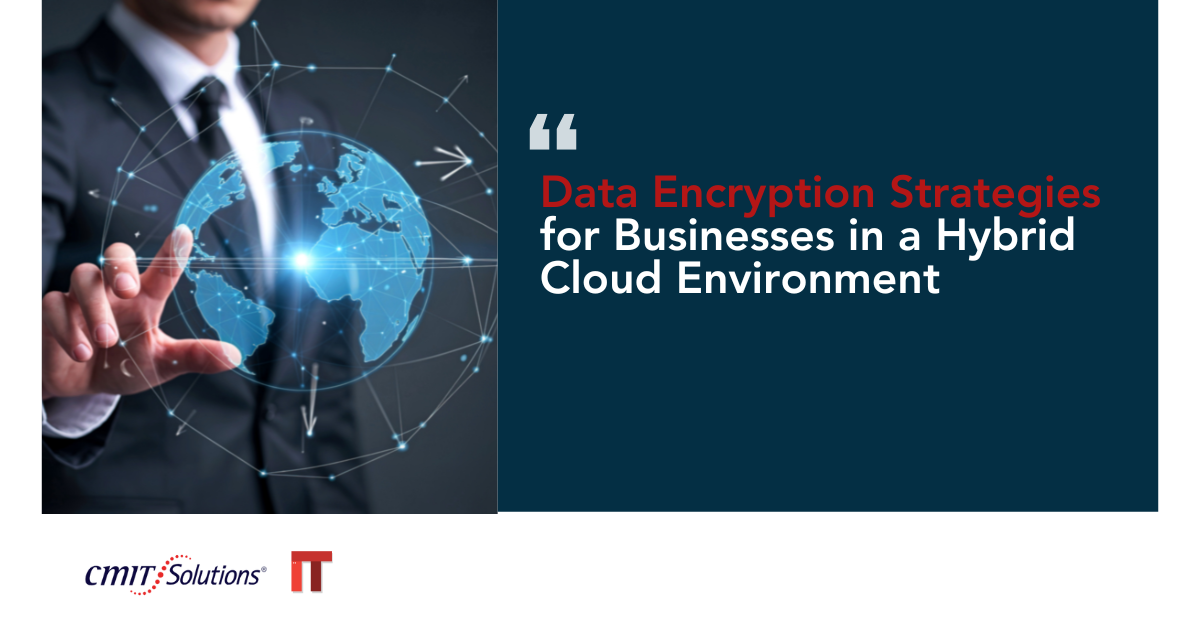
As companies adopt hybrid cloud infrastructures blending on-premises systems with public and private cloud services the importance of data encryption has never been greater. Sensitive business information moves constantly between different environments, users, and devices. Without proper encryption, this mobility exposes businesses to compliance risks and cyber threats. At CMIT Solutions of Long Beach, the goal is simple: help businesses embrace cloud flexibility while maintaining airtight data protection through layered encryption strategies.
Understanding the Hybrid Cloud Landscape
Hybrid cloud offers the best of both worlds: the security of private systems and the scalability of public cloud platforms. However, this mix also increases data complexity.
Common challenges include:
- Managing encryption keys across environments
- Maintaining compliance with industry standards
- Securing data in motion and at rest
- Balancing performance with protection
CMIT’s expertise in multi-cloud management ensures that even as workloads shift across platforms, encryption policies remain consistent and enforceable.

Why Data Encryption Is Non-Negotiable
Encryption transforms readable data into an unreadable code, ensuring that even if intercepted, it remains useless to unauthorized parties. In a hybrid cloud setup, this provides an extra layer of defense against internal errors and external attacks.
Benefits of encryption include:
- Prevents data breaches from exposed systems
- Meets compliance mandates like HIPAA, GDPR, and SOC 2
- Protects intellectual property and trade secrets
- Enhances customer confidence and trust
As highlighted in CMIT’s cybersecurity compliance, businesses that use encryption proactively don’t just avoid penalties they gain a competitive advantage.
Encryption Types for Hybrid Cloud Environments
To protect data throughout its lifecycle, businesses must apply multiple layers of encryption that work seamlessly across cloud and on-prem systems.
1. Encryption at Rest
This secures stored data on servers, drives, and backups.
- Use AES-256 for maximum protection
- Encrypt databases, file systems, and virtual disks
- Rotate keys regularly
CMIT’s ransomware resilience approach reinforces that encrypted backups are a business’s strongest recovery safeguard.
2. Encryption in Transit
This protects data moving between users, apps, and systems.
- Use TLS or HTTPS protocols
- Employ VPNs for remote access
- Verify certificate authenticity
CMIT’s insights on secure remote access illustrate how hybrid teams can stay connected without exposing data in motion.
3. End-to-End Encryption (E2EE)
This ensures only the sender and recipient can read messages or files.
- Ideal for collaboration platforms and email
- Supports compliance in regulated industries
- Eliminates risks from intermediaries
CMIT’s unified communications strategy shows how secure communication tools integrate E2EE to safeguard business interactions.
Effective Key Management Strategies
Encryption is only as strong as the keys that unlock it. Without centralized key control, hybrid environments risk inconsistencies and vulnerabilities.
Best practices include:
- Use cloud-native key management services (KMS)
- Employ hardware security modules (HSMs) for added protection
- Separate encryption duties from IT administration
- Regularly rotate and revoke expired keys
As CMIT highlights in its zero trust adoption, managing identity and access at the encryption level is critical for Zero Trust success.
Compliance Considerations for Hybrid Cloud Encryption
Encryption doesn’t just secure data it satisfies key compliance frameworks across industries. Each regulatory body has specific encryption requirements, and managed IT services simplify these complexities.
Examples include:
- HIPAA: Requires encryption of health data at rest and in transit
- GDPR: Encourages encryption for personal data protection
- PCI-DSS: Mandates encryption of payment card information
- CCPA: Recommends encryption for consumer data security
CMIT Solutions of Long Beach’s work on HIPAA and beyond ensures that healthcare and financial organizations meet these encryption benchmarks efficiently.
The Role of AI and Automation in Encryption
Artificial intelligence is reshaping encryption by automating threat detection and anomaly monitoring. Instead of relying solely on static rules, AI tools continuously analyze encryption behaviors for signs of compromise.
AI-driven encryption tools can:
- Identify weak or expired certificates
- Automate re-encryption of critical data
- Predict risks before breaches occur
CMIT’s AI innovation showcases how intelligent automation enhances encryption performance and scalability without human error.
Protecting Data Across Cloud and Edge
Hybrid architectures extend data beyond the data center into IoT devices, mobile endpoints, and remote branches. Encryption strategies must therefore reach every endpoint.
To protect data everywhere:
- Use endpoint encryption software for devices
- Secure file-sharing with digital rights management
- Implement role-based access control (RBAC)
- Integrate backup encryption for business continuity
These principles mirror CMIT’s focus on endpoint security, where every connected device becomes part of a secure data ecosystem.
Common Encryption Mistakes to Avoid
Even businesses with encryption in place often make small missteps that lead to major vulnerabilities.
Common pitfalls include:
- Using outdated encryption algorithms
- Storing keys in the same environment as encrypted data
- Neglecting data deletion or re-encryption after migrations
- Relying solely on vendor-managed encryption without oversight
CMIT’s cyber threats research warns that outdated encryption practices often become entry points for attackers exploiting hybrid configurations.

Partnering With Managed IT for Encryption Success
Managing encryption in hybrid environments requires both technical expertise and continuous monitoring. That’s why many SMBs rely on Managed Service Providers (MSPs) like CMIT Solutions of Long Beach for guidance.
A managed approach includes:
- Implementation of encryption policies across platforms
- 24/7 key management and access control
- Regular compliance audits and reporting
- Disaster recovery and encrypted backup management
As seen in CMIT’s help desk, expert oversight ensures that encryption remains effective without disrupting daily business operations.
Encryption and the Future of Data Security
The next generation of hybrid cloud security will depend on adaptive encryption dynamic systems that evolve in real time as threats change.
Future trends include:
- Quantum-resistant encryption algorithms
- Blockchain-based key management
- Automated compliance validation
- Unified encryption across all cloud platforms
CMIT Solutions’ insights on cybersecurity without compromise reinforce the principle that encryption is not just a defensive tool it’s a forward-looking investment in resilience.
Conclusion: Securing the Hybrid Future
Data is the lifeblood of modern business, and in hybrid cloud environments, encryption is the shield that keeps it safe. When properly managed, encryption enhances compliance, improves client confidence, and strengthens every aspect of your cybersecurity posture.
By partnering with CMIT Solutions of Long Beach, businesses gain access to expert-led encryption strategies, managed compliance, and continuous protection ensuring that sensitive data remains confidential, wherever it travels. Encryption isn’t just about privacy it’s about preserving the integrity and trust that power your digital future.