Businesses across Long Beach are undergoing rapid digital transformation as technology becomes central to daily operations. From managing customer data and financial systems to supporting remote teams and cloud applications, organizations are relying more heavily on technology than ever before. However, many companies still operate with outdated systems that cannot keep up with modern business demands.
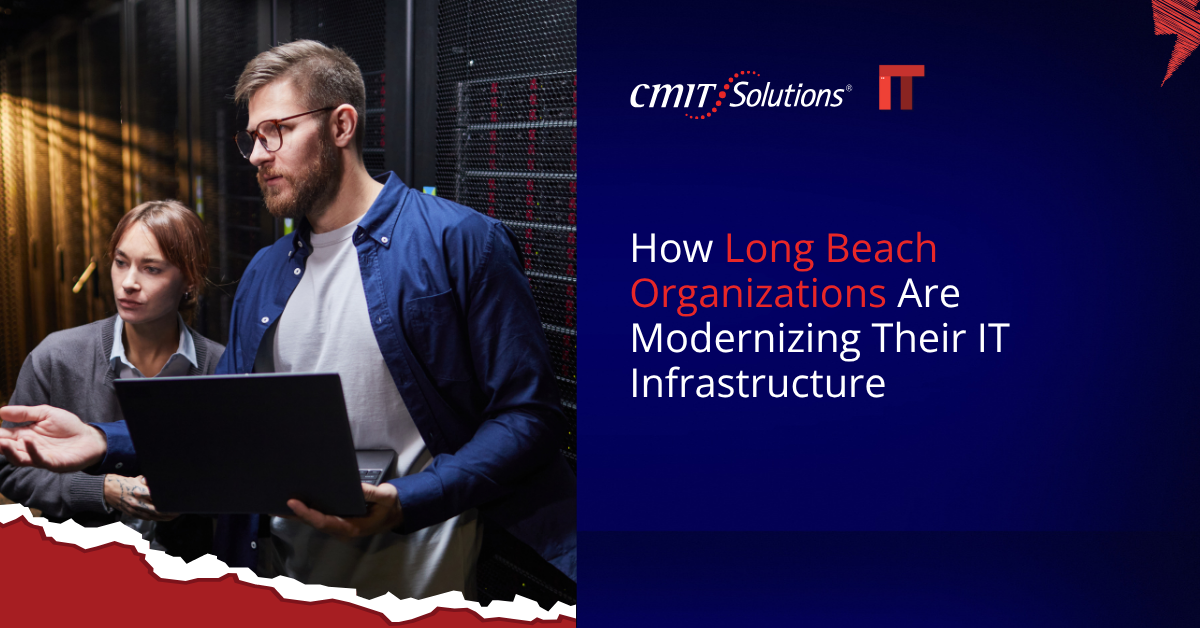
To stay competitive, Long Beach organizations are modernizing their IT infrastructure by adopting cloud technologies, improving cybersecurity, upgrading networks, and implementing smarter IT management strategies. Modern IT infrastructure allows businesses to operate more efficiently, reduce downtime, and support long-term growth.
Below are some of the key ways organizations in Long Beach are transforming their technology environments.
Moving from Legacy Systems to Modern Infrastructure
Many organizations still rely on legacy technology that was originally designed years ago. While these systems may still function, they often lack the flexibility, performance, and security required for modern business operations.
Legacy systems commonly create problems such as:
- Slow system performance
- Compatibility issues with modern applications
- Increased cybersecurity vulnerabilities
- Higher maintenance costs
Modernizing infrastructure allows businesses to replace outdated systems with more reliable and scalable technologies. Companies that implement managed IT services gain expert guidance in upgrading their infrastructure while minimizing disruptions. Many organizations are also addressing legacy system modernization to reduce risk and improve efficiency.
Replacing legacy systems with modern platforms improves efficiency and allows organizations to adapt more quickly to changing technology needs.
Adopting Cloud-Based Infrastructure
Cloud computing has become one of the most important components of modern IT infrastructure. Instead of relying solely on physical servers located in an office, businesses can now store data and run applications through secure cloud platforms.
Cloud technology provides several advantages for organizations:
- Scalable storage and computing resources
- Remote access to files and applications
- Reduced hardware maintenance costs
- Improved collaboration between teams
Organizations adopting cloud infrastructure can scale their technology resources as their business grows, without needing to invest heavily in physical hardware.
Cloud platforms also allow employees to work securely from different locations, which is essential for modern hybrid and remote work environments. Many businesses strengthen this with managed cloud services and cloud strategy planning.
Strengthening Cybersecurity Across IT Systems
As organizations modernize their infrastructure, cybersecurity becomes an essential part of the process. Modern IT systems must be designed with security integrated into every layer.
Businesses in Long Beach are implementing stronger business cybersecurity strategies to protect their networks, data, and digital operations.
Key cybersecurity improvements include:
- Multi-factor authentication for system access
- Advanced threat detection systems
- Network monitoring and vulnerability scanning
- Secure endpoint protection for employee devices
Companies that adopt professional cyber security services can detect threats earlier and respond quickly to potential attacks. Many are also investing in advanced threat monitoring and endpoint security protection.
By integrating security directly into IT infrastructure, organizations can significantly reduce the risk of cyber incidents.
Implementing Scalable Network Solutions
Reliable network performance is critical for modern organizations. As businesses adopt cloud applications, video conferencing tools, and data-driven platforms, network demands continue to increase.
Outdated network systems can cause:
- Slow internet connectivity
- Disruptions in cloud applications
- Poor communication between teams
- Increased downtime
Businesses that implement network management solutions gain better visibility into network performance and can resolve issues before they impact operations. Many improve stability through network performance management.
Modern network infrastructure ensures consistent connectivity and supports the growing digital demands of modern workplaces.

Supporting Remote and Hybrid Work Environments
Workplace environments have evolved significantly in recent years. Many organizations now support remote employees, hybrid teams, and distributed workforces.
To support these changes, businesses are modernizing their IT infrastructure with technologies that enable secure remote access.
These solutions often include:
- Secure cloud collaboration tools
- Virtual private networks for remote access
- Identity-based security controls
- Centralized file storage systems
Companies that adopt business cloud solutions allow employees to access company systems securely from anywhere while maintaining strong data protection. Many organizations also implement secure remote access to support flexible work.
This flexibility improves productivity while supporting modern work environments.
Enhancing Data Protection and Backup Systems
Data is one of the most valuable assets for modern organizations. Companies generate and store large volumes of information, including customer records, operational data, financial reports, and internal communications.
Modern IT infrastructure includes reliable data protection strategies that safeguard this information from loss or cyber threats.
Businesses implementing data backup solutions benefit from:
- Automatic backups of important files
- Secure offsite storage of data
- Faster recovery after system failures
- Protection against ransomware attacks
Strong backup and recovery systems ensure organizations can maintain operations even during unexpected disruptions. Many businesses reinforce this with secure cloud backups.
Automating IT Monitoring and Maintenance
Managing modern IT environments can be complex. Businesses often operate with multiple systems, devices, and applications that require constant monitoring.
Automation tools are now being used to simplify IT management.
Automated systems can:
- Monitor network performance in real time
- Detect potential system failures early
- Identify cybersecurity threats
- Automatically install updates and patches
Organizations that rely on professional IT management gain access to advanced monitoring tools that help prevent technical issues before they impact business operations. Many are also embracing smarter IT automation to reduce routine workload.
Automation allows IT teams to focus on strategic improvements instead of routine maintenance tasks.
Integrating Business Applications
Many organizations use multiple software platforms for tasks such as accounting, project management, customer relationship management, and communication.
If these systems do not integrate properly, employees may struggle with disconnected data and inefficient workflows.
Modern infrastructure strategies focus on integrating applications so that systems can communicate seamlessly.
Integrated systems allow businesses to:
- Share real-time data across departments
- Reduce duplicate data entry
- Improve decision-making through accurate information
- Streamline internal workflows
Businesses that adopt IT consulting services can identify the best ways to integrate technology platforms and optimize operational efficiency. Many growing companies connect modernization with smart business growth.

Improving System Reliability and Reducing Downtime
Downtime is one of the biggest challenges businesses face when managing technology infrastructure. System outages can disrupt productivity, delay customer services, and create financial losses.
Modern IT infrastructure focuses heavily on reliability and resilience.
Strategies for improving system stability include:
- Continuous system monitoring
- Redundant infrastructure components
- Proactive hardware maintenance
- Predictive analytics for identifying potential failures
Organizations that implement security monitoring systems can detect unusual system activity early and resolve issues before they cause major disruptions. Many businesses reduce outages with proactive IT support.
This proactive approach significantly reduces downtime and improves operational reliability.
Aligning Technology with Business Growth
Successful IT modernization requires aligning technology investments with business goals. Infrastructure should support growth, innovation, and operational efficiency.
Companies adopting a modern IT strategy focus on building flexible technology environments that can evolve as the organization expands.
This approach allows businesses to:
- Scale operations without infrastructure limitations
- Adopt new technologies more easily
- Improve customer experiences
- Maintain competitive advantages in their industries
Modern IT infrastructure enables organizations to adapt quickly to new opportunities and technological advancements. Many teams use a future ready roadmap to guide that process.
Conclusion
Organizations in Long Beach are modernizing their IT infrastructure to keep pace with the demands of digital business environments. From adopting cloud platforms and strengthening cybersecurity to implementing automation and scalable network systems, businesses are transforming how they manage technology.
Modern IT infrastructure improves system reliability, enhances data security, and supports flexible work environments. By replacing outdated systems and implementing smarter technology strategies, organizations can operate more efficiently and prepare for future growth.
Partnering with CMIT Solutions Long Beach helps businesses modernize their IT infrastructure with expert guidance, proactive monitoring, and secure technology solutions designed for modern organizations.
If your organization is ready to upgrade its technology environment and build a more reliable IT infrastructure, contact CMIT Solutions of Long Beach today to learn how modern IT solutions can support your business growth and operational success.