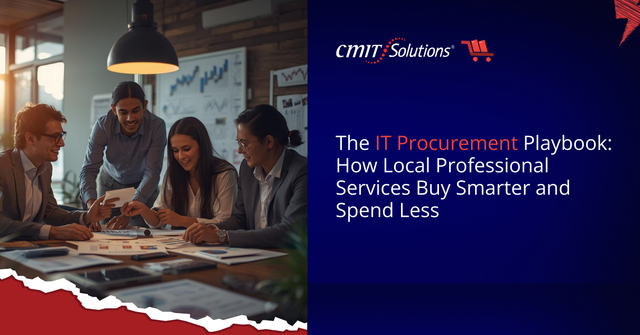
For many professional services firms, IT procurement has traditionally been reactive. Equipment is purchased when something breaks, software is added when a new need arises, and vendors are selected based on urgency rather than strategy. While this approach keeps operations moving in the short term, it often leads to unnecessary spending, inconsistent systems, and long-term inefficiencies.
As technology becomes more central to service delivery, professional services firms are rethinking how they buy and manage IT. Smarter procurement strategies are helping organizations control costs, improve performance, and make technology a competitive asset rather than a recurring expense.
Why reactive IT purchasing drives up costs
Unplanned IT purchases tend to prioritize speed over value. When decisions are made under pressure, firms often overpay or select solutions that don’t scale well.
Common consequences include:
- Paying premium prices for urgent replacements
- Purchasing incompatible hardware or software
- Overlapping tools that serve similar purposes
- Higher support and maintenance costs over time
Reactive purchasing is often compounded by unmanaged IT sprawl, where systems accumulate without oversight.
Understanding actual technology needs before buying
Smarter procurement starts with clarity. Professional services firms that buy effectively begin by assessing how technology supports daily workflows, client delivery, and growth plans.
This assessment helps identify:
- Which tools are essential versus optional
- Where performance bottlenecks exist
- Which systems are underutilized
- What capabilities will be needed in the near future
Grounding decisions in operational reality prevents overspending and misalignment.
Standardization reduces complexity and expense
Firms that standardize devices, software platforms, and vendors benefit from predictability and efficiency. Standardization simplifies support, training, and lifecycle management.
Key advantages include:
- Lower purchasing costs through consistency
- Faster onboarding for new employees
- Reduced troubleshooting time
- Easier updates and replacements
Standardization also makes it easier to manage network infrastructure and system performance.

Vendor selection should focus on long-term value
Lowest upfront cost rarely equals lowest total cost. Smarter procurement evaluates vendors based on reliability, support quality, and long-term fit rather than price alone.
Effective vendor evaluation considers:
- Product longevity and update cycles
- Support responsiveness
- Integration with existing systems
- Clear pricing and renewal terms
Long-term value becomes more visible when procurement is aligned with strategic IT guidance rather than one-off purchases.
Lifecycle planning prevents emergency spending
Every technology asset has a lifecycle. Firms that plan for replacement and upgrades avoid the cost spikes associated with unexpected failures.
Lifecycle-aware procurement includes:
- Planned refresh schedules
- Budget forecasting for replacements
- Alignment with warranty and support timelines
- Proactive upgrades instead of emergency fixes
This approach reduces the risk of downtime and improves operational stability.
Software licensing oversight controls recurring expenses
Subscription-based software has made IT costs more flexible—but also easier to lose track of. Without oversight, licenses accumulate without delivering value.
Smarter procurement practices involve:
- Regular license usage reviews
- Eliminating unused or redundant subscriptions
- Aligning license levels with actual needs
- Monitoring renewal dates and terms
Oversight becomes critical as firms rely more heavily on cloud-based services.

Security and compliance must influence purchasing decisions
Professional services firms handle sensitive client data, making security a critical procurement factor. Cheaper tools that lack adequate controls can create costly risks.
Procurement decisions should account for:
- Built-in security features
- Compliance requirements
- Vendor security practices
- Data protection capabilities
Security-aligned procurement supports broader cybersecurity goals and reduces remediation costs.
Procurement aligned with growth supports scalability
Technology purchased today should support where the firm is headed, not just where it is now. Firms that align procurement with growth plans avoid frequent replacements.
Scalable procurement strategies consider:
- Workforce expansion
- New service offerings
- Increased data volumes
- Remote and hybrid work models
Planning ahead minimizes disruption as the business evolves.
Centralized oversight improves accountability
When procurement decisions are scattered across departments, spending becomes fragmented and difficult to control. Centralized oversight brings consistency and visibility.
Benefits include:
- Clear approval processes
- Better cost tracking
- Stronger negotiation leverage
- Reduced duplication of purchases
Centralization also supports smarter budgeting and forecasting.
Smarter procurement strengthens operational confidence
When IT procurement is strategic, technology becomes more reliable and predictable. Teams experience fewer disruptions, and leadership gains confidence in IT investments.
Over time, smarter procurement leads to:
- Lower total cost of ownership
- Improved system performance
- Fewer operational surprises
- Better alignment between IT and business goals
Technology spending becomes intentional rather than reactive.
Conclusion
IT procurement is no longer just a purchasing function it is a strategic discipline that directly affects efficiency, security, and profitability. Professional services firms that move away from reactive buying and toward structured, informed procurement gain better control over costs while improving the reliability of their technology environments.
By aligning purchasing decisions with operational needs, lifecycle planning, and long-term goals, organizations can spend less while getting more value from their IT investments.
CMIT Solutions of Long Beach helps professional services firms develop smarter IT procurement strategies that reduce waste, improve performance, and support sustainable growth.