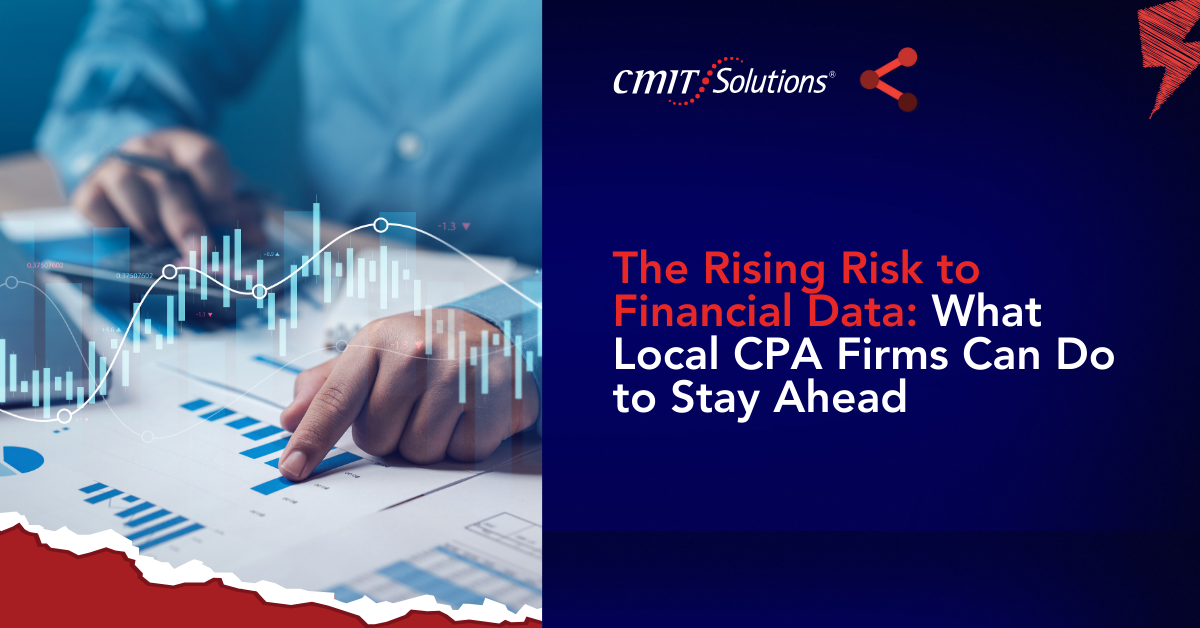
CPA firms hold some of the most sensitive data in the business world: tax records, bank statements, payroll files, audits, legal documents, and financial disclosures. As cybercriminals adopt new, AI-powered tools, financial data has become one of the most profitable targets for attackers. That means accounting practices in Long Beach must strengthen their defenses before the next tax season, not after a breach.
The threat environment is shifting quickly, and insights from recent breach trends show how rapidly financial records are being exploited.
breach trends
Why CPA Firms Are Now Prime Targets
Cybercriminals follow the money and few businesses store as much verified, high-value financial data as CPA firms. Personal information, tax IDs, SSNs, income documents, and corporate financials can be sold instantly on the dark web or used for fraudulent refunds.
This growing threat mirrors the patterns highlighted in small business targeting, where attackers increasingly prefer companies with limited security resources.
small business targeting
Why CPA data is so attractive:
- Tax documents contain complete identity profiles
- Refund fraud produces quick financial returns
- Businesses rely on uninterrupted filing workflows
- CPAs often use seasonal staff unfamiliar with security best practices
How AI-Driven Attacks Are Accelerating Financial Theft
AI is changing the game for attackers. Instead of manually crafting phishing emails or guessing passwords, cybercriminals now deploy automated, highly personalized attacks that appear legitimate and urgent.
The rise of AI-generated schemes is already affecting financial-service organizations nationwide.
AI-generated schemes
AI-enhanced attack methods include:
- Fake IRS emails tailored to real filing deadlines
- Deepfake CFO requests asking for financial transfers
- Automated password attacks using financial data patterns
- Phishing emails that imitate clients or partners with perfect grammar
The Dangerous Impact of Outdated Systems in CPA Offices
Many CPA firms still rely on older desktop software, aging servers, and outdated operating systems. While these tools may “still work,” they quietly expose firms to major vulnerabilities.
This risk echoes the warning signs seen in widespread system aging issues, where unsupported platforms become easy entry points for attackers.
system aging issues
Consequences of outdated systems:
- Software no longer receives security patches
- Vulnerabilities can be exploited in minutes
- Performance problems delay client deliverables
- Compliance gaps increase legal exposure
The Growing Threat of Ransomware to CPA Firms
Ransomware is one of the most devastating cyberthreats in the financial industry. Attackers encrypt tax files, audit folders, and accounting systems and then demand payment to restore access. During peak filing season, even a short disruption can lead to missed deadlines and financial penalties.
Real-world ransomware cases show how quickly these attacks escalate and how costly they can be for small firms.
ransomware cases
Ransomware risks for CPAs:
- Locked QuickBooks and tax software systems
- Encrypted client financial folders
- Loss of access to cloud accounting platforms
- Long-term reputational damage

Why Weak Passwords and Outdated Authentication Are No Longer Enough
Financial professionals manage dozens of client accounts, portals, and filing systems — making strong authentication essential. But many CPA firms still rely on basic passwords, reused logins, or outdated MFA methods attackers can now bypass using AI.
Modern identity risks reveal how quickly attackers exploit weak login systems.
identity risks
Key authentication problems in CPA offices:
- Shared department passwords
- Old security questions with guessable answers
- SMS-based MFA vulnerable to SIM swapping
- Password reuse across filing platforms
Email Remains the #1 Entry Point for Financial Fraud
Email is the communication lifeline for CPA firms — and the biggest gateway for attacks. Criminals impersonate banks, clients, or software vendors to trick staff into clicking malicious links or approving fraudulent transfers.
The sophistication of realistic phishing attempts continues to increase, especially during busy financial seasons.
realistic phishing
Common email-based threats:
- Fake client tax document requests
- Fraudulent W-9 or 1099 updates
- Malware disguised as financial statements
- “Urgent IRS notice” scams
The Need for Zero Trust in Financial Environments
CPA firms can no longer assume that internal devices, users, or applications are safe. A Zero Trust approach “never trust, always verify” — adds crucial protection inside the network where attackers often hide.
This mirrors the industry shift toward modern verification models, which prevent unauthorized access even after an initial breach.
modern verification
Zero Trust protects CPA firms by:
- Limiting access to only the data each employee needs
- Preventing lateral movement inside the network
- Continuously validating user identity
- Segmenting high-risk financial systems
The Critical Role of Secure Data Backups for CPA Firms
Reliable, encrypted, and tested backups are essential for financial professionals. Losing access to client files even temporarily can create compliance failures, IRS penalties, and permanent trust issues.
Strong backup strategies prevent catastrophic data loss during ransomware, hardware failure, or cloud outages.
backup strategies
Best practices for CPA backup protection:
- Daily encrypted backups to multiple locations
- Quick disaster recovery environments
- Regular file restoration testing
- Offsite backup storage independent of the main network

Compliance Pressure Is Increasing for Financial Practices
CPA firms operate under strict federal and state regulations — from confidentiality rules to tax-data handling standards. Cybersecurity failures can lead to legal action, audits, or even loss of licensure.
Growing compliance demands highlight how essential consistent security controls have become for professional firms.
compliance demands (applicable to CPA-level frameworks as well)
Compliance challenges for CPAs include:
- Protecting non-public financial information
- Maintaining secure client communication
- Ensuring safe data transmission to IRS and state agencies
- Documenting cybersecurity policies
How CPA Firms Can Build a Future-Proof Security Strategy
Staying ahead of attackers requires a layered, strategic defense built around modern tools and human awareness. Technology alone isn’t enough accounting teams must be trained and systems must be continuously monitored.
These principles align with modern IT readiness approaches already helping local firms catch risks early.
modern IT readiness
Key defensive steps for CPA firms:
- Implement multi-factor authentication across all systems
- Migrate away from outdated operating systems
- Monitor networks 24/7 with intelligent tools
- Restrict financial data to least-privilege access
- Train all staff including seasonal hires quarterly
- Enable encrypted, remote-access tools for hybrid work
- Partner with an MSP for continuous protection
Why Partnering With a Managed IT Provider Is Now Essential
Most CPA firms don’t have the time or internal expertise to manage cybersecurity, monitoring, compliance, backups, and cloud environments. Outsourcing IT to a trusted partner provides both protection and peace of mind.
Local firms benefit from expert guidance that aligns technology with operational and regulatory needs.
expert guidance
Advantages for CPA practices:
- Dedicated security monitoring
- Predictable monthly costs
- Faster issue resolution
- Assistance during audits or breach investigations
- Strategic planning for future technology upgrades
Conclusion: Staying Ahead Is the Only Way to Stay Safe
Financial data is becoming more valuable and more vulnerable every year. Cybercriminals now have AI tools that scale attacks faster than ever, making CPA firms high-priority targets. But with the right strategy, modern defenses, and expert support, accounting practices in Long Beach can stay not just protected but ahead of the threat curve.
By upgrading outdated systems, strengthening authentication, training employees, adopting Zero Trust, and implementing reliable backups, CPA firms can protect their clients, their reputation, and their future.