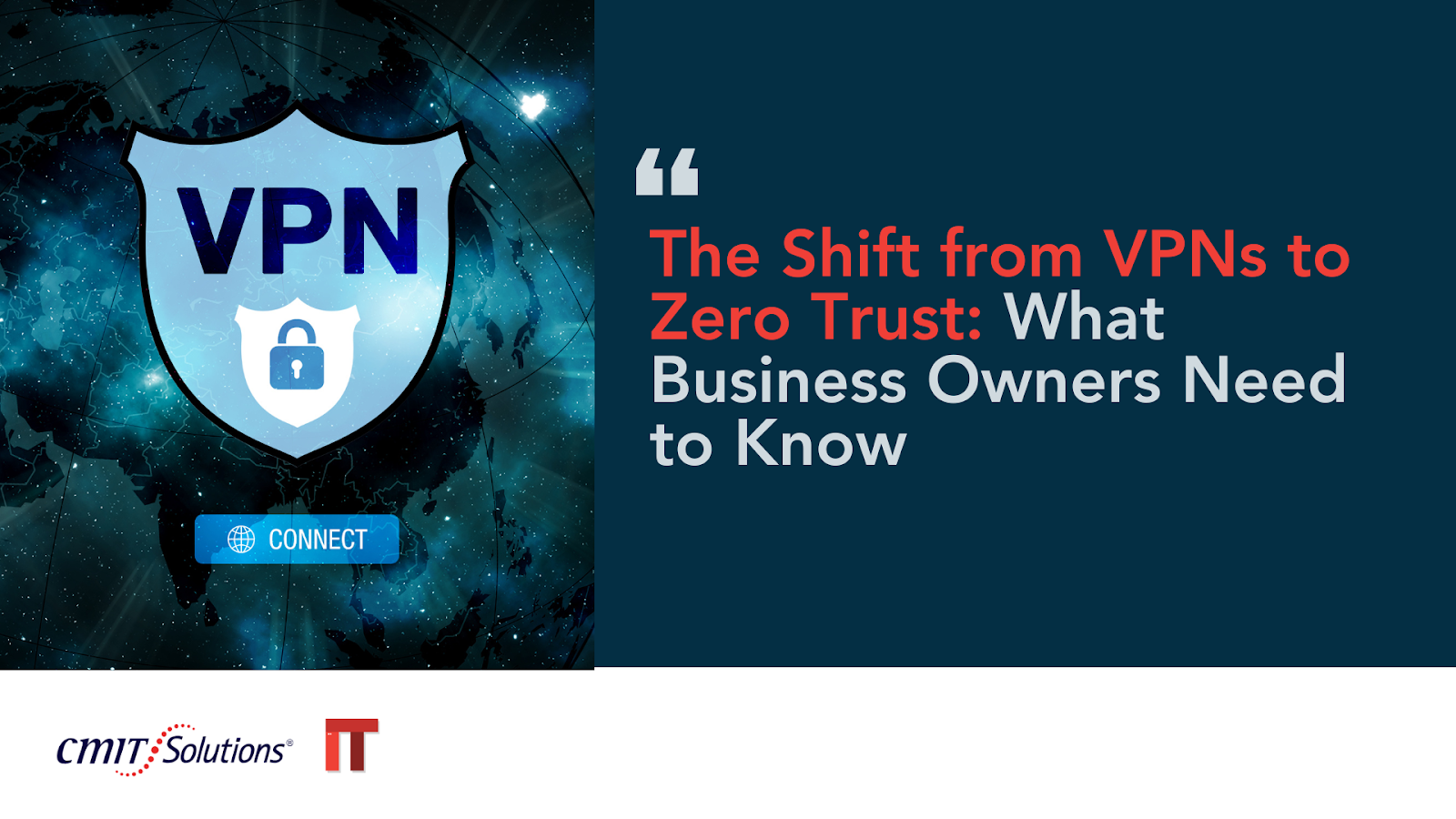
What Is a VPN?
A Virtual Private Network (VPN) creates a secure, encrypted connection between a device and a network, masking the user’s IP address and allowing remote access to corporate resources. For years, VPNs were considered the gold standard for remote work security, helping businesses protect data in transit and mitigate cyber threats.
However, VPNs rely on a perimeter-based security model, assuming that once a user is inside the network, they are trusted. This trust model is increasingly risky in a landscape where cyberattacks and insider threats are on the rise.
Why VPNs Are No Longer Enough
Modern work environments are decentralized, with employees accessing systems from various devices and locations. VPNs struggle to manage this complexity. Their broad network access can expose organizations to lateral movement by attackers once inside.
The rise of insider threats and compromised credentials has made traditional VPNs more vulnerable. Plus, VPNs often suffer from performance issues, especially when multiple users are connected, slowing down productivity and frustrating remote workers.

What Is Zero Trust?
Zero Trust is a modern cybersecurity framework that operates under a simple principle: trust no one, verify everything. It assumes that threats could exist both outside and inside the network, so every access request is treated as a potential risk.
Zero Trust enforces strict identity verification, device authentication, and access control policies. Instead of granting full access, it applies least-privilege access principles—ensuring users only access what they need, nothing more.
Why Zero Trust Matters Now
The traditional perimeter-based security model has eroded with cloud adoption and remote work. Businesses need a security framework that adapts to this new environment.
Zero Trust is designed to reduce the risk of data breaches, ransomware, and unauthorized access. It aligns with the modern threat landscape where attackers often exploit trust-based assumptions to move laterally within systems. That’s why zero trust adoption is becoming the new standard for SMB security strategies.
Key Components of a Zero Trust Architecture
To successfully implement Zero Trust, businesses must integrate multiple technologies and policies:
- Identity and Access Management (IAM): Verifies users before granting access
- Multi-Factor Authentication (MFA): Adds an extra layer of login security
- Endpoint Detection and Response (EDR): Monitors and responds to endpoint threats
- Network Segmentation: Isolates critical systems from one another
- Real-time Monitoring: Detects anomalies and suspicious behavior
Understanding your needs helps determine whether solutions like SIEM or EDR are right for your cybersecurity infrastructure.
Business Benefits of Zero Trust
Adopting Zero Trust enhances security while supporting business agility:
- Stronger protection against cyber threats and ransomware
- Greater visibility into network activity
- Scalability for remote work and cloud services
- Reduced risk of regulatory penalties
Companies that implement Zero Trust see fewer breaches and more confidence in their IT posture. This proactive approach empowers SMBs to manage modern risks while enabling growth.
Why SMBs Need Managed IT Services
Small businesses often lack the internal resources to build and maintain a Zero Trust framework. That’s where managed IT services come in.
A reliable MSP can:
- Assess your current security posture
- Implement key Zero Trust tools like AI security and MFA
- Ensure continuous compliance monitoring
- Provide proactive incident response planning
With proactive IT support, you can stay ahead of evolving threats without overburdening your team or budget.

Cloud and Zero Trust: Better Together
Zero Trust pairs naturally with cloud-based systems. In fact, cloud-native security platforms often incorporate Zero Trust principles by default.
Moving to managed cloud services gives businesses the flexibility and scalability they need—while still maintaining control through access policies, encryption, and real-time monitoring.
Pairing cloud backups with Zero Trust helps organizations maintain operational continuity and avoid data loss from ransomware attacks or insider breaches.
How Zero Trust Prevents Breaches
Cybercriminals thrive in environments with poor segmentation and excessive trust. Zero Trust blocks their typical pathways by continuously validating identities, scanning for suspicious behavior, and segmenting sensitive systems.
Solutions like endpoint protection, real-time monitoring, and AI innovation work together to reduce attack surfaces. This makes it significantly harder for bad actors to exploit outdated defenses like VPN-only systems.
Getting Started: Transitioning to Zero Trust
Transitioning from VPNs to Zero Trust doesn’t happen overnight. Start with these practical steps:
- Audit your current infrastructure and access controls
- Implement MFA across all user accounts
- Adopt network segmentation for sensitive systems
- Roll out endpoint monitoring tools
- Partner with an MSP for full Zero Trust deployment
Resources like CMIT’s guide on cybersecurity without compromise can help clarify which technologies to prioritize based on your risk level and industry.
Conclusion
VPNs served businesses well—but they were designed for a different era. Today’s cybersecurity threats demand a more robust and dynamic approach. Zero Trust offers that framework, combining authentication, automation, and vigilance.
For Long Beach businesses, embracing Zero Trust means moving beyond outdated tools and into a future-proof security strategy. Whether you’re concerned about ransomware, data breaches, or compliance, a Zero Trust model—supported by managed IT services—can protect what matters most.
Make the switch today and turn security into a growth enabler—not a roadblock.