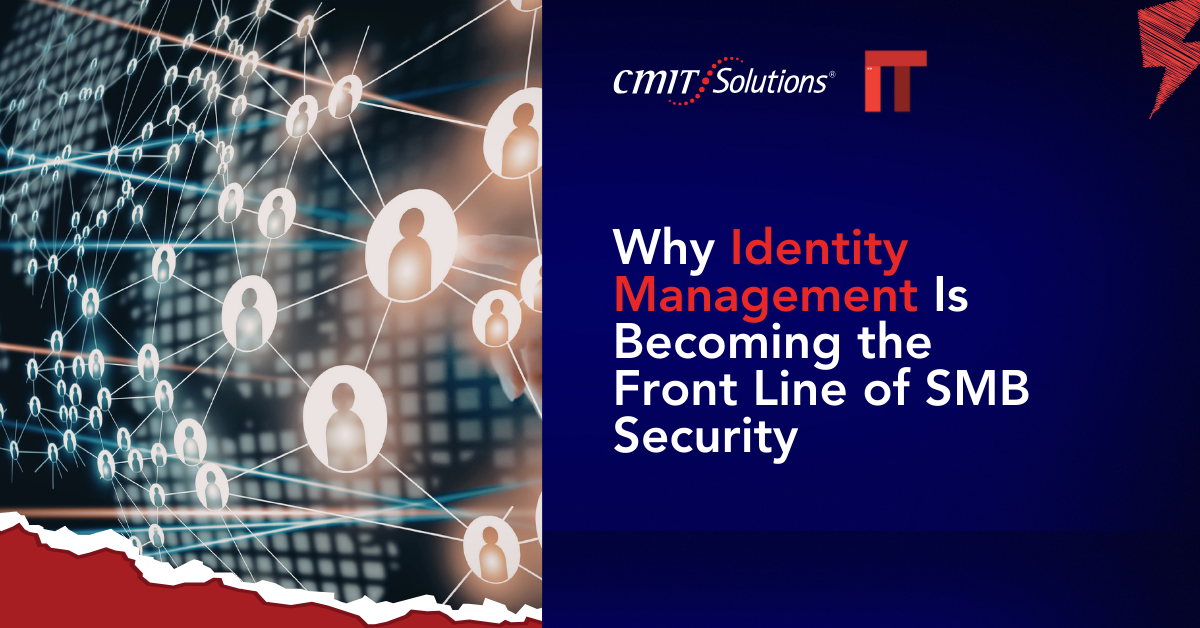
For small and mid-sized businesses, cybersecurity threats are no longer limited to malware or network intrusions. Today’s most successful attacks often begin with something far simpler: a compromised identity. User credentials have become the easiest and most effective way for attackers to gain access to systems, data, and applications making identity management the new front line of SMB security.
As businesses adopt cloud platforms, remote work, and third-party applications, traditional perimeter-based security models no longer provide adequate protection. At CMIT Solutions of Long Beach, we see firsthand how identity-related weaknesses expose SMBs to risk, even when other security tools are in place. Managing who can access systems, what they can access, and under what conditions is now central to protecting modern business environments.
The Shift From Network Security to Identity-Centric Security
Historically, SMB security focused on defending the network perimeter firewalls, routers, and on-premise infrastructure. While these controls remain important, they are no longer sufficient on their own. Users now access systems from multiple locations, devices, and cloud services, often outside the traditional network boundary.
As a result, identity has replaced the network as the primary control point. Security decisions are increasingly based on who the user is, how they authenticate, and whether their behavior aligns with expected patterns.
Key changes in security focus include:
- Users no longer operate exclusively inside a secure office network
- Cloud applications bypass traditional perimeter defenses
- Credentials are targeted more often than infrastructure
- Access decisions must follow users across environments
- Identity verification is now central to risk management
Stolen Credentials Are the Most Common Entry Point for Attacks
Many cyber incidents targeting SMBs begin with compromised usernames and passwords. These credentials may be stolen through phishing, reused across services, or exposed through weak password practices. Once attackers gain valid credentials, they can often move freely without triggering traditional security alerts, especially as cyber threats continue to evolve.
Identity-based attacks are especially dangerous because they mimic legitimate user behavior, making them harder to detect and stop.
Credential-related risks SMBs must address include:
- Password-only authentication is no longer sufficient
- Users often reuse passwords across platforms
- Phishing attacks target employees at all levels
- Compromised credentials enable lateral movement
- Identity abuse can persist undetected for long periods
Cloud Adoption Has Made Identity Management Business-Critical
Cloud services have transformed how SMBs operate, enabling flexibility, scalability, and remote collaboration. However, they also shift security responsibility toward identity controls. When applications are hosted in the cloud, access is no longer governed by physical networks but by user authentication and authorization, making cloud strategy decisions closely tied to identity security.
Without strong identity management, cloud environments can quickly become fragmented and difficult to secure.
To manage cloud-related identity risks, SMBs should focus on:
- Centralized identity platforms for cloud access
- Consistent authentication across applications
- Secure single sign-on configurations
- Conditional access based on risk and context
- Visibility into user activity across cloud services
Poor Access Control Increases Both Security and Compliance Risk
Identity management is not just about authentication it is also about authorization. Many SMBs struggle with defining and enforcing appropriate access levels, leading to overprivileged users who have more access than necessary.
Excessive access increases the potential impact of compromised accounts and raises compliance concerns related to data protection and accountability, especially as compliance audits become more demanding.
Effective access control depends on:
- Role-based access aligned to job responsibilities
- Limiting administrative privileges to essential users
- Regular reviews of user permissions
- Immediate access removal during offboarding
- Clear documentation of access policies

Remote and Hybrid Workforces Depend on Strong Identity Controls
Remote and hybrid work environments have become standard for many SMBs, expanding the attack surface significantly. Employees now access systems from home networks, personal devices, and public locations often outside direct IT oversight.
In this environment, identity verification becomes the primary method of ensuring secure access, especially as remote access needs increase.
To support secure remote work, businesses should prioritize:
- Multi-factor authentication for all remote access
- Device-based access validation
- Secure identity verification across locations
- Monitoring for unusual login behavior
- Enforcing least-privilege access remotely
Identity Sprawl Is Creating Hidden Security Gaps
As SMBs adopt more applications and platforms, user identities often become fragmented across systems. Multiple credentials, unmanaged accounts, and inconsistent access policies create blind spots that attackers can exploit.
This identity sprawl makes it difficult to maintain visibility and control, especially as businesses grow.
To address identity sprawl, organizations should focus on:
- Centralizing identity management systems
- Reducing duplicate or orphaned accounts
- Standardizing onboarding and offboarding processes
- Maintaining an accurate inventory of user identities
- Aligning access policies across platforms
Multi-Factor Authentication Is Now a Baseline Expectation
Multi-factor authentication has evolved from a best practice into a baseline security requirement. Relying on passwords alone exposes SMBs to unnecessary risk, especially when attackers can easily bypass weak or reused credentials.
MFA adds a critical layer of protection by requiring additional verification factors beyond passwords, and many organizations are now exploring passkey security to strengthen authentication even further.
When implementing MFA, businesses should consider:
- Enforcing MFA across all critical systems
- Using risk-based authentication where possible
- Balancing security with user experience
- Extending MFA to cloud and remote access
- Monitoring MFA effectiveness and adoption
Identity Monitoring Improves Threat Detection and Response
Identity management does not end at authentication it also plays a vital role in detecting threats. Monitoring login activity, access patterns, and user behavior allows businesses to identify anomalies that may indicate compromise.
Identity-based monitoring provides early warning signals that traditional tools may miss, especially when paired with MDR EDR capabilities.
To improve detection through identity monitoring, SMBs should focus on:
- Logging authentication and access events
- Alerting on abnormal login locations or times
- Detecting privilege escalation attempts
- Correlating identity activity with security alerts
- Reviewing identity logs regularly

Identity Management Supports Compliance and Audit Readiness
Many compliance frameworks require businesses to demonstrate control over user access, data protection, and accountability. Identity management provides the foundation for meeting these expectations by enabling traceability and governance.
Without proper identity controls, compliance efforts often fall short during audits or assessments, including increasingly strict IT compliance expectations.
Strong identity management supports compliance by enabling:
- Clear documentation of access policies
- Audit trails for user activity
- Enforcement of least-privilege principles
- Timely access removal and role changes
- Visibility into who accessed sensitive data
Identity Management Must Be Integrated Into Overall Security Strategy
Treating identity management as a standalone tool limits its effectiveness. To truly serve as the front line of SMB security, identity controls must be integrated with broader IT and cybersecurity strategies.
At CMIT Solutions of Long Beach, we help businesses align identity management with endpoint security, network protection, monitoring, and compliance initiatives creating a cohesive defense strategy supported by managed services.
A mature identity-focused security approach includes:
- Integration with security monitoring tools
- Alignment with business workflows and growth
- Continuous improvement and policy refinement
- Employee education on identity security
- Ongoing assessment of identity-related risks
Final Thoughts: Identity Is the New Security Perimeter
For today’s SMBs, identity management is no longer a supporting component of cybersecurity it is the foundation. As attackers increasingly target credentials instead of infrastructure, businesses must adapt by strengthening how identities are managed, protected, and monitored.
At CMIT Solutions of Long Beach, we help SMBs build identity-first security strategies that reduce risk, support compliance, and enable secure growth through cybersecurity support. By treating identity as the front line of defense, businesses can better protect their systems, data, and people in an increasingly complex digital landscape.