
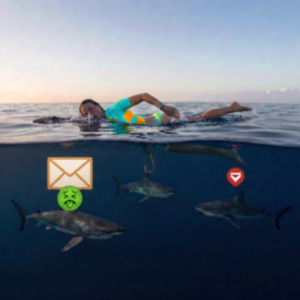
 On the surface, the water looks completely calm…
That’s what makes Shark Week so compelling every single year. The danger is never the thing you can see. It’s what’s already moving underneath — quiet, patient, and aimed at exactly the right moment.
Cybercriminals operate the same way.
The threats businesses face right now aren’t dramatic. They don’t announce themselves. They’re designed to blend in with normal operations — to look like a routine email, a familiar vendor, a standard approval request — right up until the moment something breaks, money moves, or systems go down.
And during the summer? When schedules shift, employees travel, and oversight gets thinner? Attackers know the water is at its calmest. That’s when they’re most active. 😬
Here are three ways they’re circling your business right now.
1. Fake Invoices and Vendor Impersonation
In most cases, attackers don’t need to hack anything. They just need to send one believable email.
This is called Business Email Compromise, or BEC. It works by impersonating a vendor, supplier, or executive your team already trusts. The email arrives looking completely normal. Someone on your team processes the payment. And by the time anyone realizes the request wasn’t legitimate, the money is gone.
These attacks spike during vacation season for one very specific reason: when the person who normally approves payments is out, requests get rerouted to people who don’t always know what “normal” looks like. Temporary stand-ins are less likely to question urgency. Attackers know exactly which buttons to push. And boy, do they push them.
The fix is simple and costs nothing: build a verification step for any financial request that arrives via email. A quick confirmation call to a known number — not the number listed in the suspicious email — stops most of these before they go anywhere.
One phone call. That’s often the entire difference. </soapbox>
2. Phishing Attacks That Target Distracted Employees
Phishing works because it’s engineered around how people behave when they’re busy. Not careless. Not uninformed. Just busy.
Cybercriminals design these moments deliberately. A distracted employee sees a password reset notification and clicks the link without thinking. Someone gets a text that looks like it came from IT. An email lands right before a meeting asking for urgent approval on a wire transfer. Nobody stops to verify because stopping feels like losing time.
The most effective protection here isn’t a software solution. It’s culture.
People need to feel genuinely comfortable slowing down when something seems off — without worrying it’ll make them look inexperienced or difficult. That means treating these as worthy of a pause:
- An unexpected login request that came out of nowhere
- A payment instruction that wasn’t part of any existing conversation
- A link in an email they weren’t expecting from someone they sort of know
Speed is the weapon attackers use against you. Slowing down is how you take it away from them. 💪
3. Third-Party Risks That Travel Fast
Here’s the one that surprises most business owners. It scares the heck out of me. 😶
When a vendor with access to your systems gets compromised, the threat doesn’t stay contained to them. It travels directly into your environment through whatever connection they have to your business.
This is called supply chain exposure. And most businesses have significantly more of it than they realize.
Software tools connected to your network. Service providers holding credentials. Contractors whose access was never removed after a project wrapped up. Each of those is a path into your business that most owners have never fully mapped.
Outsourcing a service doesn’t outsource the accountability. 😬
Knowing where you stand starts with being able to answer three questions:
- Which vendors can currently access your data or systems?
- What exactly are they connecting to?
- Who inside your business is responsible for managing those relationships?
If those answers aren’t clear, the exposure is real — whether you can see it or not.
By the Time You See It, It’s Already Moving
Sharks don’t announce themselves. Neither do the cybercriminals targeting your business right now.
The companies that get hit aren’t always the ones that ignored obvious warning signs. They’re the ones who assumed everything was fine because nothing looked wrong.
Summer is when schedules get loose, attention drifts, and the water looks the calmest. It’s also when attackers are the most active.
We help businesses get a clear picture of where they’re exposed — across vendors, employee activity, and day-to-day operations — before something goes wrong.
Ten minutes. No jargon. Just an honest look at where your business stands before something surfaces that shouldn’t. 🎯
And if you know a business owner who’s been assuming the water looks calm — send this their way. It’s a good time to look a little closer.