
Let’s be honest for a second. When you opened your business this morning, cybersecurity probably wasn’t the first thing on your mind. You had invoices to send, customers walking through the door, and about a dozen other fires to put out before lunch.
I get it. Running a small business in the Top of Virginia or the Eastern Panhandle of West Virginia means wearing a lot of hats. And “IT security expert” usually isn’t one of them.
But here’s what keeps me up at night when I talk to local business owners: the hackers know this too. They’re banking on the fact that you’re too busy to notice until it’s too late.
So before we flip the calendar to 2026, let’s talk about what’s actually putting your business at risk – and what you can do about it without losing your mind.
Why Are Hackers Coming After Businesses Like Yours?
I hear this all the time: “We’re too small to be a target.” And honestly? I wish that were true.
The numbers tell a different story though. Something like 40% of cyberattacks now hit small and medium-sized businesses. Not the big banks. Not the Fortune 500 companies with armies of IT staff. Businesses like yours.
Why? Because most small businesses don’t have solid network security solutions in place. Criminals know this. They’re not looking for a challenge – they’re looking for an easy payday.
And it doesn’t matter if you’re running a medical practice in Winchester, a retail shop in Berkeley County, or a professional services firm anywhere in the Shenandoah Valley. If you’ve got customer data, financial records, or employee information on your systems, someone out there wants it.
Keep your business secure, even when you’re busy running it.
What’s Actually Threatening Your Business Right Now
Forget the technical jargon for a minute. Let me break down what’s really happening out there in plain English.
Ransomware Has Gotten Nasty
Remember when ransomware was just some annoying virus that locked up your computer? Those days are long gone.
Today’s ransomware attacks are sophisticated operations. Criminals break into your systems, encrypt everything you need to run your business, and then demand payment – sometimes tens of thousands of dollars. And here’s the kicker: they’ll often threaten to leak your sensitive data publicly if you don’t pay up.
For businesses without proper endpoint protection services in place, getting hit with ransomware can mean weeks of downtime. I’ve seen companies in the Top of Virginia & Eastern Panhandle of West Virginia nearly close their doors because they couldn’t recover.
Your Team Is Both Your Greatest Asset and Biggest Risk
I don’t say this to blame anyone – it’s just reality. Phishing emails have gotten scary good. We’re talking messages that look exactly like they came from your bank, your supplier, or even your business partner.
One of your employees clicks on the wrong link during a busy afternoon, and suddenly attackers have the keys to your entire network.
This is exactly why cybersecurity consulting for businesses has become so important. Technology matters, sure. But training your people to spot these scams? That’s half the battle right there.
The Password Problem That Won’t Go Away
You’d think by now we’d all know better. But weak passwords are still one of the easiest ways criminals get into business systems.
And it gets worse when employees reuse the same password for everything – their work email, their personal accounts, and that random website they signed up for three years ago. When one of those gets breached, attackers have a master key to try everywhere else.
Multi-factor authentication isn’t just a nice-to-have anymore. It’s table stakes for any business that’s serious about protecting itself.
Those Update Notifications You Keep Ignoring
Be honest – how many times have you clicked “remind me later” on a software update this month?
Here’s the thing: those updates often contain critical security patches. Software companies find vulnerabilities, hackers find out about them too, and there’s a race to see who acts first. Every day you delay an update is another day your systems are exposed.
Regular security risk assessment services can catch these gaps before someone exploits them. It’s like getting your car inspected – you’d rather find the problem in the shop than broken down on I-81.
Sometimes the Threat Comes From Inside
Not every security incident involves some shadowy hacker overseas. Sometimes it’s a disgruntled employee. Sometimes it’s just an honest mistake – someone accidentally emails sensitive files to the wrong person.
Having clear policies and some basic monitoring in place goes a long way toward catching these issues before they spiral.
Read More About: Why DIY IT Support Is Costing Shenandoah Businesses More Than They Think
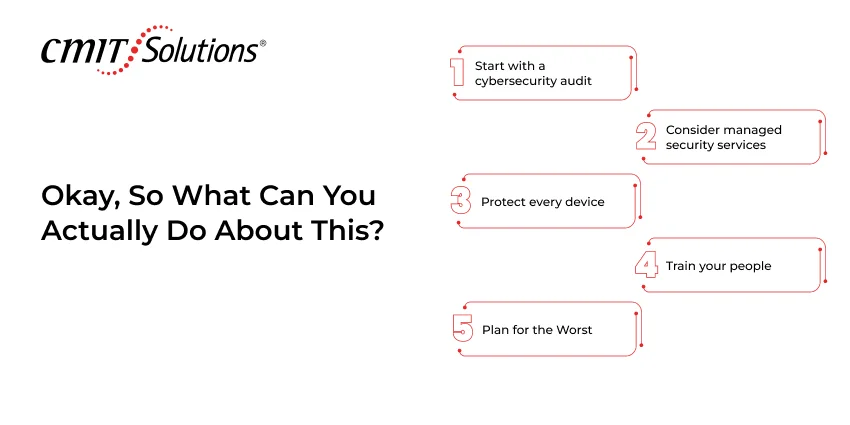
Okay, So What Can You Actually Do About This?
I’m not here to scare you and then leave you hanging. Let’s talk solutions – practical ones that make sense for businesses our size.
- Start with a cybersecurity audit. You can’t fix what you don’t know is broken. A thorough assessment shows you exactly where you’re vulnerable and helps you prioritize what to tackle first.
- Consider managed security services. Unless you’ve got IT staff on payroll (and most small businesses don’t), having a team monitoring your systems around the clock makes a huge difference. They catch problems at 2 AM so you don’t wake up to a disaster.
- Protect every device. Laptops, desktops, phones, tablets – if it connects to your network, it needs endpoint protection. Period.
- Train your people. Regular, ongoing training. Not just a one-time thing during onboarding that everyone forgets. Make it part of how you do business.
- Plan for the worst. A solid disaster recovery plan means you can bounce back even if something does go wrong. Hope for the best, prepare for the rest.
For a lot of business owners in our region, the smartest move is partnering with a local cybersecurity expert who understands what companies like yours actually need – not what works for some giant corporation in Northern Virginia.
Protect your systems, data, and people before cyber threats become real problems.
Why Working With Someone Local Makes a Difference
When you’re evaluating computer security companies serving the Top of Virginia & Eastern Panhandle of West Virginia, pay attention to who actually shows up when things go sideways.
There’s a big difference between calling a local team that knows your business and your community versus getting routed to a call center somewhere across the country. When your systems are down and every minute costs money, you want someone who answers the phone and gets to work – fast.
And here’s the good news: affordable cybersecurity services for small businesses absolutely exist. You don’t need an enterprise-sized budget. You need a partner who right-sizes solutions for companies with 5 to 100 employees and doesn’t try to sell you stuff you don’t need.
The Real Cost of Putting This Off
Look, I understand the temptation to kick this can down the road. There’s always something more urgent demanding your attention.
But consider this: the average data breach costs small businesses over $150,000. That’s not counting the lost productivity while you’re scrambling to recover. Or the customers who decide maybe they should take their business somewhere else. Or the hit to your reputation that takes years to rebuild.
Addressing these cybersecurity risks before 2026 isn’t about being paranoid. It’s about being smart. It’s about making sure the technology you depend on actually supports your growth instead of putting everything at risk.
Local cybersecurity support that actually shows up when it matters.
About CMIT Solutions of Shenandoah, VA
At CMIT Solutions of Shenandoah, VA, we’ve built our business around one simple idea: local businesses deserve enterprise-quality IT support without the enterprise-level headaches.
We work with small and mid-sized companies throughout the, and the wider Top of Virginia & Eastern Panhandle of West Virginia region. Our team handles the technical stuff—24/7 network monitoring, responsive help desk support, advanced threat protection, secure cloud services, reliable backups, and complete business continuity planning—so you can focus on running your business.
We’re not just another vendor. We’re your neighbors, and we treat your business like we’d want someone to treat ours. That means honest advice, solutions that actually fit your needs, and someone who picks up the phone when you call.
Want to know how secure your business really is? Reach out for a free cybersecurity consultation and let’s have a real conversation about protecting your company – no pressure, no jargon, just clear, practical advice that fits your needs.
FAQs
What cybersecurity threats should small businesses in the Shenandoah Valley worry about most?
The big ones right now are ransomware attacks that can shut down your operations, phishing scams that trick employees into giving up access, weak passwords that hackers exploit, outdated software with known security holes, and simple human mistakes that accidentally expose sensitive data. If you don’t have dedicated IT staff keeping an eye on things, these risks are even more serious.
How much should I expect to pay for a cybersecurity audit in the Top of Virginia area?
It really depends on how big your business is and how complex your systems are. That said, plenty of managed service providers around the Top of Virginia & Eastern Panhandle of West Virginia offer reasonable options for small businesses. Some even include an initial security assessment as part of a free consultation – it’s worth asking about.
Is it better to work with a local cybersecurity provider or a big national company?
There’s real value in working with someone local. They understand what businesses in our area deal with, they can get to you faster when something goes wrong, and you’re not just another ticket number in some massive queue. The best local providers also have access to national-level tools and expertise, so you’re not sacrificing capability for convenience.
What security services do small businesses actually need versus what’s overkill?
Most small businesses do well with 24/7 monitoring, endpoint protection on all their devices, regular security checkups, employee training, solid backup systems, and a disaster recovery plan. Beyond that, it depends on your industry and specific situation. A good provider will help you figure out what makes sense rather than pushing services you don’t need.
What’s the best way to protect my business from ransomware?
There’s no single magic solution – it takes a few layers working together. You need reliable backups that you actually test regularly. Keep all your software updated. Train your team to recognize suspicious emails. Use endpoint protection tools. And have a clear plan for what happens if you do get hit. Working with cybersecurity professionals helps make sure you haven’t missed anything important.