Introduction: The New Cybersecurity Reality
In today’s hyperconnected business world, every digital interaction carries potential risk. Small and midsize businesses (SMBs) are increasingly targeted by cybercriminals because they often lack enterprise-level security yet handle valuable data. The rapid expansion of remote work, cloud adoption, and Internet of Things (IoT) devices has blurred traditional security perimeters making next-gen cybersecurity a necessity, not an option.
Cyberattacks are no longer limited to large corporations. Phishing, ransomware, and insider threats now strike SMBs daily, costing businesses billions in downtime and data recovery. To stay secure, SMBs must adopt a proactive, AI-driven, and Zero Trust-based defense strategy designed for modern threats.
What Is Next-Gen Cybersecurity?
Next-gen cybersecurity represents a shift from reactive protection to proactive, predictive defense. It combines automation, artificial intelligence, and continuous monitoring to protect digital assets in real time.
Key components include:
- Zero Trust frameworks that validate every user and device before granting access.
- AI-powered analytics to detect unusual patterns and potential breaches.
- Cloud-native protection designed for hybrid and remote environments.
- Behavior-based monitoring that learns from data trends to predict and prevent attacks.
As discussed in The Rise of Zero Trust, perimeter-based security is no longer effective. Next-gen security continuously authenticates every connection inside and outside the network.
Why Traditional Security Models Fail
Traditional antivirus and firewalls were built for a simpler, office-bound world. They can’t adapt to the fluid digital ecosystems SMBs operate in today.
Common weaknesses include:
- Static defense mechanisms that can’t detect AI-driven phishing or polymorphic malware.
- Limited visibility into cloud and remote devices.
- Manual updates that leave systems outdated for months.
- Siloed tools that fail to communicate across platforms.
Cyber ciminals now leverage artificial intelligence to mimic real users and automate attacks. The insights from From Fiction to Fraud reveal how fake AI-generated content is being weaponized to manipulate employees and compromise systems.
Why SMBs Need Managed IT Services
Managed IT services provide SMBs with enterprise-grade protection at an affordable cost. These services combine expertise, automation, and constant monitoring to ensure threats are detected before they escalate.
Benefits include:
- 24/7 network monitoring and immediate threat response.
- Proactive system patching to prevent vulnerabilities.
- Strategic IT consulting for security and scalability.
- Integrated data backup and recovery solutions.
- Compliance-ready management and audit preparation.
As Proactive IT Support explains, break-fix models are obsolete. Managed IT services keep systems operational, secure, and compliant.
Partnering with a local provider ensures personalized protection. CMIT Solutions of Birmingham, for instance, delivers tailored strategies aligned with local compliance and industry needs.
The Role of AI and Automation in Cyber Defense
Artificial intelligence is revolutionizing cybersecurity. By analyzing billions of data points, AI can detect suspicious activity far faster than human teams.
How AI improves security:
- Detects hidden malware and zero-day threats.
- Automates responses to contain breaches instantly.
- Enhances endpoint protection across devices.
- Identifies insider threats using behavioral analysis.
Automation strengthens these capabilities by eliminating manual errors and response delays. Insights from AI in Your Inbox show how AI tools streamline workflows and when combined with cybersecurity, they create intelligent systems that learn and adapt continuously.
Securing the Cloud: Where Agility Meets Risk
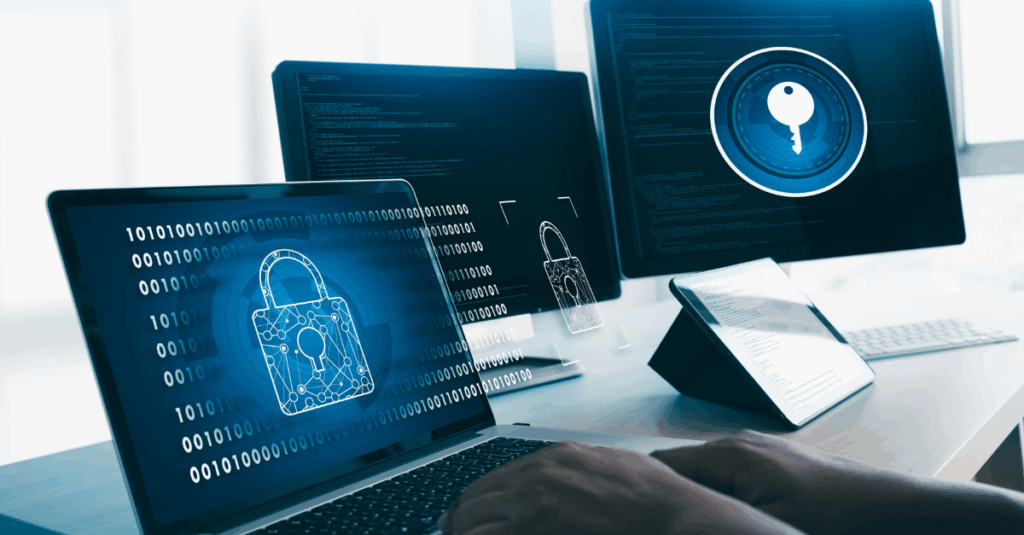
Cloud computing drives scalability and collaboration but also introduces new attack vectors. Misconfigurations, weak credentials, and lack of visibility make cloud environments a favorite target for cybercriminals.
Essential cloud security practices:
- Enable multi-factor authentication (MFA).
- Encrypt data both in transit and at rest.
- Regularly audit cloud configurations.
- Adopt Zero Trust cloud strategies to secure access.
As seen in Cloud Services Without Cloud Strategy, having a cloud without a strategy is like locking the front door but leaving the windows open. SMBs must implement comprehensive cloud governance to ensure resilience and compliance.
Additionally, Hybrid Work, Hybrid Cloud highlights the growing need for scalable and secure hybrid cloud setups that support flexible teams while safeguarding data.
Building a Strong Network Foundation
Modern cybersecurity starts with a strong network. Without proper network segmentation and monitoring, even the best tools can fail.
Network hardening tips:
- Deploy AI-driven firewalls and intrusion detection systems (IDS).
- Segment networks to limit internal exposure.
- Apply strict access controls for employees and vendors.
- Monitor network traffic for unusual behavior.
The article Next-Gen Network Management emphasizes balancing speed and protection essential for businesses adopting cloud or edge computing.
With the rise of 6G connectivity, network security must evolve to handle increased data transfer rates without sacrificing control.
Data Backup and Recovery: Preparing for the Worst
Even with advanced defenses, breaches can occur. A reliable data backup and disaster recovery (BDR) plan ensures business continuity.
Key recovery best practices:
- Automate data backups at regular intervals.
- Store copies in secure offsite or cloud locations.
- Test restoration processes frequently.
- Use immutable backups that can’t be altered by ransomware.
As noted in From Downtime to Uptime, downtime can cost thousands of dollars per hour. Modern SMBs must treat recovery as a core business function not an afterthought.
Complementary insights from Disaster Recovery Planning reinforce that proactive planning saves time, data, and reputation.
Compliance and Cyber Governance
As regulations evolve, compliance is no longer optional it’s a cybersecurity cornerstone. Governments and industries now enforce strict data protection requirements, and noncompliance can lead to hefty fines.
Compliance essentials for SMBs:
- Automate audit trails and reporting.
- Implement identity and access management (IAM).
- Regularly review security policies.
- Conduct third-party risk assessments.
Automation helps simplify this process. Articles like Compliance Without the Chaos and Compliance Audits Are Getting Smarter demonstrate how modern tools ensure SMBs stay audit-ready year-round while minimizing administrative strain.
Empowering Teams Through Cyber Awareness
Human error remains the leading cause of data breaches. A single misclick can compromise an entire network. To combat this, SMBs must foster a culture of cybersecurity awareness.
Employee-focused security measures:
- Conduct regular phishing simulations.
- Enforce strong password and MFA policies.
- Train employees on safe data handling practices.
- Encourage immediate reporting of suspicious activity.
As The Real Cost of Clicks explains, awareness programs are just as vital as firewalls or antivirus software. Educated employees act as the first and strongest line of defense.
IT Consulting: Aligning Strategy and Security
Technology must align with business objectives. IT consulting bridges the gap between technology strategy and business growth. Consultants assess infrastructure, identify vulnerabilities, and create a roadmap for secure digital transformation.
Strategic consulting benefits:
- Informed technology investments.
- Streamlined operations through automation.
- Compliance-aligned IT growth.
- Long-term cybersecurity maturity.
The insights from Tech Strategy for Growth demonstrate how expert guidance ensures SMBs achieve both innovation and protection without overspending or overcomplicating their IT setup.

The Future of Cybersecurity: AI, Quantum, and Edge
Tomorrow’s cybersecurity landscape will be defined by technologies like quantum computing, agentic AI, and edge networks. These innovations will transform both attack and defense models.
Emerging trends include:
- Quantum encryption to protect against advanced decryption algorithms.
- Agentic AI for autonomous cybersecurity decision-making.
- Edge computing to secure data closer to its source.
- Predictive analytics to anticipate attack vectors.
As Quantum-Ready Cybersecurity points out, preparing for future threats today gives SMBs an edge in long-term resilience and compliance readiness.
Why SMBs Can’t Afford to Wait
Cybersecurity is no longer a luxury or a reactive measure it’s a strategic investment. SMBs that delay modernization risk data breaches, downtime, and loss of customer trust.
To future-proof operations, businesses must:
- Adopt AI-driven defense systems.
- Partner with a local MSP for continuous protection.
- Integrate security into every digital process.
- Regularly assess infrastructure and compliance readiness.
As explained in Technology Adoption in 2025, waiting for a breach to occur before acting can be catastrophic. Forward-thinking SMBs secure themselves today to stay competitive tomorrow.
Conclusion: Securing the Connected Future
In a world where every device, user, and system is connected, cybersecurity defines business survival. Next-gen cybersecurity empowers SMBs to stay ahead of threats through automation, AI, managed IT services, and continuous learning.
CMIT Solutions of Birmingham has shown that security isn’t just about technology it’s about resilience, adaptability, and trust. As highlighted in Rooted in Resilience, building secure local partnerships ensures that every SMB can thrive confidently in the digital age.
With proactive defense, smart strategy, and trusted partnerships, your business can remain secure, compliant, and future-ready no matter how connected the world becomes.