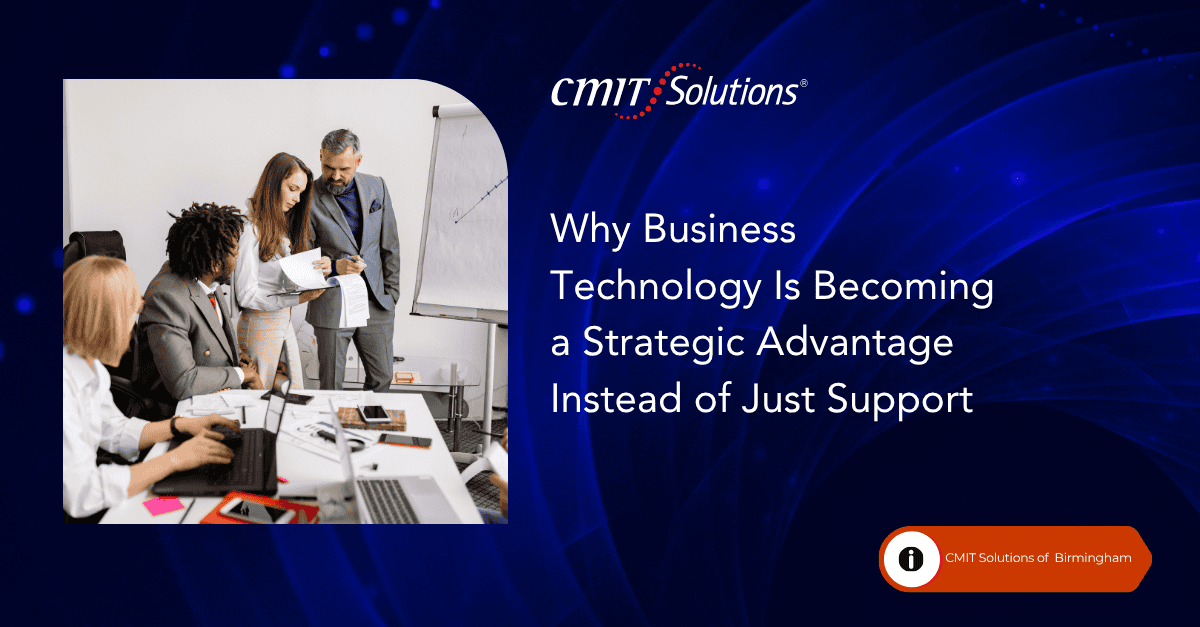
For years, businesses treated technology as a background function something necessary to keep systems running but rarely considered essential for growth. IT teams were seen as problem-solvers, called upon only when systems failed or issues disrupted operations.
That mindset is rapidly changing. Today, business technology is no longer just about maintenance—it is a key driver of innovation, efficiency, and competitive positioning. Companies that recognize this shift are using technology to move faster, serve customers better, and scale more effectively.
For businesses in evolving markets like Birmingham, this transformation is not optional. It is a critical factor in long-term success.
The Shift from Operational Tool to Business Driver
Technology has transitioned from being a supporting function to becoming a central component of business strategy.
Technology Is Now Embedded in Every Business Function
Modern businesses rely on technology across all departments:
- Sales teams use CRM systems to manage pipelines
- Marketing teams depend on automation and analytics tools
- Finance departments utilize cloud-based accounting systems
- Customer service relies on digital communication platforms
Because of this integration, technology decisions directly influence business outcomes. Trends like digital workflow automation are accelerating this shift.
IT Decisions Now Impact Revenue and Growth
Technology is no longer just about reducing downtime it affects how businesses generate revenue, acquire customers, and deliver services. Strategic IT investments can improve speed, reduce costs, and open new opportunities. Insights from data driven decisions highlight this transformation.
Understanding Technology as a Strategic Asset
When technology becomes a strategic advantage, it actively contributes to business growth instead of simply supporting operations.
What Makes Technology Strategic?
Technology becomes strategic when it:
- Aligns with long-term business goals
- Enables faster and smarter decision-making
- Improves customer engagement
- Supports scalability and expansion
Instead of reacting to issues, businesses start using IT to anticipate needs and drive innovation, as seen in future tech connectivity.

Key Reasons Behind This Transformation
Several factors have accelerated the shift toward technology-driven business strategies.
Rapid Digital Adoption
Businesses across industries are adopting digital tools to remain competitive. Cloud platforms, automation systems, and real-time analytics are now standard rather than optional.
Increasing Complexity of IT Environments
Modern IT environments involve multiple systems, platforms, and integrations. Managing this complexity requires structured planning and visibility, supported by network visibility insights.
Growing Cybersecurity Risks
Cyber threats have become more sophisticated. Technology decisions now directly affect risk management. Businesses must understand threats like adaptive cyber attacks.
Changing Customer Expectations
Customers expect faster service, seamless digital experiences, and personalized interactions. Technology enables businesses to meet these expectations efficiently.
How Strategic Technology Improves Business Performance
Organizations that treat technology as a strategic asset see measurable improvements across multiple areas.
Operational Efficiency and Automation
Automation reduces repetitive tasks and improves workflow efficiency. This shift is driven by AI driven automation.
Smarter Decision-Making Through Data
Businesses now rely on analytics to guide decisions. Leveraging insights from business data insights improves accuracy and speed.
Enhanced Customer Experience
Technology enables businesses to:
- Respond faster
- Deliver personalized services
- Maintain consistent communication
Flexibility and Scalability
Cloud-based systems allow businesses to scale efficiently without heavy infrastructure changes.
The Role of Cloud Computing in Strategic IT
Cloud technology is one of the biggest drivers of this shift.
Why Cloud Solutions Matter
Cloud platforms provide:
- Remote accessibility
- Secure data storage
- Cost-effective infrastructure
- Scalability for growth
Businesses can avoid issues like multi cloud cost.
Supporting Hybrid and Remote Work
Cloud solutions enable secure remote access and improve team collaboration.
Cybersecurity as a Business Priority
Cybersecurity is no longer just an IT concern it is a business-critical function.
The Business Impact of Cyber Threats
Cyber incidents can lead to:
- Financial losses
- Operational disruptions
- Loss of customer trust
- Compliance violations
Businesses must understand risks like email security threats.
Integrating Security into IT Strategy
Security must be embedded into every layer of IT infrastructure.
Why Reactive IT Models No Longer Work
Traditional break-fix IT models are outdated.
Limitations of Reactive IT
Reactive IT leads to:
- Unplanned downtime
- Increased costs
- Delayed resolutions
This often results in hidden system failures.

The Value of Proactive IT Management
Proactive IT includes monitoring, maintenance, and long-term planning.
How Managed IT Services Enable Strategic Advantage
Many SMBs lack resources to implement strategic IT initiatives.
Moving Beyond Technical Support
Managed IT providers deliver ongoing optimization and planning.
Key Contributions to Business Strategy
Managed IT services help businesses:
- Align IT with goals
- Implement modern tools
- Maintain performance
- Strengthen cybersecurity
This approach reflects modern IT evolution.
Why This Matters for Birmingham Businesses
Birmingham is a growing business hub with increasing competition and digital adoption.
Businesses leveraging technology strategically can:
- Improve efficiency
- Strengthen security
- Enhance customer experience
- Scale effectively
Indicators Your Business Needs a Strategic IT Approach
- Frequent downtime
- Outdated systems
- Security concerns
- Lack of planning
- Limited data usage
Conclusion
Business technology has evolved from a support function into a critical driver of growth and competitive advantage. Companies that recognize this shift are better equipped to improve efficiency, enhance customer experiences, and adapt to changing market demands.
For small and medium-sized businesses, adopting a strategic approach to IT requires the right expertise and support. Partnering with a trusted provider like CMIT Solutions of Birmingham enables businesses to move beyond reactive IT and build a proactive, scalable, and secure technology environment.
If your business is ready to use technology as a competitive advantage rather than just a support system, now is the time to take action. Contact CMIT Solutions of Birmingham to explore how strategic IT solutions can support your long-term success.