
Manufacturing has always run on precision. A single delayed shipment, a stalled production line, or a missed order can ripple through an entire supply chain. For decades, plant floors relied on aging equipment, isolated systems, and manual processes that worked well enough because there was no better alternative. That has changed. Manufacturers across Birmingham and beyond are now modernizing their IT environments, not as a trend to follow but as a direct response to rising customer expectations, tighter margins, and the growing cost of unplanned downtime.
Every hour a production line sits idle costs money that cannot be recovered. Every disconnected system that requires manual data entry slows decision making. Every outdated server that cannot support new automation tools limits what a plant can actually produce. These pressures are pushing manufacturers to treat IT modernization the same way they treat equipment maintenance: as a core part of staying competitive, not an optional upgrade.
CMIT Solutions of Birmingham works closely with manufacturers who are rethinking how their technology supports the plant floor, the back office, and everything in between. This article looks at why modernization has become such a priority, what outdated systems actually cost manufacturers, and what a modern, resilient manufacturing IT environment looks like in practice.
The Real Cost of Downtime on the Plant Floor
Downtime is rarely a single, isolated event. It is usually the result of small inefficiencies compounding over time until something fails at the worst possible moment. For manufacturers, the cost of downtime extends far beyond the obvious lost production hours.
- Missed delivery windows can damage relationships with major customers and trigger contractual penalties.
- Idle labor still needs to be paid even when equipment is offline.
- Rework and scrap increase when systems fail mid process, wasting raw materials.
- Emergency repairs typically cost more than planned maintenance.
- Reputation damage can follow a manufacturer that repeatedly misses commitments.
Many of these losses trace back to IT related failures rather than mechanical ones. A network outage that disconnects a control system, a server crash that takes down scheduling software, or a cyberattack that locks production data can bring an entire facility to a stop just as effectively as a broken machine. Understanding how proactive IT support prevents these kinds of failures before they escalate has become essential reading for plant managers trying to protect their production schedules.
Why Legacy Systems Are Holding Manufacturers Back
Many manufacturing facilities are still running on infrastructure that was installed ten or fifteen years ago. At the time, it met every need the business had. Today, it creates friction in ways that are not always obvious until something breaks.
Aging Servers and Storage
Older servers were not built to handle the volume of data modern manufacturing generates, from sensor readings to quality control logs to inventory tracking. As data volume grows, aging hardware slows down, increasing the risk of crashes during critical production runs.
Disconnected Software Systems
Many plants still operate with separate, disconnected systems for inventory, scheduling, quality control, and finance. Staff spend hours manually transferring data between platforms, introducing errors and delaying decisions that should happen in real time.
Limited Network Capacity
As manufacturers add sensors, automated equipment, and connected devices to the plant floor, older networks were never designed to handle that level of traffic. This creates bottlenecks that slow down machinery communication and data collection.
Outdated Security Protections
Legacy systems often run on software that no longer receives security updates, making them a soft target for attackers. Reviewing reliable IT infrastructure principles shows how much of a manufacturer’s operational stability depends on infrastructure that is actively maintained rather than left running until it fails.
How Modern IT Directly Improves Productivity
Modernizing IT is not just about avoiding problems. It actively creates measurable gains in output, efficiency, and decision making speed.
Real Time Visibility Into Operations
Modern systems give plant managers a live view of production status, equipment performance, and inventory levels. Instead of waiting for end of shift reports, decisions can be made in real time based on what is actually happening on the floor.
Automated Data Collection
Sensors and connected equipment can automatically feed data into centralized systems, eliminating manual logging and reducing the errors that come with it. This frees up staff time for higher value work rather than repetitive data entry.
Predictive Maintenance
Rather than waiting for equipment to fail, modern monitoring tools can flag early warning signs of mechanical issues, allowing maintenance teams to address problems during scheduled downtime instead of during a production run. This approach mirrors the value organizations gain from network monitoring solutions that catch issues before they cause a full outage.
Streamlined Communication
Cloud based tools allow plant floor staff, office teams, and remote managers to stay connected without relying on outdated systems that only work from a single terminal. Reviewing how cloud solutions birmingham businesses are adopting can help manufacturers understand which platforms fit their specific workflow needs.
Faster, More Accurate Reporting
Integrated systems reduce the time spent compiling reports manually, giving leadership faster access to the numbers they need for planning, budgeting, and customer commitments.
Cybersecurity Risks Specific to Manufacturing
Manufacturing has become an increasingly common target for cyberattacks, largely because production environments cannot tolerate extended downtime, making them more likely to feel pressure during a ransomware incident.
Common risks manufacturers face include:
- Operational technology exposure. Industrial control systems were often designed without modern security in mind, and connecting them to broader networks without proper segmentation creates significant risk.
- Intellectual property theft. Product designs, formulas, and proprietary processes are valuable targets for competitors and foreign actors alike.
- Supply chain attacks. Vendors and suppliers with weaker security can become an entry point into a manufacturer’s own systems.
- Ransomware targeting production data. Attackers know that locking scheduling, inventory, or control systems can halt production entirely, increasing pressure to pay quickly.
Reviewing ransomware tactics 2026 criminals are currently using illustrates how quickly these methods evolve and why manufacturers cannot rely on protections that were adequate even a few years ago. Comparing ransomware prevention costs against recovery expenses consistently shows that prevention is dramatically less expensive than rebuilding after an attack.
Segmenting Operational and Business Networks
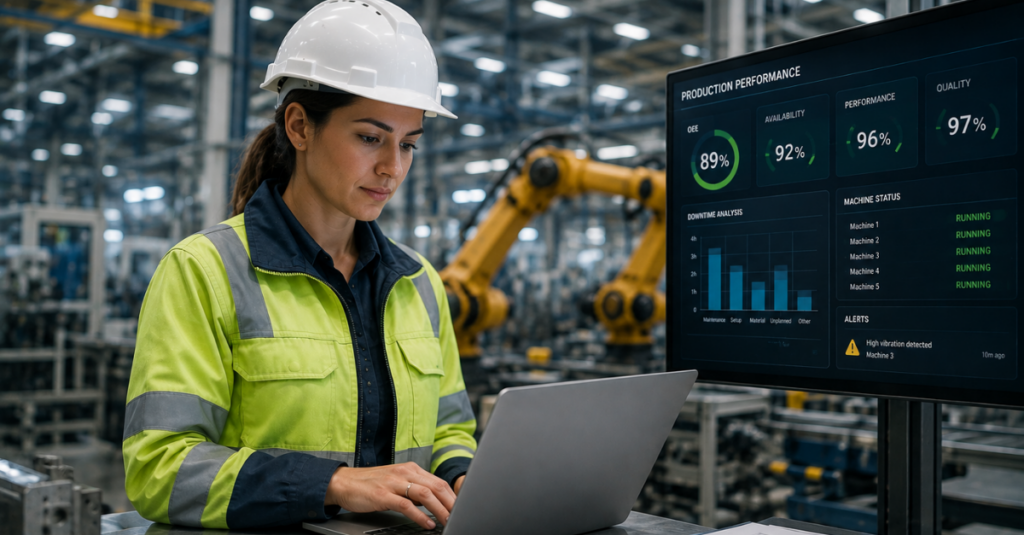
One of the most important steps a manufacturer can take is separating operational technology, the systems that control machinery and production, from standard business IT networks. Without this separation, a compromised office computer could potentially become a pathway into systems that control physical equipment.
A properly segmented manufacturing network typically separates:
- Production and industrial control systems
- Business applications such as finance, HR, and email
- Guest and vendor network access
- IoT sensors and connected equipment
- Remote access points for off site staff or vendors
This approach reflects the same principle covered in discussions around shadow IT risks, where unmanaged devices and unmonitored connections create openings attackers can exploit. In a manufacturing environment, the stakes are even higher, since a breach can affect physical safety, not just data.
Compliance Pressures Facing Manufacturers
Manufacturers, particularly those serving defense, automotive, aerospace, or medical customers, face increasingly strict compliance requirements around data handling and cybersecurity. Falling out of compliance can mean losing contracts entirely, not just facing fines.
Key compliance considerations include:
- Documented cybersecurity policies and incident response plans
- Regular vulnerability assessments and penetration testing
- Controlled access to sensitive design and production data
- Employee training on recognizing phishing and social engineering
- Secure handling of data shared with vendors and subcontractors
A broader IT compliance guide can help manufacturers understand which specific regulations apply to their contracts and customer base. Many are also turning to compliance as service models, where compliance is managed continuously rather than addressed only when an audit is approaching.
Signs a Manufacturer Has Outgrown Its Current IT Setup
Many manufacturers do not realize their infrastructure has become a liability until production is already affected. Common warning signs include:
- Frequent unplanned downtime tied to system crashes or network issues
- Staff manually re entering data between disconnected systems
- No clear visibility into equipment performance until something fails
- Limited or no monitoring of industrial control systems
- Difficulty scaling technology to support new equipment or production lines
- No documented disaster recovery plan for production critical systems
These patterns closely mirror the signs described in growing business support discussions across other industries, where infrastructure that once worked fine simply cannot keep pace with growth, order volume, or new equipment demands.
The Role of Automation and AI on the Plant Floor
Automation has moved well beyond robotic assembly lines. Modern manufacturers are using artificial intelligence and automation across scheduling, quality control, inventory management, and predictive maintenance.
Broader trends around AI business operations show how quickly automation is being adopted across industries, and manufacturing has been one of the earliest and most active adopters. Some facilities are also exploring how AI copilots productivity tools can assist office staff with reporting, scheduling, and administrative tasks, freeing up time for higher priority work.
As adoption grows, the network supporting these tools needs to be built for reliability and security, not just speed. A single connectivity failure can interrupt automated processes across an entire production line.
Building a Business Continuity Plan for Production Environments
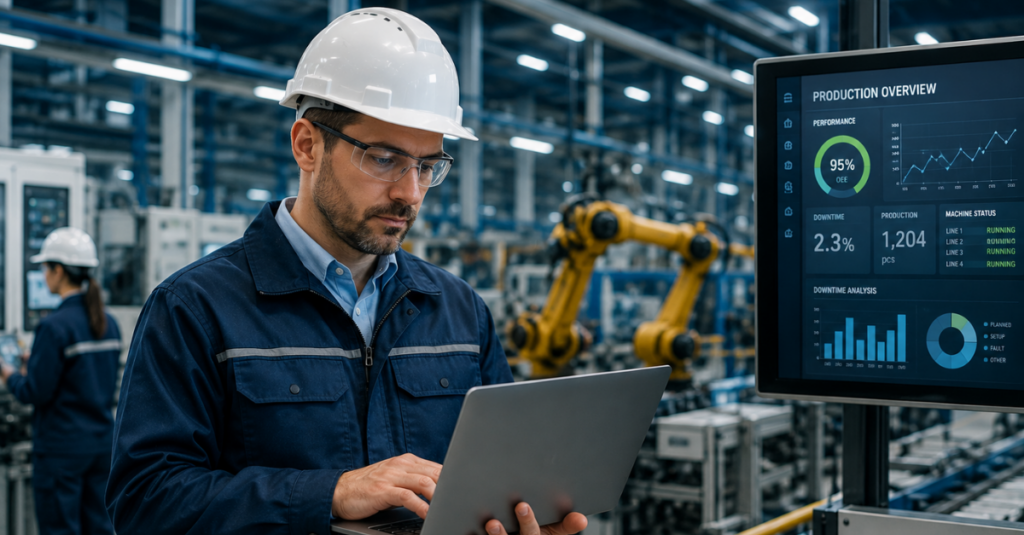
Manufacturers cannot afford to treat disaster recovery as an afterthought. A production line that goes down without a recovery plan can stay down far longer than necessary, compounding financial losses with every passing hour.
A strong business continuity plan for manufacturing typically includes:
- Regular, tested backups of production, scheduling, and inventory data
- A documented failover process for critical control systems
- Clear roles and responsibilities during an outage or incident
- Communication protocols for notifying staff, customers, and vendors
- Defined recovery time targets for different systems based on priority
Reviewing why more businesses are prioritizing disaster recovery planning shows how a tested plan turns a potential multi day outage into a manageable, short term disruption.
Network Infrastructure Built for the Plant Floor
Manufacturing environments present unique network challenges that standard office infrastructure was never designed to handle. Metal equipment, large open spaces, and electromagnetic interference from machinery can all affect wireless connectivity.
A network built for manufacturing needs to account for:
- Coverage across large facilities with minimal dead zones
- Reliable connections for equipment sensors and automated systems
- Redundancy so a single point of failure does not take down the entire plant
- Bandwidth allocation that prioritizes production critical systems over less urgent traffic
Reviewing what strong network visibility improvements actually deliver helps plant managers understand why simply being able to see what is happening across the network, in real time, resolves many issues before they ever reach the production floor.
Cloud Migration Considerations for Manufacturers
Moving manufacturing systems to the cloud offers real benefits, including remote access, easier scaling, and reduced dependence on aging on site servers. It also requires careful planning, since production environments cannot tolerate the kind of downtime a poorly managed migration can cause.
Reviewing proven cloud migration strategies before making the switch helps manufacturers avoid common pitfalls, such as migrating systems in the wrong order or underestimating bandwidth needs during the transition. Cost planning also matters, and understanding cloud cost optimization strategies helps manufacturers avoid unexpected billing surprises as usage scales.
Why Manufacturers Are Turning to Managed IT Partners
Running a production facility already requires constant attention to scheduling, equipment, staffing, and customer commitments. Very few manufacturers have the internal resources to design, monitor, and continuously secure an IT environment that supports both the plant floor and the back office.
A managed IT partner typically provides:
- Network design tailored to the physical layout and demands of the facility
- Ongoing monitoring to catch issues before they cause downtime
- Security updates, patching, and vulnerability management
- Help desk support for office and plant staff
- Compliance guidance specific to manufacturing contracts and customer requirements
- Scalable solutions that grow with new equipment or additional production lines
Understanding the value of proactive network management helps manufacturers see why addressing issues before they cause downtime is far more cost effective than reacting after a line has already stopped. Many facilities that historically relied on informal, reactive fixes find that this shift represents one of the biggest operational improvements they make.
Budgeting for IT Modernization
Cost is often the biggest hesitation manufacturers have when it comes to modernizing IT. Upgrading infrastructure is an investment, and leadership reasonably wants a clear picture of the return before committing budget.
A thoughtful budgeting approach typically considers:
- Current downtime costs tied to outdated systems
- Labor hours lost to manual processes that could be automated
- Insurance requirements or discounts tied to demonstrated cybersecurity practices
- Long term savings from avoiding emergency repairs and breach recovery
Looking at cybersecurity budget planning trends across other industries can help manufacturers benchmark their spending against similarly sized operations. Many are also shifting toward outcome based IT pricing models, paying for measurable results like uptime and response time rather than unpredictable hourly billing.
Preparing for What Comes Next
Manufacturing technology continues to evolve quickly, and facilities that modernize now will be better positioned to adopt future advancements without a complete infrastructure overhaul.
Looking at future technology trends gives manufacturers a useful framework for planning upgrades before they become urgent, rather than reacting after a competitor gains an edge. Emerging areas worth watching include:
- Continued growth of edge computing benefits, processing sensor data closer to the source for faster response times
- Broader use of 6G business connectivity research, which will eventually support even more connected equipment on the plant floor
- Expansion of autonomous AI agents handling routine scheduling and inventory decisions with minimal human input
- Growth in ai driven network management tools that automate both performance monitoring and security response
Choosing the Right Technology Partner for a Manufacturing Facility
Not every IT provider understands the specific demands of a production environment. A partner used to standard office settings may not account for operational technology, plant floor connectivity challenges, or the strict uptime requirements manufacturers depend on.
When evaluating a potential partner, manufacturers should look for:
- Experience specifically with manufacturing or industrial environments
- A clear plan for segmenting operational and business networks
- Around the clock monitoring rather than business hours only support
- A documented disaster recovery and incident response plan
- Transparent pricing and clearly defined service level agreements
- Willingness to explain technical decisions in plain, non technical language
Vendor and Supply Chain Risk Management
Manufacturers rarely operate in isolation. Raw material suppliers, logistics partners, and contract vendors all connect into a manufacturer’s systems at some point, whether through shared portals, electronic data interchange, or direct network access. A weak link anywhere in that chain can become an entry point into a manufacturer’s own environment.
Managing this risk typically involves:
- Requiring vendors to meet minimum cybersecurity standards before granting system access
- Limiting vendor access to only the specific systems and data they need
- Monitoring third party connections for unusual activity
- Reviewing vendor security practices on a recurring basis rather than only during onboarding
This kind of layered defense connects closely to the growing concern around synthetic identity fraud, where attackers blend real and fabricated information to bypass standard verification checks, sometimes using compromised vendor credentials as the starting point.
Data Driven Decision Making Across the Facility
Modern manufacturing generates enormous amounts of data, from machine performance metrics to quality control results to inventory turnover rates. The challenge for most facilities is not collecting this data, it is turning it into decisions that actually improve operations.
A modernized IT environment makes it possible to:
- Consolidate data from multiple systems into a single, accessible view
- Identify patterns in equipment performance that point to recurring issues
- Track production efficiency across shifts, lines, or facilities
- Support leadership decisions with current, accurate numbers instead of outdated reports
Reviewing how data driven insights are unlocked from previously unused data sources shows how much operational value is often sitting untapped in systems manufacturers already own.
Supporting Distributed Teams and Multiple Facilities
Manufacturers with more than one location, or with sales and administrative staff working outside the plant, face an added layer of complexity when it comes to communication and system access. Disconnected phone systems, inconsistent file access, and inconsistent security policies across locations all create friction.
Modern unified communications platforms bring voice, messaging, and video into a single system that works consistently whether staff are on the plant floor, in a regional office, or working remotely. This consistency reduces confusion and helps ensure that critical updates reach the right people quickly, regardless of location.
Modernizing Endpoint Security and Access Controls
As manufacturers add more laptops, tablets, and mobile devices across the plant and office, each one becomes a potential entry point if it is not properly secured. Endpoint protection has become as important as network level defenses.
Key practices include:
- Requiring multi factor verification for access to sensitive systems
- Exploring passwordless authentication methods to reduce the risk of stolen or reused credentials
- Keeping operating systems current, including evaluating windows 11 features that improve both security and day to day usability for office and plant staff
- Enforcing device encryption for laptops and mobile devices that leave the facility
Reducing Risk Through Better Network Visibility
Many manufacturers discover security and performance issues only after they have already caused a disruption. Facilities that invest in continuous visibility catch problems while they are still small.
A facility with strong network oversight can typically:
- Identify unusual traffic patterns before they escalate into a breach
- Spot failing hardware before it causes a full outage
- Track which devices are connected to the network at any given time
- Respond to incidents faster because the source of the problem is already visible
Understanding how automated network oversight handles much of this monitoring helps manufacturers see why continuous visibility has become standard practice rather than an occasional check in.
Conclusion
Manufacturing runs on consistency, and consistency depends heavily on technology that works the way it is supposed to, every shift, every day. Facilities that continue relying on aging infrastructure are not just risking occasional inconvenience, they are accepting a slow, steady drag on productivity that shows up in missed deadlines, wasted labor, and preventable downtime.
Manufacturers that treat IT modernization as a core operational priority, rather than a one time project, tend to see the benefits compound over time through fewer disruptions, faster decision making, and stronger protection against the kinds of cyber threats that specifically target production environments.
CMIT Solutions of Birmingham works with manufacturers to design, secure, and maintain the kind of IT environment that keeps production running smoothly while protecting the data and systems that operations depend on. For facilities ready to take a closer look at where their current setup stands, scheduling a consultation is a straightforward first step toward a stronger, more reliable production environment.
Frequently Asked Questions