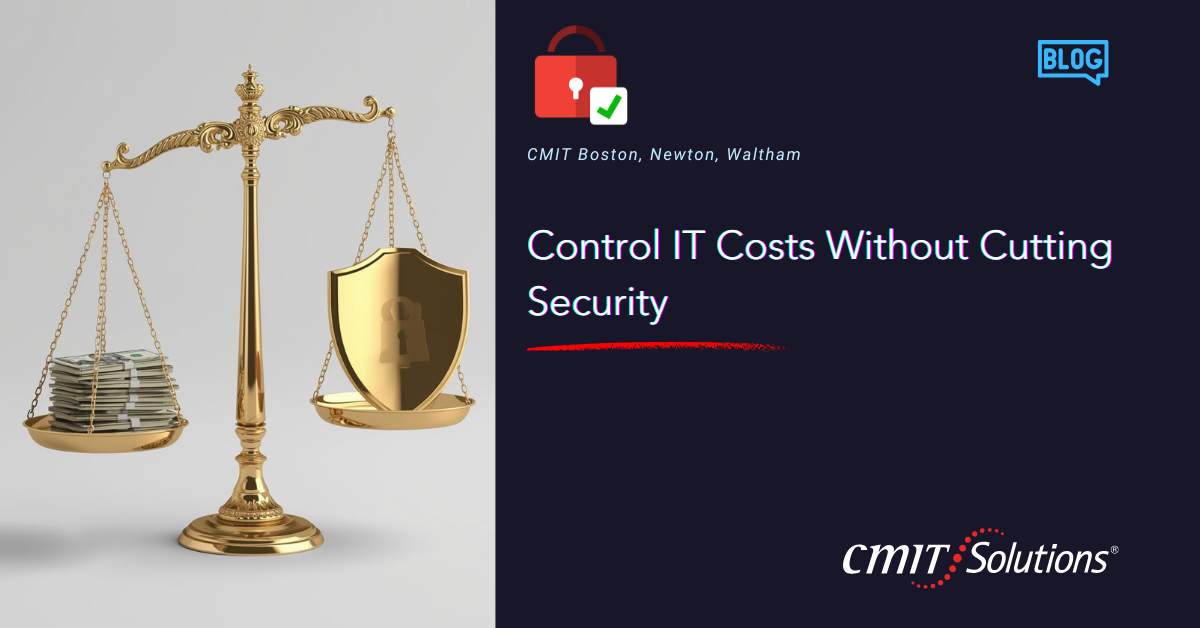
Rising IT costs are a growing concern for many organizations, especially as security threats continue to increase in scale and sophistication. Budget pressure often creates a false choice between saving money and staying secure. In reality, the most effective cost-control strategies focus on alignment, visibility, and smart prioritization not reducing protections.
For many small business owners, IT spending feels unpredictable — and every surprise takes time away from running the business.
The goal isn’t to do less or take risks. It’s to spend more intentionally, simplify what you manage day to day, and avoid paying for tools or services you don’t actually use. When IT is easier to manage and more predictable, it saves both money and time.but to spend more intentionally an approach that aligns closely with modern smart IT strategies.
Understanding Where IT Spend Actually Goes
Many organizations struggle to control IT costs because spending is spread across dozens of subscriptions, services, and tools added over time. What starts as a few helpful solutions can slowly turn into a confusing mix of software licenses, security tools, and support contracts.
For example, a small business may be paying for multiple security tools that all claim to “protect endpoints,” or licenses for employees who left months ago. Without visibility, those costs quietly add up and no one has time to track them down.
Creating a clear picture of where IT money is going is the foundation of cost control without compromising security. This is often the first thing uncovered during an IT assessment.
To gain clarity into IT expenses, start by reviewing:
- Active software licenses and subscriptions
- Security tools by function and overlap
- Managed services and support contracts
- Usage patterns versus billed capacity
Right-Sizing Software and Security Licenses
Over-licensing is one of the most common sources of wasted IT spend. Licenses are often purchased “just in case” or never adjusted as teams grow, shrink, or change roles. The result is paying every month for capacity that isn’t being used.
A common example is paying for advanced security or productivity licenses for every employee, even though only a portion of the team uses those features. Another is keeping licenses active for former employees simply because no one had time to review them.
Right-sizing ensures licenses match real usage without weakening security. It’s a practical step that reduces waste and simplifies management—especially for businesses moving away from reactive support toward managed IT services.
To right-size effectively, evaluate:
- Active users compared to purchased licenses
- Feature tiers that exceed daily needs
- Dormant or unused accounts
- Licenses tied to old roles or departed staff
Consolidating Tools to Reduce Redundancy
Many businesses don’t realize how many tools they’re paying for until they line them up side by side. Security and productivity stacks often grow organically—adding one tool here, another there—until multiple platforms are doing similar jobs.
Consolidation reduces spend while simplifying management and improving visibility—particularly important when addressing long-term IT risks.
For example, a business might be paying for:
- One tool for email security
- Another for endpoint protection
- A third for monitoring alerts
Each tool may be helpful on its own, but managing three separate dashboards, renewals, and alerts creates extra work and confusion.
Tool consolidation reduces costs while making IT easier to manage. Fewer tools means fewer headaches, less time spent troubleshooting, and better visibility into what’s actually happening across systems.

Using Layered Security Instead of Point Solutions
Layered security focuses on combining complementary controls rather than relying on a large number of standalone tools. This approach improves protection while keeping costs predictable.
Well-designed layers reduce risk by ensuring that failures in one area are compensated elsewhere, which is a core principle behind essential cybersecurity practices.
Effective layered security typically includes:
- Strong identity and access controls
- Endpoint protection and patching
- Network segmentation and monitoring
- Backup and recovery safeguards
Controlling Costs Through Predictable Service Models
Unplanned IT expenses often come from reactive support, emergency fixes, or incident response. Moving toward predictable service models helps control costs while improving reliability.
Predictability allows organizations to budget confidently without sacrificing responsiveness and is one of the key benefits discussed in the ROI of managed services.
To improve cost predictability, consider:
- Fixed monthly service agreements
- Clearly defined scopes of support
- Proactive maintenance and monitoring
- Included security management services
Reducing Risk to Avoid Expensive Incidents
The most costly IT events are often security incidents that disrupt operations, damage trust, or require extensive remediation. Investing in prevention is significantly less expensive than recovering from an incident.
Risk reduction directly supports cost control by avoiding unplanned losses, particularly those tied to IT downtime.
To reduce exposure, prioritize:
- Regular patching and vulnerability management
- Strong authentication and access controls
- Tested backups and recovery plans
- Employee security awareness
Aligning Security Spend With Business Priorities
Not every system carries the same level of risk or business impact. Aligning security investment with what matters most ensures resources are used efficiently.
This alignment helps avoid over-investing in low-risk areas while under-protecting critical ones, a balance often reinforced through IT consulting.
For example, a single ransomware incident can result in lost revenue, missed deadlines, and weeks of recovery work. Preventive measures cost far less and significantly reduce the chance of disruption.
Risk reduction supports cost control by avoiding unplanned losses and downtime.
Key prevention priorities include:
- Regular patching and vulnerability management
- Strong authentication and access controls
- Tested backups and recovery plans
- Employee security awareness
These steps protect both budgets and business continuity.

Reviewing and Adjusting IT Spend Regularly
Cost control is not a one-time initiative. As technology, staffing, and threats evolve, IT spending must be reviewed and adjusted accordingly.
Regular reviews help prevent budget creep and ensure ongoing value, especially as organizations plan for long-term resilience and future-proofing technology.
For example, systems tied directly to revenue or customer data deserve stronger protection than internal tools with limited exposure. This focus prevents over-investing in low-risk areas while under-protecting critical ones.
To better align spending, assess:
- Systems that support revenue or client delivery
- Data subject to regulatory or contractual requirements
- Dependencies that affect uptime
- Acceptable risk levels for different functions
This alignment keeps security practical, effective, and cost-conscious.
Conclusion
Controlling IT costs does not require sacrificing security. With guidance from CMIT Solutions of Boston, Newton & Waltham, organizations can focus on visibility, right-sizing, consolidation, and layered security controls to reduce unnecessary spending while maintaining strong protection against modern threats.
The most effective cost-control strategies are proactive and intentional. When IT investments are aligned with actual business needs and managed consistently, security becomes more sustainable, budgets grow more predictable, and organizational risk is reduced—without compromise.
Optimize IT spend without weakening security. CMIT Solutions of Boston, Newton & Waltham helps organizations align technology investments with real business needs. Schedule a cost and security alignment review to uncover savings while strengthening protection.
If you want to keep costs predictable and avoid IT hassles, CMIT Solutions of Boston, Newton & Waltham can help you simplify your technology, eliminate waste, and stay secure without adding complexity.