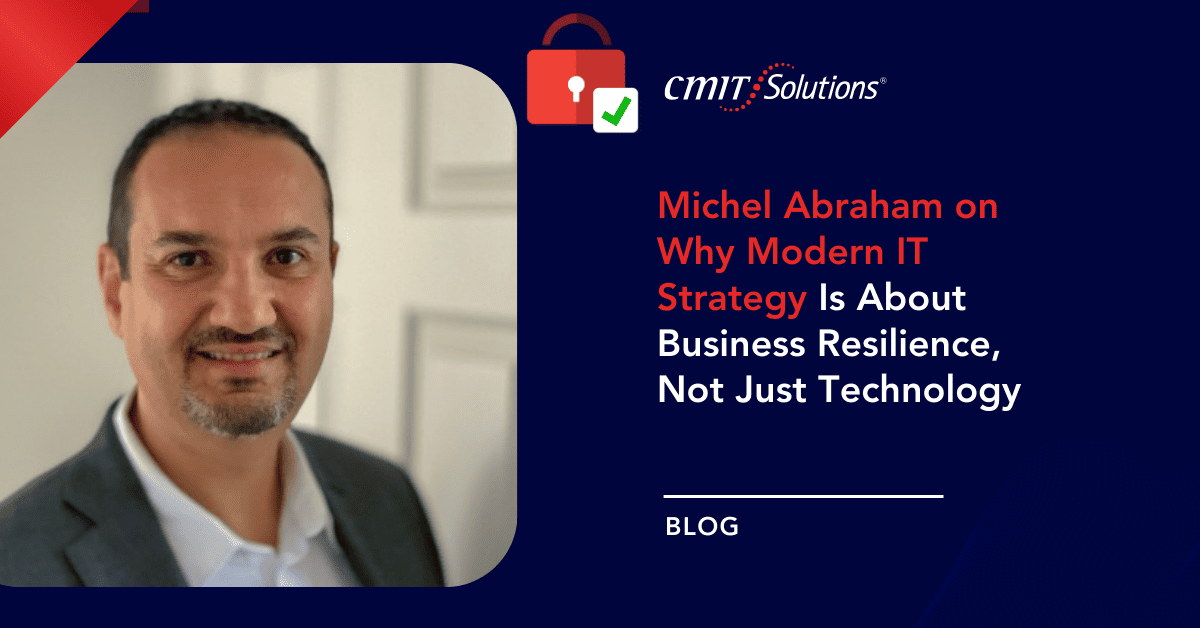
In today’s fast-moving business environment, IT strategy can no longer be viewed as purely a technical function. According to Michel Abraham, modern IT is about driving business resilience ensuring that companies can operate securely, efficiently, and adaptively even when faced with disruptions. For SMBs in Bothell and Renton, embracing this mindset is crucial for maintaining competitive advantage and safeguarding growth.
From Technology-Centric to Business-Centric IT
Historically, IT strategy focused on infrastructure, hardware, and software. While these elements remain critical, Abraham emphasizes that resilient IT strategy prioritizes how technology supports the business mission. Key pillars include:
- Operational continuity during system failures or unexpected disruptions
- Security and regulatory compliance across all platforms
- Adaptability to adopt emerging technologies efficiently
- Proactive planning to prevent disruptions rather than simply reacting
This shift moves businesses away from reactive “break-fix” IT and toward predictive, strategic IT management. SMBs can see the benefits of proactive IT support in reducing downtime and avoiding costly emergencies.
Why Business Resilience Matters
In a world of cyber threats, hybrid workforces, and global uncertainties, IT disruptions can quickly lead to lost revenue, reputational damage, and regulatory penalties. Business resilience ensures companies can:
- Maintain critical operations during system outages or cyber incidents
- Recover quickly from data loss with effective backup solutions
- Scale operations without interruptions
CMIT Solutions demonstrates how to build a reliable disaster recovery plan to help businesses in Bothell and Renton prepare for the unexpected.

Aligning IT with Business Goals
One key insight from Michel Abraham is that resilient IT isn’t just about avoiding failure—it’s about creating a strategic advantage. Businesses that align IT investments with core goals gain flexibility, better decision-making, and faster time-to-market. For example, automating workflows and leveraging cloud platforms not only increases efficiency but also positions SMBs to respond quickly to customer needs or market changes.
Cybersecurity as a Core Component
Resilient IT integrates cybersecurity into all business processes. Multi-layered defenses, endpoint protection, and secure cloud platforms work together to prevent disruptions before they occur. For SMBs, combining these solutions with predictive IT management simplifies compliance and reduces operational risk.
Learn more about strengthening cyber defenses to protect business continuity.
Cloud and Hybrid Solutions Enable Flexibility
Abraham also stresses that modern IT must be scalable and flexible. Cloud-first and hybrid IT solutions allow SMBs to:
- Access applications and data from anywhere securely
- Ensure continuity during office closures or hardware failures
- Reduce IT overhead while supporting growth
Managed cloud services provide a secure, scalable foundation for businesses ready to adapt and expand.

Data-Driven Decisions
Resilient IT also supports smarter decision-making. With integrated analytics platforms like Power BI, SMBs can consolidate data, identify trends, and act quickly. Centralized, standardized data ensures decisions are accurate and timely.
CMIT Solutions shows how SMBs can turn data into actionable insights to drive growth and improve operational efficiency.
The Role of IT Partners
Michel Abraham highlights that building business resilience requires expertise. SMBs often lack internal resources to implement predictive monitoring, scalable cloud solutions, and proactive security measures. Partnering with a trusted MSP ensures continuous support, strategic planning, and operational alignment.
CMIT Solutions provides managed IT services in Bothell and Renton that prioritize resilience alongside technology management. This allows SMBs to focus on growth while IT experts handle security, monitoring, and optimization.
Steps to a Resilient IT Strategy
- Assess IT infrastructure – Identify gaps in security, backup, and scalability.
- Develop a resilience roadmap – Align IT initiatives with business priorities.
- Implement proactive monitoring – Detect and prevent issues before they impact operations.
- Adopt cloud and hybrid solutions – Ensure secure, flexible, and scalable IT environments.
- Train employees and optimize processes – Embed resilience into organizational culture.
Why SMBs Can’t Wait
Cybersecurity threats, hybrid workforce models, and regulatory demands mean SMBs cannot rely on reactive IT strategies. By focusing on resilience, businesses reduce operational risk, enhance efficiency, and remain competitive.
As Michel Abraham emphasizes, modern IT is about enabling business continuity and growth, not just maintaining technology.
Conclusion
Business resilience is now at the core of effective IT strategy. SMBs in Bothell and Renton that adopt resilience-focused IT can minimize risk, improve productivity, and prepare for future growth.
CMIT Solutions of Bothell and Renton helps SMBs implement resilient IT strategies through proactive management, cloud solutions, cybersecurity, and predictive monitoring. From enhancing collaboration to safeguarding data, CMIT ensures technology aligns with business goals.
Take the first step toward a resilient IT strategy—contact CMIT Solutions today and transform your IT infrastructure into a foundation for growth and continuity.