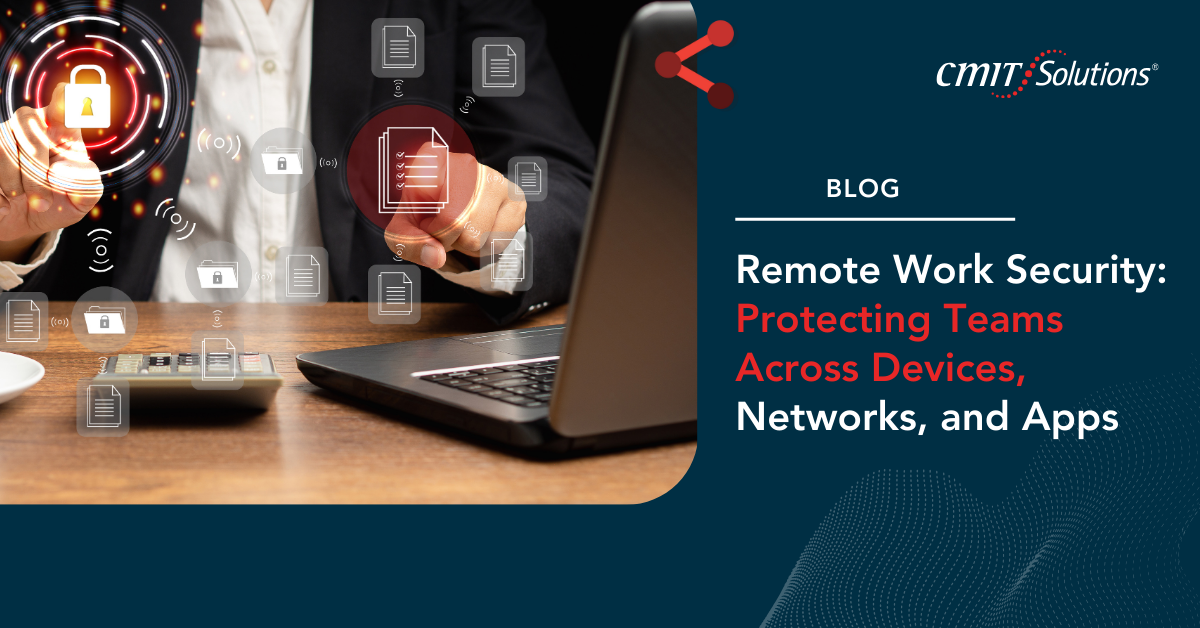
As businesses continue to embrace flexible work models, ensuring the security of remote teams has become a top priority. From employees working on personal devices to accessing critical data over public Wi-Fi, the risks are higher than ever. Without proper safeguards, small and mid-sized businesses (SMBs) can become easy targets for cybercriminals. This comprehensive guide explores remote work security from every angle, highlighting key strategies and why managed IT services are essential to protect teams across devices, networks, and apps.
Understanding Remote Work Security
Remote work security refers to the policies, tools, and technologies that protect company data when employees work outside a traditional office environment. Unlike on-premises networks, remote environments introduce unpredictable variables—home routers, personal devices, public Wi-Fi, and unsecured applications. To stay secure, SMBs need layered defenses that safeguard sensitive information, detect threats early, and maintain compliance standards.
Key elements of a strong remote security framework include:
- Endpoint Protection: Monitoring and securing every device that connects to business systems.
- Network Security: Enforcing encryption, firewalls, and VPN usage to prevent unauthorized access.
- Application Management: Controlling which apps employees can use and ensuring updates and patches are applied consistently.
- Data Backup & Recovery: Protecting business continuity in case of ransomware or hardware failure.

Why SMBs Need Managed IT Services for Remote Work
While larger enterprises may have in-house IT teams, SMBs often lack the resources to manage remote work security on their own. Managed IT services provide a cost-effective way to monitor devices, secure networks, and respond to threats 24/7.
A trusted partner like CMIT Solutions of Bothell and Renton can deliver proactive monitoring, patch management, and advanced cybersecurity tools that small businesses can’t deploy internally. With experts on call, SMBs gain enterprise-level protection without the high costs of an internal IT department.
Benefits of partnering with a managed services provider (MSP):
- 24/7 monitoring and rapid threat response
- Centralized management of devices and applications
- Scalable services that grow with your business
- Access to enterprise-grade security tools at SMB-friendly costs
Securing Devices with Advanced Endpoint Protection
Every laptop, tablet, and smartphone used by remote employees is a potential entry point for cyberattacks. Implementing endpoint detection and response (EDR) tools is critical to spotting suspicious activity before it causes damage.
Protecting your endpoints with advanced EDR means you can monitor devices in real time, isolate infected machines, and prevent threats from spreading across the network.
Key steps for endpoint security:
- Install and maintain next-generation antivirus software.
- Enforce multi-factor authentication (MFA) on all devices.
- Require encryption of sensitive data stored on laptops and mobile devices.
- Enable remote wipe capabilities for lost or stolen equipment.
Building Secure Remote Networks
Remote teams frequently rely on home Wi-Fi or public hotspots, which are inherently less secure than corporate networks. To mitigate risks, SMBs should deploy virtual private networks (VPNs) and multi-layered security strategies that encrypt data in transit.
Solutions like multi-layered cybersecurity provide comprehensive protection against phishing attacks, malware, and unauthorized access. Businesses should also encourage employees to use password-protected routers and avoid public Wi-Fi whenever possible.
Best practices include:
- Mandating VPN connections for all remote access.
- Segmenting networks to isolate critical business systems.
- Conducting regular security audits of employee home setups.
Safeguarding Business Emails and Collaboration Apps
Email remains the most common attack vector for cybercriminals. Phishing attempts, business email compromise, and ransomware attacks can cripple SMB operations. With the rise of hybrid and remote teams, securing email platforms is more important than ever.
CMIT Solutions of Bothell and Renton specializes in email security by deploying spam filters, AI-powered threat detection, and phishing simulations to train employees. Unified collaboration tools like Microsoft Teams should also be protected with access controls, regular updates, and secure file-sharing protocols.
Data Backup and Disaster Recovery Planning
No remote work strategy is complete without a disaster recovery plan. Whether it’s a ransomware attack or an accidental file deletion, SMBs need the ability to recover critical data quickly.
Building a reliable disaster recovery plan ensures that backups are automated, encrypted, and stored offsite to protect against data loss. Recovery time objectives (RTOs) and recovery point objectives (RPOs) should be clearly defined to minimize downtime during an incident.
Backup essentials:
- Perform automated daily backups of critical data.
- Store backups in multiple secure locations, including cloud repositories.
- Test recovery processes regularly to ensure reliability.
Strengthening Compliance in Remote Environments
Many SMBs operate in industries with strict compliance requirements, such as healthcare (HIPAA) or finance (PCI-DSS). Remote work introduces new risks that can make maintaining compliance challenging.
Solutions like IT compliance management help businesses navigate these requirements by automating security policies, enforcing encryption standards, and tracking audit logs. A managed IT partner ensures that your remote operations remain compliant without burdening internal staff.
Enhancing Security with Cloud and Unified Communication Tools
Cloud services and collaboration platforms are essential for remote productivity, but they must be properly secured. From file storage to video conferencing, each tool presents unique vulnerabilities if left unmonitored.
Unified communication strategies combine voice, messaging, and video into a single platform while maintaining encryption and access controls. Managed cloud solutions provide scalability while ensuring data is backed up and protected from unauthorized access.
Key advantages of secure cloud adoption:
- Seamless collaboration across teams and devices
- Built-in redundancy for disaster recovery
- Automatic updates and patching to reduce vulnerabilities
Leveraging Microsoft Intune for Device Management
Mobile device management (MDM) solutions like Microsoft Intune simplify the process of managing employee devices across different locations. Intune allows SMBs to enforce security policies, manage app installations, and remotely wipe data if a device is lost or compromised.
Benefits of Intune include:
- Centralized device and application management
- Real-time security compliance monitoring
- Reduced IT workload through automated policy enforcement

Proactive Threat Detection with SIEM Tools
Security Information and Event Management (SIEM) solutions provide advanced analytics to detect and respond to cyber threats in real time. Tools like Microsoft Sentinel, as highlighted in this guide, collect and analyze security data from across your network to identify potential attacks before they escalate.
For SMBs, SIEM tools are an essential layer of defense, especially in remote environments where employees may connect from multiple locations and devices.
Conclusion: A Managed IT Strategy Is Key to Remote Security
As remote and hybrid work become permanent fixtures in the business world, SMBs can no longer rely on outdated security practices. Partnering with a trusted MSP like CMIT Solutions of Bothell and Renton ensures that your organization stays protected across devices, networks, and apps. From multi-layered security to data backup and disaster recovery, managed services provide the proactive monitoring and expert support necessary to secure today’s distributed workforce.
Key Takeaways
- Managed IT services reduce risk and strengthen remote security.
- Endpoint protection, VPNs, and SIEM tools safeguard devices and networks.
- Regular backups and disaster recovery plans ensure business continuity.
- Compliance automation keeps SMBs audit-ready across industries.
By implementing these strategies, SMBs can confidently support remote work while protecting their data, employees, and reputation.