
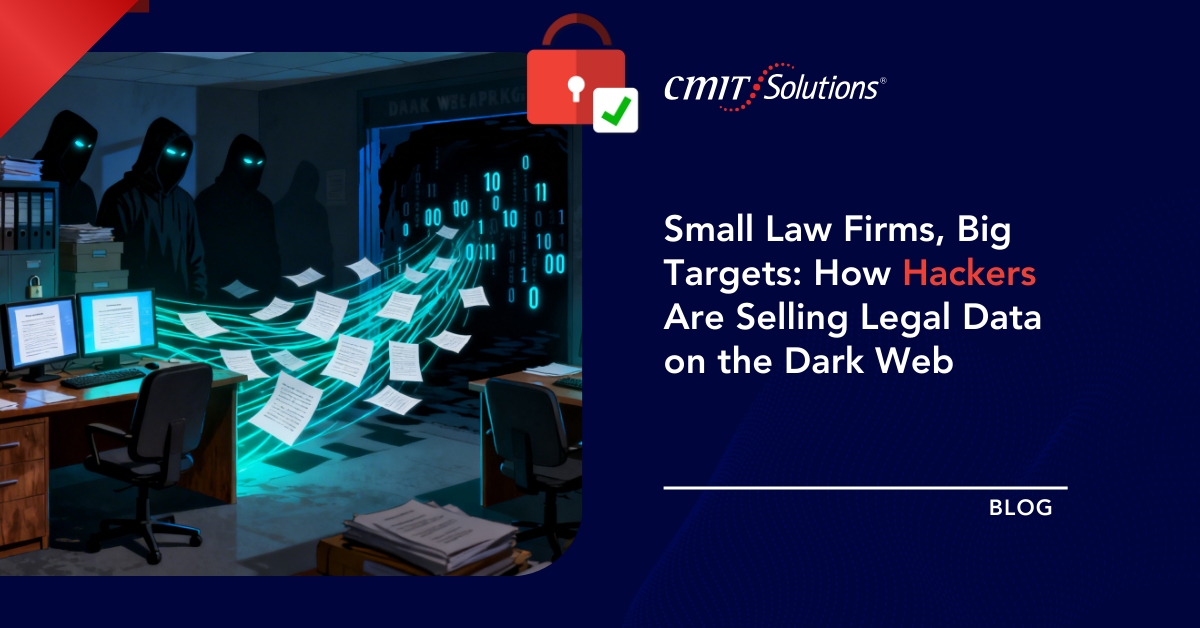
Many small law firms assume cybercriminals focus their efforts on large corporations with massive IT budgets and global footprints. In reality, attackers are increasingly targeting smaller firms and doing so with alarming success, especially as cybercrime evolves into more organized markets outlined in the dark web data economy.
Why? Because law firms hold highly sensitive information, operate under strict deadlines, and often lack the layered cybersecurity defenses found in larger organizations. As a result, legal data from small firms is now regularly being bought and sold on dark web marketplaces, sometimes without firms realizing a breach has even occurred.
Why legal data is so valuable to cybercriminals
Legal data is uniquely attractive because of its depth, sensitivity, and long-term value.
Law firms manage:
- Client personal and financial information
- Confidential contracts and agreements
- Intellectual property and trade secrets
- Litigation strategies and settlement details
- Corporate transactions and regulatory filings
Unlike stolen credit card data, legal records can be monetized repeatedly used for extortion, insider trading, corporate espionage, or identity theft. This makes even small firms lucrative targets.
Why small law firms are targeted more often than large ones
Hackers don’t choose targets based on firm size alone they choose based on opportunity.
Small law firms are often targeted because they:
- Rely on lean or outsourced IT support
- Use outdated systems or unpatched software
- Lack continuous security monitoring
- Assume they are “too small” to be targeted
- Have limited cybersecurity training for staff
From an attacker’s perspective, compromising a small firm can be easier and faster—while still yielding high-value data, particularly as attackers leverage techniques discussed in the rise of AI-powered cybercrime.
How legal data ends up on the dark web
Most breaches don’t start with sophisticated hacking tools. They begin with simple access points that go unnoticed.
Phishing and credential theft
Attackers use convincing emails to trick staff into sharing login credentials or clicking malicious links. Once access is gained, email systems and document repositories become easy targets—a risk heightened without layered protections beyond basic filtering, as explained in why email security needs more than a spam filter.
Remote access vulnerabilities
Unsecured remote desktop connections, weak VPN configurations, or stolen passwords allow attackers to enter systems quietly.
Outdated software and systems
Unpatched servers, case management systems, or document platforms often contain known vulnerabilities that attackers actively scan for.
Ransomware with data exfiltration
Modern ransomware attacks don’t just encrypt files they copy sensitive data first. If firms refuse to pay, attackers sell the stolen data on the dark web, following trends outlined in how ransomware has evolved.

What happens to stolen legal data
Once data is stolen, it moves quickly.
On dark web marketplaces, legal data is:
- Sold to other criminals in bulk
- Used for blackmail or extortion
- Leveraged in financial fraud schemes
- Used to gain insider knowledge in disputes or deals
- Released publicly to pressure firms and clients
In many cases, firms discover breaches only after clients are contacted or when data surfaces in criminal investigations.
Why breaches often go undetected for months
Small law firms often lack the tools to detect subtle intrusions.
Attackers frequently:
- Monitor email communications quietly
- Set up forwarding rules to capture messages
- Access files without altering them
- Move slowly to avoid triggering alerts
Without continuous visibility, these activities blend into normal system behavior highlighting the risks of “set-it-and-forget-it” security approaches discussed in why proactive monitoring is critical.
The legal, financial, and reputational impact
A data breach is more than an IT issue it’s a business and ethical crisis.
Consequences may include:
- Breach notification obligations
- Regulatory scrutiny and penalties
- Client lawsuits or loss of trust
- Damage to professional reputation
- Long-term client attrition
For law firms, confidentiality is foundational. A single incident can undermine years of trust.
Why basic cybersecurity is no longer enough
Antivirus software and firewalls alone cannot stop modern threats.
Effective protection for law firms now requires:
- Advanced email and phishing protection
- Multi-factor authentication for all access
- Secure remote access controls
- Regular patching and system updates
- Continuous monitoring for unusual behavior
- Secure backups with rapid recovery options
Cybersecurity must be layered, proactive, and aligned with modern compliance expectations discussed in building real compliance into everyday operations.

The role of staff awareness in preventing breaches
Technology is critical—but people remain a key line of defense.
Law firms should ensure staff understand:
- How to recognize phishing attempts
- Why urgency-based requests are risky
- How to report suspicious activity quickly
- The importance of secure document handling
Well-trained staff significantly reduce preventable incidents.
What small law firms should do now
Preparation makes the difference between prevention and damage control.
High-impact steps include:
- Conducting a security risk assessment
- Reviewing access controls and permissions
- Securing email and remote access systems
- Testing backup and recovery processes
- Partnering with IT experts experienced in legal environments
Proactive planning is far less disruptive than responding after a breach.
Conclusion
Small law firms may not see themselves as cyber targets but hackers do. The combination of valuable legal data and limited security resources makes smaller firms especially attractive in today’s threat landscape.
Protecting client confidentiality now requires more than good intentions. It requires proactive cybersecurity, visibility into systems, and a clear strategy for prevention and recovery.
At CMIT Solutions of Bothell and Renton, we help small law firms secure their systems, protect client data, and reduce the risk of breaches that can lead to dark web exposure. If you want to understand where your firm may be vulnerable and how to strengthen your defenses without disrupting daily operations we’re here to help you take the next step confidently.