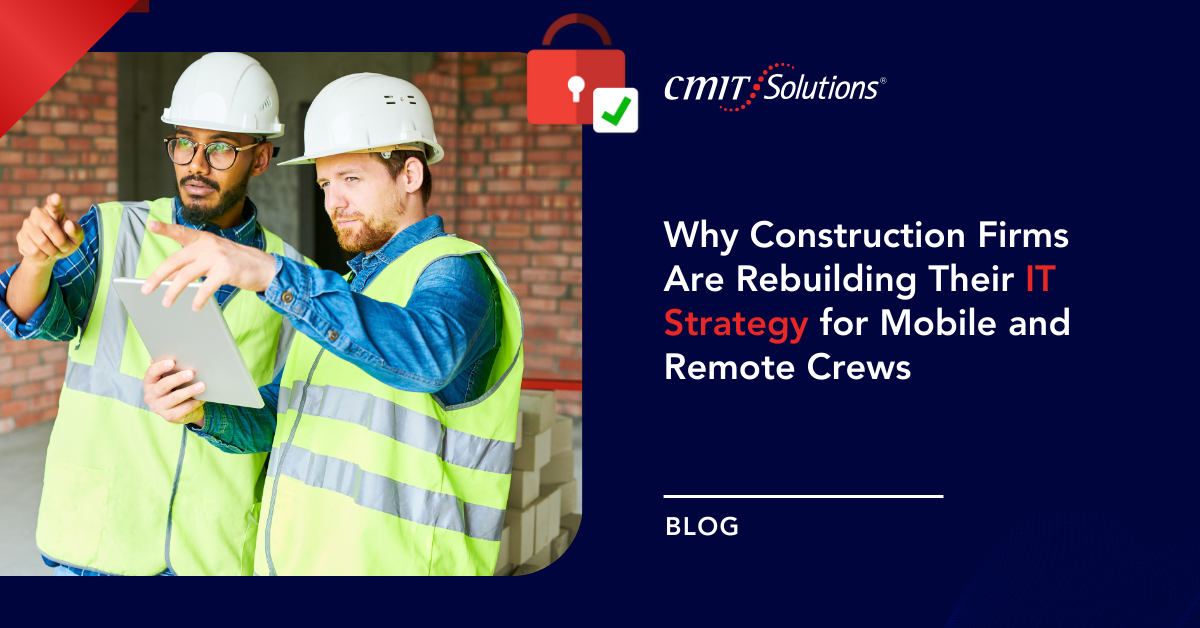
Construction firms are no longer operating solely from trailers and office desks. Today’s projects rely on mobile crews, cloud-based plans, real-time communication, and remote access to critical systems. From foremen on job sites to project managers working across locations, construction has become a highly distributed operation.
This shift has forced construction companies to rethink their IT strategies. Legacy systems designed for office-based work can’t keep up with the demands of mobile crews, tight deadlines, and growing cybersecurity risks. Firms that fail to modernize their IT infrastructure are finding themselves slowed down, exposed to threats, and unable to scale efficiently.
The Rise of Mobile and Remote Construction Work
Modern construction projects depend on speed, coordination, and constant access to information. Blueprints, schedules, inspections, change orders, and vendor communications are now digital and frequently updated.
To support this environment, construction firms are moving toward cloud-first and hybrid IT models that allow teams to access data securely from anywhere. This shift mirrors trends seen across other industries adapting to flexible work environments, as explained in this overview of the cloud advantage.
Without the right IT foundation, however, mobile access becomes a liability rather than an asset.
Security Risks Grow as Job Sites Go Digital
Every tablet, smartphone, and laptop used on a job site becomes a potential entry point for cybercriminals. Construction firms are increasingly targeted because they often manage valuable financial data, contracts, and project documentation—yet many still rely on minimal security controls.
Phishing attacks, ransomware, and unauthorized access can originate from unsecured devices or public Wi-Fi connections used on job sites. That’s why many firms are adopting multi-layered security strategies that protect users, devices, and networks simultaneously.
A strong overview of this approach is outlined in multi-layered security, which highlights how layered defenses reduce the impact of modern cyber threats.

Endpoint Protection Is No Longer Optional
Endpoints are the frontline of today’s construction IT environment. Devices travel between job sites, offices, and home networks, making them prime targets for malware and ransomware.
Basic antivirus software is no longer enough. Construction firms are increasingly deploying advanced endpoint detection and response (EDR) tools that monitor behavior, detect suspicious activity, and respond automatically to threats.
This proactive approach to device security is essential for protecting mobile crews, as explained in advanced EDR protection.
Reliable Connectivity Drives Productivity
Delayed file access, dropped connections, and unreliable communication can halt work and create costly delays. Construction firms need dependable connectivity between job sites, offices, and cloud platforms.
Unified communications tools—such as voice, video, messaging, and file sharing—are becoming central to construction workflows. These tools ensure that updates reach crews instantly and decisions are made faster.
The benefits of modern communication strategies are explored in unified communications, showing how connected teams stay productive regardless of location.
Cloud Platforms Enable Real-Time Collaboration
Cloud-based project management and document storage allow teams to collaborate in real time. Updated plans, permits, and inspection reports are immediately available, reducing errors caused by outdated information.
However, unmanaged cloud environments can lead to rising costs, misconfigurations, and security gaps. That’s why construction firms are increasingly adopting managed cloud services to maintain visibility, control access, and optimize performance.
A deeper look at cloud security challenges can be found in cloud security essentials.

Compliance and Data Protection Are Becoming More Complex
Construction firms must comply with data protection requirements tied to contracts, insurance providers, and regulatory standards. As digital systems expand, maintaining compliance becomes more challenging—especially when data is accessed remotely.
Proactive IT governance helps firms track access, enforce policies, and remain audit-ready. This is increasingly important as compliance expectations rise across industries, as detailed in compliance isn’t optional.
Downtime and Data Loss Can Stop a Project Cold
In construction, downtime is expensive. If crews can’t access plans, schedules, or systems, work slows or stops entirely. Cyber incidents, hardware failures, or accidental deletions can derail timelines.
This is why firms are investing in robust backup and disaster recovery strategies that ensure critical data can be restored quickly. A strong recovery plan protects operations even when unexpected disruptions occur.
Best practices for resilience are outlined in disaster recovery planning and data backup strategies.
From Break-Fix to Proactive IT Management
Traditional “break-fix” IT models don’t work for mobile construction environments. Waiting for systems to fail before responding leads to delays, frustrated teams, and lost revenue.
Construction firms are moving toward proactive managed IT services that monitor systems continuously, identify issues early, and support long-term growth. This approach aligns IT with business goals instead of reacting to emergencies.
The long-term benefits of this shift are explained in proactive IT services.
Why Construction Firms Are Choosing Managed IT Partners
Managing mobile devices, cloud platforms, cybersecurity, compliance, and connectivity internally is increasingly unrealistic for construction firms. A managed IT partner provides the expertise and oversight needed to keep operations running smoothly.
With the right partner, construction companies gain:
- Secure mobile and remote access
- Reduced downtime and IT disruptions
- Predictable technology costs
- Scalable systems that support growth
Building an IT Strategy That Supports the Job Site
Construction firms that rebuild their IT strategy around mobility, security, and reliability are better positioned to compete in today’s fast-moving environment. Technology is no longer a back-office function it’s a core part of how projects are delivered on time and on budget.
CMIT Solutions of Bothell & Renton helps construction firms design and manage IT environments that support mobile crews, protect critical data, and scale with business demands.