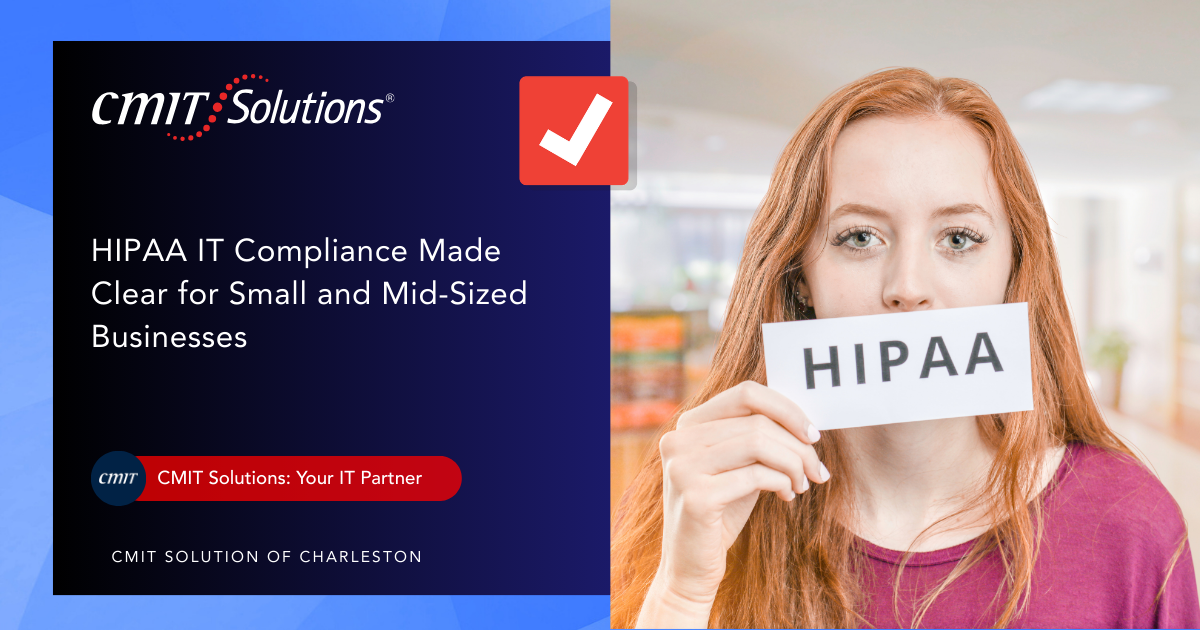
For small and mid-sized businesses in healthcare and healthcare-adjacent industries, HIPAA compliance can feel overwhelming. Regulations are complex, technology environments are evolving, and the consequences of non-compliance can be serious not just financially, but reputationally as well.
Yet HIPAA compliance is not just about avoiding penalties. At its core, HIPAA is about protecting patient trust, safeguarding sensitive information, and building resilient systems that support safe, reliable care delivery. With the right IT strategy, compliance becomes manageable, structured, and aligned with business operations.
At CMIT Solutions of Charleston, we help small and mid-sized organizations turn HIPAA compliance from a source of stress into a practical, sustainable IT framework.
Understanding HIPAA’s Role in Today’s Digital Healthcare Environment
HIPAA was established to protect sensitive patient information, but its relevance has only increased as healthcare becomes more digital. Electronic health records, cloud platforms, telehealth, and remote work have expanded the scope of where protected health information lives and how it is accessed.
For small and mid-sized businesses, this means HIPAA compliance now extends beyond clinical systems into everyday IT operations, user access, and data handling practices. This becomes significantly easier when organizations apply repeatable governance and audit habits similar to those in compliance made simple.
Understanding HIPAA’s role helps organizations recognize that compliance applies to:
- Digital storage and transmission of patient data
- Access controls across users and devices
- Third-party systems that interact with health information
- Day-to-day operational workflows
What Qualifies as Protected Health Information (PHI)
One of the most common challenges businesses face is identifying what data actually falls under HIPAA. Protected Health Information includes more than just medical records—it encompasses any data that can identify an individual and relates to their health, care, or payment for care.
Failing to properly identify PHI increases the risk of accidental exposure or improper handling. This is especially true when data flows through everyday communication channels, which is why strengthening email security is a practical compliance move not just a cybersecurity best practice.
PHI commonly exists within organizations as:
- Electronic health records and patient files
- Billing and insurance information
- Appointment schedules and communications
- Data stored in cloud platforms, email systems, and backups
The Importance of Access Control and Identity Management
HIPAA requires organizations to ensure that only authorized individuals can access PHI. This makes access control a cornerstone of HIPAA-compliant IT environments.
Small and mid-sized businesses often struggle with inconsistent permissions, shared logins, or lack of visibility into who has access to what data. Many reduce these risks by aligning security controls with a broader compliance framework like cybersecurity compliance, especially when systems and user roles change over time.
Strong access control practices help organizations:
- Limit PHI access to authorized users only
- Track user activity for accountability
- Reduce the risk of insider threats
- Maintain clear audit trails

Securing Endpoints and Devices That Handle PHI
Laptops, desktops, mobile devices, and remote workstations are all endpoints that may access PHI. Each device represents a potential entry point for unauthorized access if not properly secured.
Endpoint security plays a critical role in protecting PHI, especially in environments that support remote or hybrid work. Businesses that want consistent protection across every device typically adopt an approach similar to endpoint security, where security standards follow the user—not just the network.
HIPAA-aligned endpoint security focuses on:
- Device encryption and secure configurations
- Patch and update management
- Malware and threat protection
- Secure remote access controls
Data Encryption and Secure Data Transmission
HIPAA emphasizes the protection of PHI both at rest and in transit. Encryption ensures that even if data is intercepted or accessed improperly, it remains unreadable and protected.
For many small and mid-sized businesses, encryption is one of the most effective ways to reduce compliance risk. Encryption becomes even more valuable when paired with strategies that prevent credential misuse and phishing exposure through security awareness training.
Encryption supports HIPAA compliance by helping organizations:
- Protect stored data from unauthorized access
- Secure data transmitted across networks
- Reduce the impact of lost or stolen devices
- Strengthen overall data protection practices
Backup, Disaster Recovery, and Business Continuity
HIPAA compliance is not only about preventing breaches it also requires ensuring the availability of PHI. System failures, ransomware, and natural disasters can all disrupt access to critical data.
Reliable backup and recovery strategies are essential to maintaining continuity of care and business operations. This is why many healthcare organizations prioritize resilient recovery plans like managed backups to ensure PHI can be restored quickly and safely after an incident.
Effective backup and recovery planning enables organizations to:
- Restore PHI quickly after incidents
- Maintain access to critical systems
- Reduce downtime and operational disruption
- Meet availability requirements under HIPAA
Monitoring, Logging, and Audit Readiness
HIPAA requires organizations to monitor system activity and maintain logs that demonstrate compliance. Without proper monitoring, businesses may not detect suspicious behavior or be able to respond effectively to incidents.
Audit readiness is about having visibility and documentation before an issue occurs not scrambling afterward. Building this discipline is much easier when organizations run proactive visibility programs like proactive IT monitoring that surface problems early and reduce blind spots.
Monitoring and logging help organizations by providing:
- Visibility into access and system activity
- Early detection of potential security incidents
- Documentation for compliance audits
- Accountability across users and systems

Managing Third-Party and Vendor Risk
Many small and mid-sized businesses rely on third-party vendors for IT services, cloud platforms, billing systems, and more. If these vendors interact with PHI, they become part of the compliance landscape.
Vendor risk management is often overlooked but is critical for HIPAA compliance. A structured approach helps businesses avoid the same breakdowns that commonly derail audits, especially the pitfalls outlined in compliance audits fail.
Managing third-party risk helps organizations:
- Ensure vendors handle PHI appropriately
- Maintain consistent security standards
- Reduce exposure from external systems
- Clarify responsibility through agreements and controls
Employee Awareness and Secure Work Practices
Technology alone cannot ensure HIPAA compliance. Employees play a key role in protecting PHI through their daily actions, whether handling emails, accessing systems, or working remotely.
Clear policies and ongoing awareness reduce human error, which is one of the most common causes of compliance issues. This becomes even more important in remote and hybrid environments where work behaviors shift quickly, making guidance like remote teams highly relevant to healthcare operations.
Employee-focused compliance efforts support organizations by:
- Reducing accidental data exposure
- Encouraging secure data handling practices
- Reinforcing accountability and responsibility
- Aligning staff behavior with compliance goals
Building a Sustainable HIPAA IT Compliance Strategy
HIPAA compliance is not a one-time project—it is an ongoing process that evolves with technology, threats, and business growth. Small and mid-sized businesses benefit most from a structured, scalable approach rather than reactive fixes.
A sustainable compliance strategy integrates security, operations, and governance into a unified framework. Many organizations standardize this long-term approach by aligning IT decision-making with service models and strategic planning similar to managed IT services, where consistency and accountability reduce compliance stress.
A long-term HIPAA IT strategy helps organizations:
- Adapt to changing regulatory requirements
- Maintain consistent security controls
- Reduce compliance-related stress
- Support growth without increasing risk
Conclusion: Making HIPAA Compliance Practical and Achievable
HIPAA IT compliance does not have to be confusing or overwhelming for small and mid-sized businesses. With the right technology foundation, clear processes, and strategic guidance, compliance becomes a natural part of daily operations rather than a constant concern.
Protecting patient information is about more than meeting regulatory requirements it’s about preserving trust, ensuring continuity, and supporting high-quality care.
At CMIT Solutions of Charleston, we help businesses translate HIPAA requirements into practical IT solutions that fit their size, workflow, and goals. Whether you’re strengthening your current environment or building a compliance strategy from the ground up, our team is here to help you move forward with confidence.